
Beyond Final Grades: Predicting Educational Objective Fulfillment with SVMs
Learning analytics for the prediction of the educational objectives achievement
This paper presents a Learning Analytics framework using Support Vector Machines (SVM) to predict the achievement of specific educational objectives based on continuous assessment marks. Tested on an "Automata Theory and Formal Languages" course, the method achieves over 80% precision across eight distinct learning goals.
TL;DR
Predicting whether a student will pass a course is useful, but knowing exactly which concept they will struggle with is revolutionary for teaching. This paper proposes a Support Vector Machine (SVM) based approach that analyzes marks from 12 intermediate assignments to predict the fulfillment of 8 specific educational objectives in a Computer Science course. The result? A high-precision (80%+) early warning system for instructors.
Background: The Need for Targeted Pedagogy
In the landscape of Educational Data Mining (EDM), most research focuses on "Final Grade Prediction." While technically impressive, these models often lack actionable granularity. If a model says a student will get a 'C', the teacher knows they are struggling but doesn't know why.
The authors argue that by mapping learning activities (assignments) to specific Educational Objectives (EOs), we can identify conceptual gaps early. This allows for adaptive learning—introducing reinforcement resources before a student even attempts a final exam.
Methodology: Mapping Activities to Objectives
The researchers conducted their experiment on the "Automata Theory and Formal Languages" (ATFL) course. The core of their method lies in the relationship between:
- Assignments (A1-A12): The tasks students perform during the semester.
- Educational Objectives (O1-O8): The actual knowledge goals (e.g., "Design of Context-Free Grammars").
The SVM Architecture
The authors trained eight separate binary classifiers, one for each objective.
- Inputs: Marks from 12 assignment questionnaires.
- Model: SVM with a Gaussian (RBF) kernel.
- Data Balancing: Because class distributions were skewed (many students either mostly pass or mostly fail specific objectives), they used SMOTE to generate synthetic minority samples, ensuring the model didn't become biased toward the majority class.
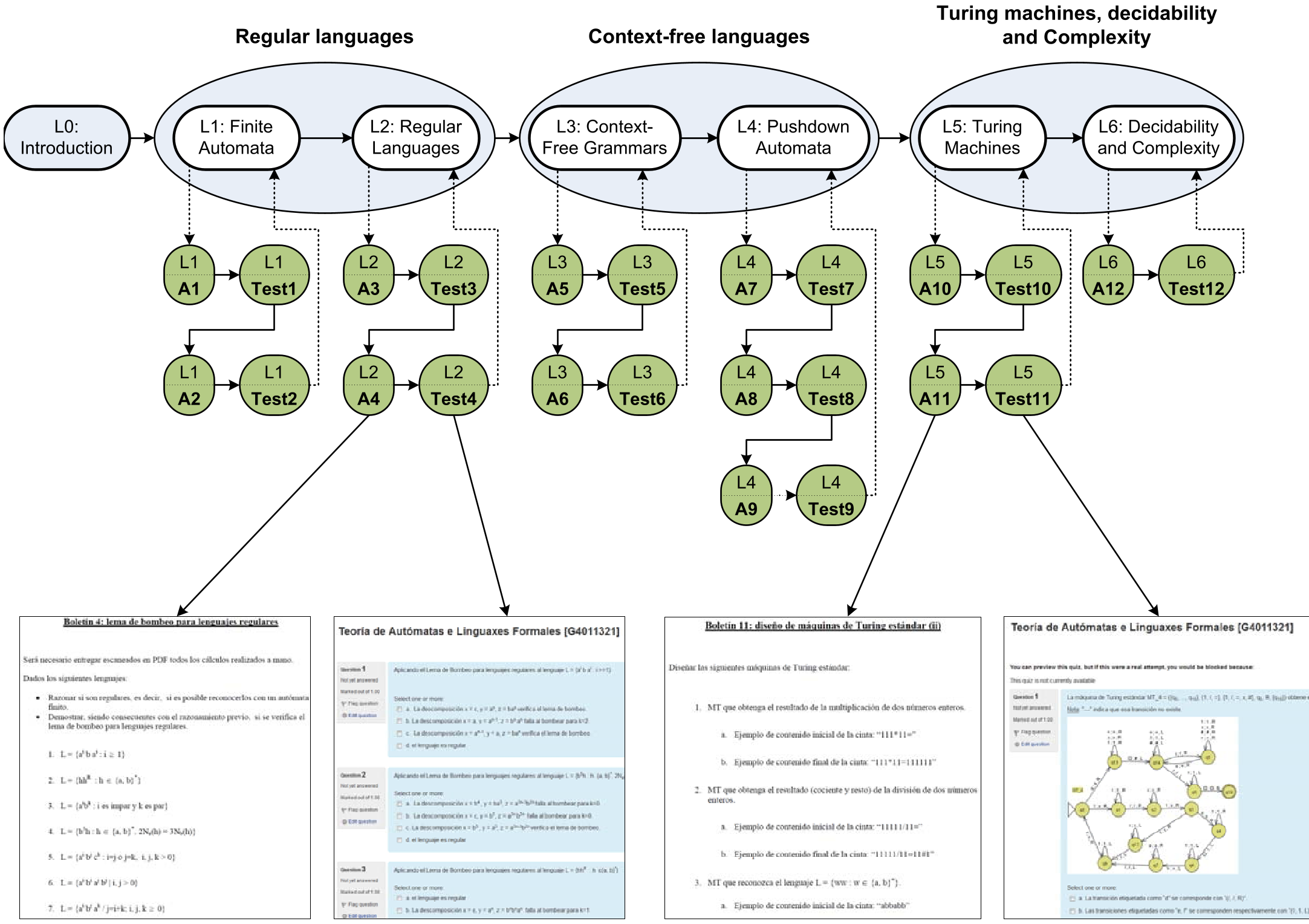 Figure 1: The structural flow of the ATFL course, showing how lectures transition into specific assignments.
Experimental Insights
The experiment involved 56 students. A 4-fold cross-validation was used to tune the regularization parameter () and the kernel spread ().
Performance Highlights
The results demonstrated that assignment marks are strong predictors of final objective achievement:
- Precision: Consistently over 80%, with several objectives hitting 90-100%.
- The "Creativity" Barrier: The objectives hardest to predict (O1 and O4) involved the "Design of Automata." Unlike rote questions, design requires a level of creativity that intermediate marks don't always fully capture.
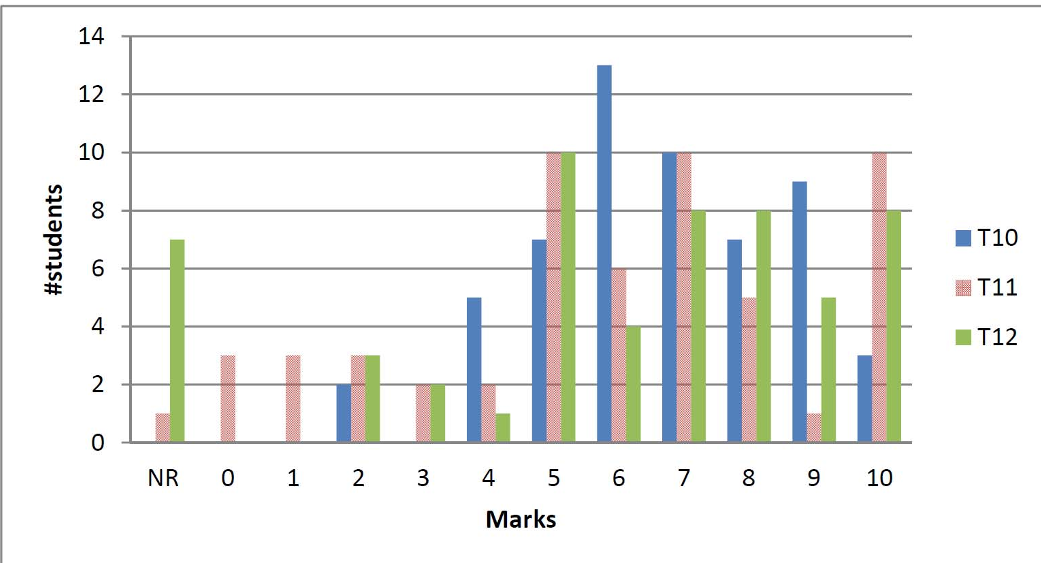 Table 1: Precision (P) and Recall (R) for the eight objectives. High precision indicates that when the model predicts success/failure, it is usually correct.
Critical Analysis: Why This Matters
The true value of this work isn't just the 80% precision; it's the inductive bias of the feature engineering. By using individual assignment marks as features rather than an aggregate total, the SVM captures the nuanced relationship between different topics.
Limitations & Future Work
- Binary Limitation: Currently, the model only predicts "Achieved" vs. "Not Achieved." Real learning is a spectrum.
- Sample Size: With only 56 students, the reliance on SMOTE is heavy. Future validation on larger cohorts is necessary to confirm the generalizability of these specific feature correlations.
The authors plan to move toward Multi-class classification to predict partial fulfillment, which would offer even finer control for adaptive learning systems.
Conclusion
This study bridges the gap between raw data and pedagogical action. By shifting the focus from "Will they pass?" to "What haven't they learned yet?", the researchers provide a blueprint for more intelligent, responsive educational environments.