
Learning by Gossip: Why "Distrust" is the Secret Sauce for Social Network Intelligence
Learning by Gossip: A Principled Information Exchange Model in Social Networks
This paper introduces Learning by Gossip, a collaborative online bootstrap method for estimating Bernoulli distribution parameters in social networks. By leveraging an ensemble of interacting agents (gossips) who "distrust" peer opinions via negative correlation, the model achieves higher estimation efficiency than standard independent sampling.
TL;DR
Researchers have developed a "Learning by Gossip" model that mimics social information exchange to estimate data distributions. Surprisingly, the key to its efficiency isn't just listening to others—it's a healthy dose of distrust. By applying negative weights to peer opinions, a community of "gossips" can estimate underlying probabilities more accurately and faster than agents working in isolation.
The Motivation: Memory Loss and Information Overload
In the sprawling web of social networks, agents (users or algorithms) are constantly bombarded with "Yes/No" information—likes, recommendations, or document quality ranks. This is essentially a Bernoulli distribution.
The problem? Most agents have a "short memory." They can't store thousands of past data points to calculate a perfect average. Standard consensus models suggest we should just average everyone's opinion. However, the authors of this paper argue that pure consensus creates redundancy. To truly extract value from a network, agents need a mechanism that stresses the information—enter the Gossip Metaphor.
Methodology: The Mechanics of Distrust
The core of the "Learning by Gossip" model is a family of estimators () that update based on three inputs:
- Fresh News (): The actual observation from the environment.
- Personal Bit (): The agent's own current conviction.
- Peer Gossip (): What everyone else is saying.
The Innovation: Negative Correlation
Unlike standard models where you trust your peers (positive coefficients), this model uses a negative coefficient () for the opinions of others.

By "distrusting" the common belief, the agents induce a negative correlation between their individual statistics. This spread actually helps the community average converge closer to the true value with lower variance than if they were all trying to agree.
Experiments: Convergence and Overfitting
The researchers tested the model by simulating a community of gossips trying to find the "true" value of a document thread's quality.
1. Bipartite Initialization
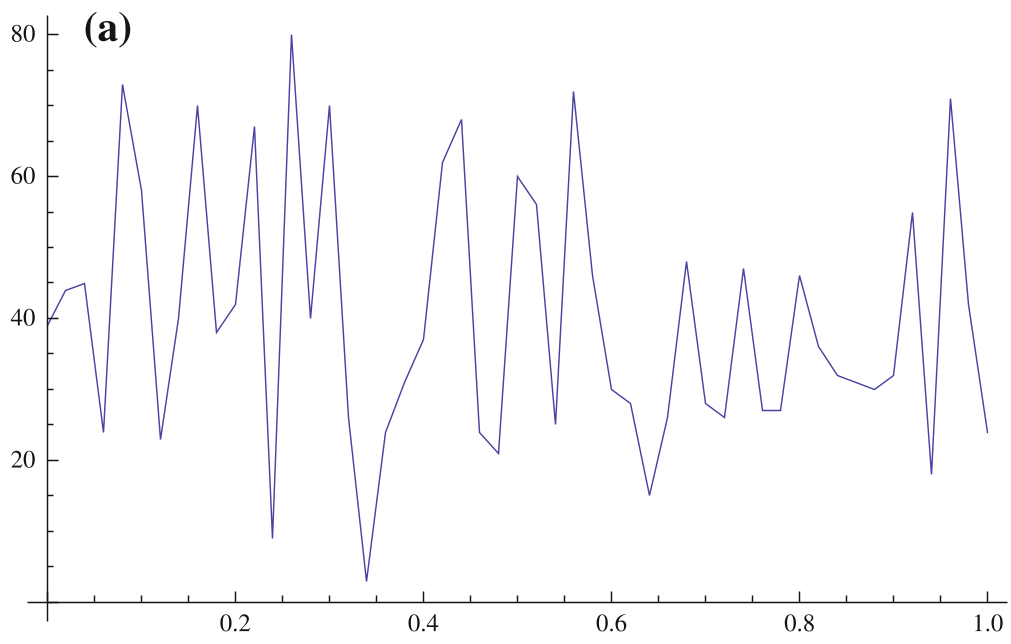
The study found that starting the community with extreme "prejudices" (half the agents starting at 0, half at 1) actually accelerated convergence compared to everyone starting with the same neutral guess. This provides a diverse "base" for the gossip to refine.
2. The Overfitting Trap
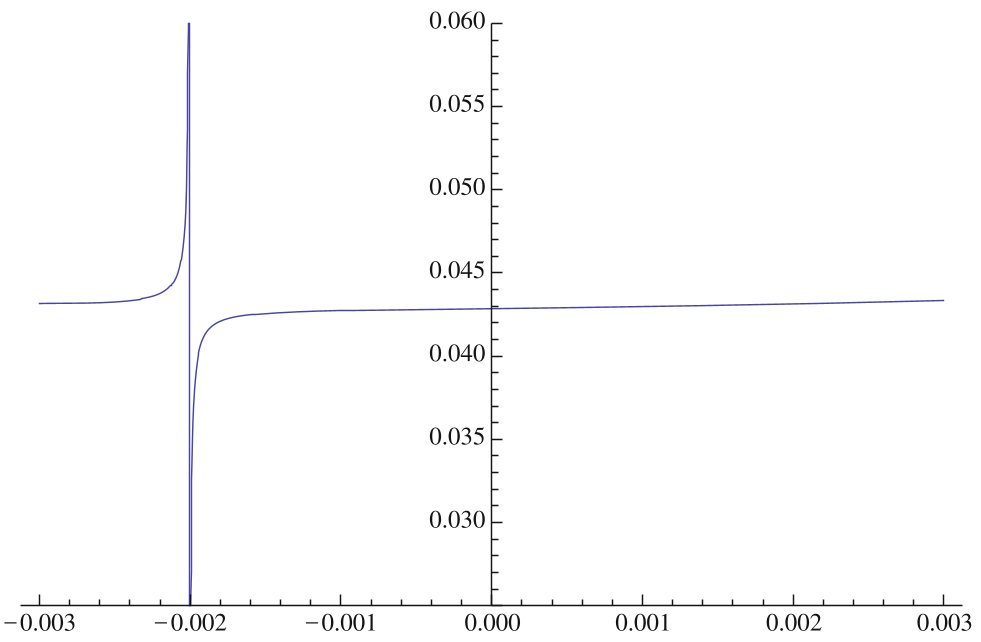
There is a catch: if the agents listen to the environment for too long, the benefit of gossiping disappears. This is an overfitting phenomenon. As the individual agents' estimates become too similar, the negative covariance that provided the statistical "boost" vanishes, and the error begins to rise again (as seen in the "U-shaped" MSE curves in the paper).
Critical Insights & Conclusion
The "Learning by Gossip" model provides a fascinating principled approach to social intelligence.
Main Takeaways:
- Correlation is a Tool: In distributed learning, correlation isn't just a byproduct; it can be engineered. Inducing negative correlation prevents the "echo chamber" effect and improves global accuracy.
- Efficiency in Constraints: The model proves that even with zero long-term memory, a community can approximate complex bootstrap statistics through simple interactions.
- The "Innovation" Rule: True learning occurs when agents treat the difference between new data and the "common belief" as the most important signal.
Limitations: The model is currently optimized for simple Boolean (Bernoulli) data. Moving to high-dimensional continuous data would requiring mapping these interactions into more complex manifold spaces, which remains a challenge for future work.
In short: To learn better as a group, don't just follow the crowd—keep a critical distance.