
DGC: Refining the Noise Floor in Large-Scale Social Network Clustering
Learning Distilled Graph for Large-Scale Social Network Data Clustering
This paper introduces Distilled Graph Clustering (DGC), an iterative framework for social network analysis that learns an optimized graph structure by combining content data and link information. It achieves superior clustering performance by simultaneously performing feature selection and graph refinement, effectively filtering out noise and sparse features.
TL;DR
Social network data is notoriously messy, filled with "noisy" tags and incomplete follow-links. The Distilled Graph Clustering (DGC) method provides a surgical solution by iteratively filtering out irrelevant features and rebuilding the network's affinity graph. It doesn't just cluster data—it actively "distills" the signal from the noise, leading to massive accuracy gains in community detection.
The "Dirty Data" Dilemma in Social Networks
In the realm of spectral analysis, we represent users as nodes and their relationships as edges. However, building this graph is fraught with two major challenges:
- Feature Pollution: User-generated content (tags, posts) is often redundant or irrelevant. Using all features leads to the "curse of dimensionality," making everyone look like they are neighbors with everyone else.
- Incomplete Links: While "follows" or "friends" provide strong signals, they are often sparse. A researcher might follow a doctor out of curiosity, not because they belong to the same professional community.
Previous SOTA methods treated feature selection and graph building as separate, one-off tasks. DGC argues that these two must be codependent and iterative.
Methodology: The Distillation Loop
The core innovation is an EM-like alternating optimization. Instead of a static graph, DGC treats the graph as a living entity that evolves alongside the feature set.
1. The Strategy
Starting with a link-based initialization, DGC alternates between:
- Feature Evaluation: Finding a subset of features that best explains the current graph structure.
- Graph Distillation: Updating the similarity weights using only the "clean" features identified in the previous step.
2. The Math behind the Magic
To keep this scalable, the authors avoided expensive generalized eigenvalue decompositions. Instead, they re-formulated the problem into a Least Squares Regression framework:
min ||X diag(ρ) W - T||^2 + λ||W||^2
Here, ρ is a binary indicator for feature selection. Since this is NP-hard, the authors applied a convex relaxation (QCLP) and utilized a "Cutting-Plane" method to handle the exponential constraints efficiently.
 The ideal similarity formulation used to refine the graph based on the distilled feature vector τ.
Experiments: Robustness in the Face of Chaos
The researchers tested DGC against baselines like LapScore and NetFS on platforms like BlogCatalog and Flickr.
Resilience to Noise
In synthetic tests, as the number of "junk" features increased from 0 to 1,000, DGC's accuracy stayed remarkably flat at ~85%. Every other baseline plummeted to near-random performance (50%). This proves that the distillation process successfully "blinds" the model to irrelevant data.
Speed and Scalability
Because DGC solves the subproblems in the primal form using Accelerated Proximal Gradient (APG), it remains efficient even as the number of users or links scales into the hundreds of thousands.
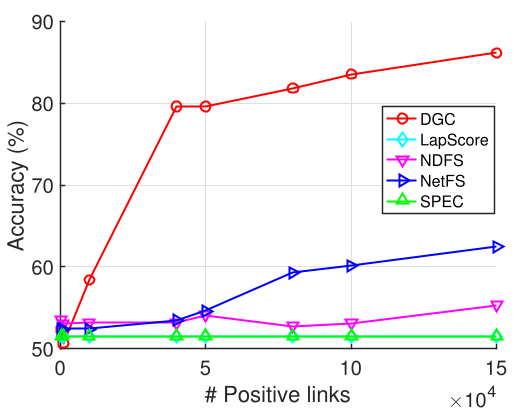 Figure 2: The evolution of the similarity matrix. Notice how it starts sparse, gets denser as signal is found, and then cleans up "noisy" links by iteration 10.
Critical Insights & Conclusion
DGC's primary value is its Inductive Bias—the assumption that the "true" social structure is hidden behind the noise and can only be recovered by reinforcing the agreement between links and content.
Limitations
- Hyperparameter Sensitivity: While robust to noise, the leverage parameter
α(balancing links vs. content) still needs tuning. - Discrete vs. Continuous: The current relaxation handles binary selection, but a soft-attention mechanism might capture more nuance.
Future Outlook
The authors suggest this isn't limited to clustering. The "Distillation" logic can be applied to Semi-Supervised Learning, where a small amount of labeled data could guide the graph refinement even more effectively. In an era of "Big Data, Bad Quality," DGC is a necessary filter for the social web.