
Cognitor: Bridging the Cultural Gap in E-Learning Through Common-Sense AI
Filling out learning object metadata considering cultural contextualization
This paper introduces Cognitor, a framework and authoring tool designed to help teachers create SCORM-compliant Learning Objects (LO). It integrates the Cog-Learn pattern language and a common-sense knowledge base to assist in organizing pedagogical content and automatically filling out cultural-contextualized metadata.
TL;DR
Cognitor is a specialized authoring framework designed to empower teachers—especially those with limited technical backgrounds—to build high-quality, SCORM-compliant digital learning materials. By leveraging a Common Sense Knowledge Base, it assists in content organization and metadata enrichment, ensuring that educational materials are not just digital, but culturally and pedagogically resonant with the learner.
Background: The Struggle of the Modern Educator
The transition from paper-based to computer-based education is more than a technical hurdle; it’s a pedagogical challenge. Teachers often lack the programming skills to create complex hyper-documents, and more importantly, they struggle to align digital content with the cultural reality of their students. In the realm of E-learning, "one size fits all" often means "one size fits none."
The Core Insight: Meaningful Learning & Subsunsors
The authors base their work on the theories of Ausubel and Novak, which posit that learning is most effective when new information is "anchored" to existing knowledge—what they call subsunsors.
Cognitor uses Conceptual Maps (CM) as its primary organizational logic. However, the "secret sauce" is the integration of Common Sense Knowledge. By tapping into a database of non-specialized, culturally specific knowledge (e.g., Brazilian Open Mind Common Sense), the tool suggests concepts that likely already exist in the student's cognitive structure.
Methodology: How Cognitor Works
The framework operates through a WYSIWYG (What You See Is What You Get) interface divided into several functional zones:
- Planning with AI Support: In the "Knowledge View Pattern" step, when a teacher enters a concept like "Health," Cognitor queries its common-sense engine to suggest related terms like "medicine" or "hospital," helping the teacher map out the content structure quickly.
- Semi-Automatic Metadata Filling: Filling out IEEE LOM (Learning Object Metadata) is notoriously tedious. Cognitor automates this by extracting keywords from the text and suggesting metadata based on the established conceptual relationships.
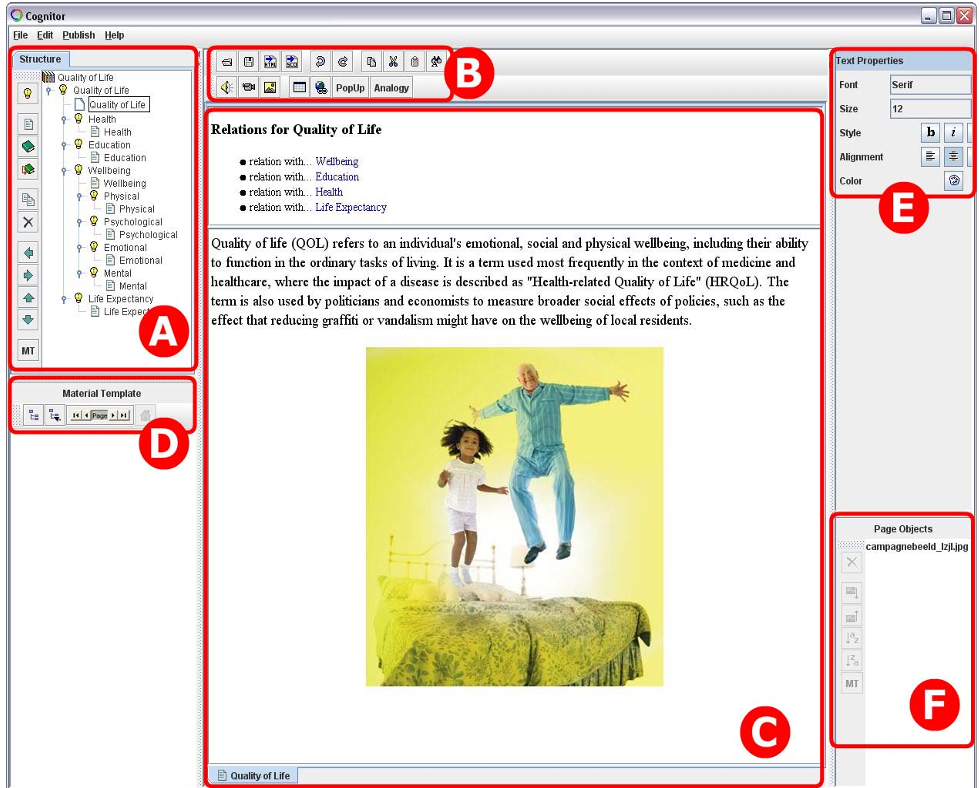 Figure 1: The Cognitor environment, showing areas for planning, editing, and object control.
Competitive Analysis
The authors compared Cognitor against popular tools like CMapTools, Inspiration, and VUE. Their findings highlight a critical gap:
- Own Editor: Most tools (66%) are merely aggregators; you can't actually write the content in them.
- Common Sense Support: Cognitor was the only tool evaluated that used a knowledge base to actively suggest culturally relevant concepts during the design phase.
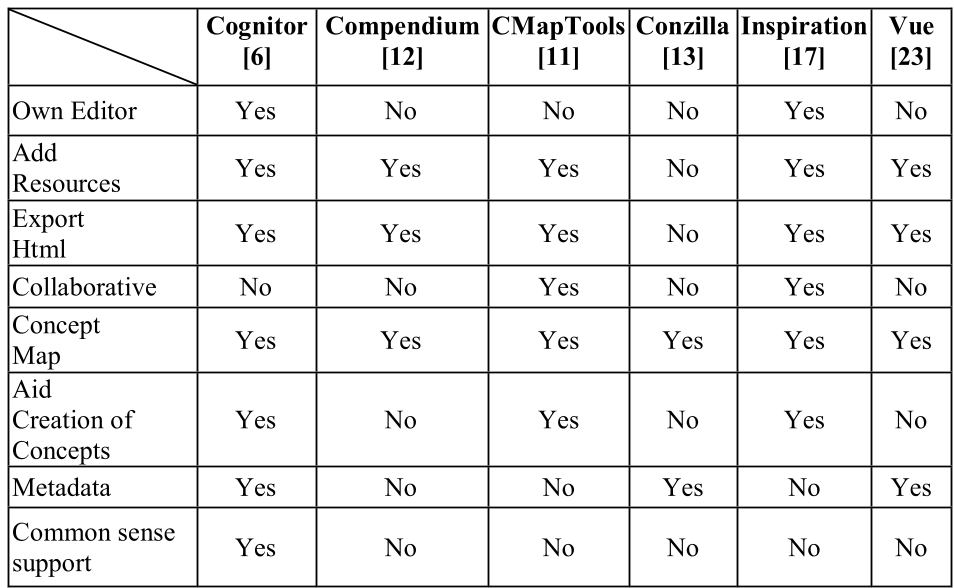 Table 1: Cognitor vs. other web-based learning material editors.
Solving the Reusability Problem (Metadata)
A Learning Object (LO) is only useful if it can be found and reused. This requires rigorous metadata. Cognitor's Keyword Composer allows teachers to select mined keywords or use "Search" to find culturally synonymous terms in the knowledge base, ensuring the LO is tagged in a way that reflects how actual people (and students) think and talk.
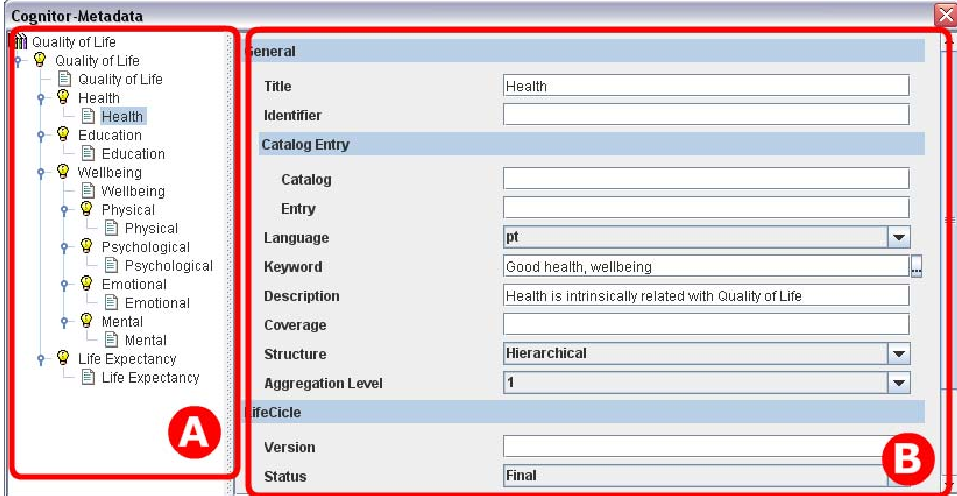 Figure 2: The Metadata editor linking conceptual maps to SCORM-compliant data fields.
Conclusion & Future Outlook
Cognitor represents a significant step toward democratizing high-quality e-learning creation. By moving away from purely technical metadata towards "Culturally Contextualized" metadata, the authors provide a blueprint for tools that respect local identities while adhering to global standards like SCORM.
Future Directions:
- Web Porting: Moving the framework from a standalone tool to a collaborative web environment.
- Collaborative Authoring: Allowing groups of teachers to build shared repositories of LOs.
- LLM Integration: While the paper uses traditional common-sense databases, the modern equivalent would likely involve Large Language Models (LLMs) to provide even deeper cultural nuance.
Final Takeaway: The success of an educational tool shouldn't be measured by its technical complexity, but by its ability to translate a teacher's pedagogical intent into a student's meaningful understanding.