
Geometric Actor-Critic: Mastering Incentives in the Fog of Unknown Social Networks
Learning Policies for Effective Incentive Allocation in Unknown Social Networks
The paper introduces Geometric Actor-Critic (GAC), an end-to-end Reinforcement Learning framework designed for optimal incentive allocation in social networks where user attributes and influence strengths are unknown. GAC leverages Graph Neural Networks (GNNs) and Differentiable Pooling to learn both local and global network representations, consistently outperforming traditional bandit and adaptive baselines across multiple real-world datasets.
TL;DR
How do you convince a social network to adopt a new behavior when you don't know who likes what or who influences whom? The Geometric Actor-Critic (GAC) framework solves this by treating the network structure itself as a latent map of influence. By combining Graph Neural Networks (GNNs) with Reinforcement Learning, it learns to price incentives perfectly under a strict budget, outperforming state-of-the-art bandit and adaptive methods without requiring any private user data.
Problem & Motivation: The "Data Blindness" Trap
Incentive allocation is the backbone of digital marketing, crowdsourcing, and public policy. The goal is simple: spend a limited budget to maximize "target behaviors" (e.g., buying a product or joining a movement).
However, most SOTA methods suffer from two fatal assumptions:
- Attribute Transparency: They assume we know user preferences (often unavailable).
- Influence Certainty: They assume the "follower count" equals real influence (often false due to "weak" or "noisy" edges).
The authors ask: Can we allocate incentives effectively using ONLY the network topology? Their insight is that the geometry of the network—how nodes cluster and connect—implicitly contains the power dynamics needed to predict influence.
Methodology: The Architecture of Influence
The GAC framework doesn't just look at a user; it looks at the user's "neighborhood" and the "global climate" of the network simultaneously.
1. Dual-Graph Encoding
Social networks are directed. Your influence on others (out-degree) is different from others' influence on you (in-degree). GAC uses two separate GraphSage layers to aggregate features from both directions, creating a nuanced local node embedding.
2. Hierarchical Abstracting (DiffPool)
A single node's position isn't enough. GAC uses DiffPool (Differentiable Pooling) to "zoom out," hierarchically clustering the graph to understand the global structure.
3. Actor-Critic Policy Generation
The local and global representations are concatenated. An RL agent (the Actor) then generates a precise incentive value between 0 and 1 for each user. The "Critic" evaluates whether this allocation maximized the conversion rate relative to the budget spent.
 Figure 1: Conceptual view of the GAC framework and network interaction.
Experiments: Proving the Geometric Advantage
The authors tested GAC against several baselines, including DGIA-IPE (Adaptive) and DBP-UCB (Multi-Armed Bandit).
Key Findings:
- Uniform Superiority: On the Twitter and Wiki-Vote datasets, GAC consistently incentivized more users.
- Robustness to Sparsity: While baselines like DGIA-IPE became unstable in sparse networks (like Wiki-Vote), GAC remained robust because its hierarchical pooling can capture structural patterns even when direct edges are few.
- The Budget Efficiency: GAC learns the "sweet spot" of pricing—avoiding the overpricing that wastes budget and the underpricing that yields no results.
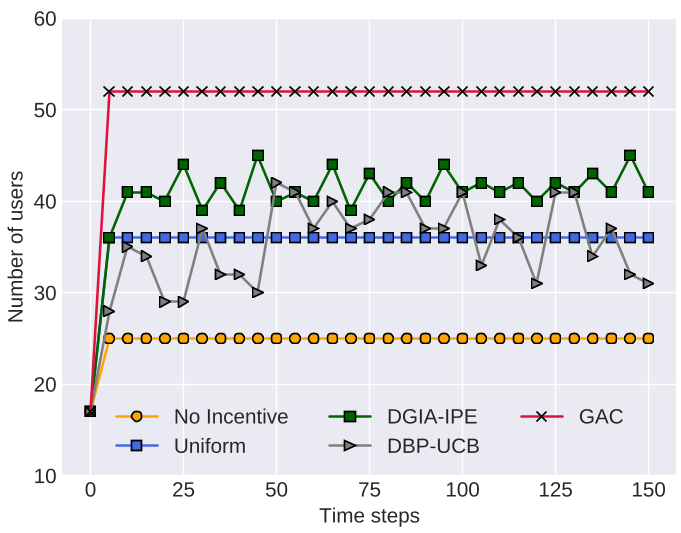 Figure 2: Performance comparison across different social network structures.
Critical Analysis & Conclusion
The brilliance of GAC lies in its Inductive Bias. By forcing the RL agent to "see" through the lens of graph geometry, it automatically prioritizes structural bottleneck nodes that act as bridges for information flow.
Limitations: The current model relies on a static topology. In real-world scenarios, social networks are dynamic—edges form and break. Future iterations would likely need Temporal Graph Networks (TGNs) to handle evolving social structures in real-time.
The Takeaway: In an era of increasing privacy regulation (GDPR, CCPA), GAC provides a template for "privacy-preserving" marketing. You don't need to know who the user is; you just need to know where they are in the social web.