
Decoding the Human Face: A Deep Dive into Computational Race Recognition
Learning Race from Face: A Survey
This survey provides a comprehensive review of computational race recognition from human faces, covering taxonomy, feature representation, and state-of-the-art algorithms. It maps the transition from 2D appearance-based methods to 3D anthropometric modeling and multi-modal fusion, highlighting achievements in cross-dataset generalization and real-world surveillance applications.
TL;DR
Race is one of the most prominent social signals conveyed by the human face. This survey explores how computational intelligence can transform "implicit" racial categories into "quantitative" models. By moving beyond simple skin-tone analysis to sophisticated 3D anthropometry and multi-modal fusion (like combining face and gait), researchers are achieving near-perfect classification on controlled datasets while grappling with the ethical and technical complexities of real-world "in-the-wild" recognition.
Contextual Positioning: Why Race Recognition Matters
In the landscape of computer vision, face recognition is often viewed through the lens of identity or expression. However, "Learning Race from Face" occupies a unique coordinate. It is a "soft-biometric" task that serves as a coarse-to-fine filter for security, human-computer interaction (HCI), and forensic art. While gender categorization involves two primary classes and expressions have six universal states, race is a "fuzzy" continuum influenced by genetics, geography, and culture.
The Core Challenge: Beyond Skin Deep
One of the most persistent misconceptions is that race recognition is synonymous with skin color detection. The authors argue that chromatic representation is actually one of the least reliable factors.
- Illumination Sensitivity: Variation in lighting can make a Caucasian face appear darker than an East Asian face.
- Chromatic Overlap: Populations from Southern India, Africa, and Melanesia may share similar skin tones but possess distinct craniofacial structures.
The true "physiognomic signature" of race lies in Configural Relations—the spatial arrangement of landmarks like the periocular region (eye corners), the tip of the nose, and the mandibular structure.
Methodology: The Hierarchical Approach
The survey breaks down the methodology into a roadmap ranging from intrusive single-model checks to non-intrusive distant monitoring.
1. The 3D Frontier
Traditional 2D images suffer from pose and lighting distortion. The shift to 3D facial scans allows for the extraction of Anthropometric Landmarks. By measuring the 3D distance between eyes, the depth of the nose, and the jaw-to-jaw width, algorithms can categorize race with remarkable structural precision.
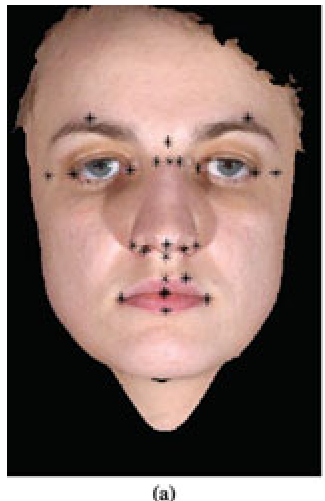 Figure: Anatomically meaningful landmarks used for 3D race classification.
2. Multi-Modal Fusion: Face + Gait
When faces are occluded or captured from a distance (common in surveillance), the "Face + Gait" fusion becomes a powerful tool. Gait (walking pattern) provides a distant cue, while Gabor-filtered facial features provide a close-range confirmation. This hierarchical fusion significantly boosts robustness in public safety applications.
 Table: Overview of state-of-the-art systems, showing the superior performance of fusion and 3D methods.
Critical Insight: The "Other-Race Effect" (ORE) in AI
A fascinating aspect of this survey is the discussion of ORE. Just as humans recognize "own-race" faces better, algorithms trained on Western-centric datasets perform poorly on East Asian or African populations. This "algorithmic bias" isn't just a data problem; it's an architectural problem. The survey suggests that Manifold Learning—projecting high-dimensional faces into low-dimensional "race-specific" manifolds—can help decouple these biases.
Future Outlook: From Single Race to Mixed Race
As global migration increases, the dichotomy of "Asian vs. Caucasian" is vanishing. The survey identifies Mixed-Race Recognition as the next big frontier.
- The Challenge: Mixed-race individuals often possess "average-looking" traits that confuse traditional binary classifiers.
- The Solution: Moving toward Fuzzy Logic and Membership Functions, where an individual is recognized as having degrees of membership in multiple ancestral groups, rather than being forced into a single box.
Conclusion
The field of learning race from faces is transitioning from simple pattern matching to a sophisticated intersection of Computational Neuroscience and Physical Anthropology. While the technical accuracy is high, the ultimate success of these systems relies on their ability to handle the "In-Group" bias and adapt to the increasing complexity of a multiracial world.
Senior Editor’s Note: This research underscores the necessity of balanced datasets (like CUN and Texas 3D) to prevent the "digital ORE" and ensure equitable AI performance across all demographics.