
Hybrid Intelligence in Pervasive Social Networking: The SOCIETIES Approach
Learning user preferences in a system combining pervasive behaviour and social networking
This paper introduces the SOCIETIES project framework, a Pervasive Social Networking (PSN) system that integrates pervasive computing with social networking via Personal Smart Spaces (PSS). The core contribution is a hybrid learning architecture that combines rule-based logic and neural networks to predict and manage user preferences in dynamic, context-aware environments.
TL;DR
The SOCIETIES project tackles the fragmentation of pervasive computing by merging it with social networking through Personal Smart Spaces (PSS). Its crown jewel is a hybrid preference-learning engine that uses Rule-Based Decision Trees for explainability and Neural Networks for rapid adaptation, solving the twin problems of context-dependency and shifting user intent.
Contextual Volatility: Why Personalization is Hard
Pervasive computing aims to make our environments "smart," yet most systems are tethered to fixed locations—creating "islands of pervasiveness." When you leave your smart home, your preferences don't follow you to the office.
The authors identify two fundamental "pain points" in current SOTA personalization:
- Context-Dependency: Your preferred ringtone volume is high at home but "mute" in a work meeting. Learning a single "preference" is impossible without high-dimensional context mapping.
- User Changeability: Humans are fickle. A permanent change in preference (e.g., buying a new car) looks identical to a one-off outlier (e.g., borrowing a friend's bike) to a naive algorithm.
Methodology: The "Dual-Engine" Architecture
To solve this, the SOCIETIES system doesn't rely on a single model. It employs a Parallel Hybrid Approach.
1. The Rule-Based Engine (The "Brain")
Using a modified C4.5 algorithm, the system generates nested IF-THEN-ELSE rules.
- Transparency: Users can view and edit these rules, preventing the "black box" frustration common in AI.
- Two-Level Memory: The system splits data into Short-term Memory (recent actions) and Long-term Memory (historical baseline).
- The Conflict Resolution Loop: If a new short-term rule (e.g., "Mute volume at work") conflicts with a long-term rule, the system triggers a deep dive into the long-term history to see if a new context variable (like
task = meeting) can explain the discrepancy.
2. The Neural Net Engine (The "Muscle")
While rules are great for logic, they can be slow to update. A two-layer neural network operates incrementally, adjusting weights with every single user interaction. This ensures the system "feels" responsive as the user moves throughout their day.
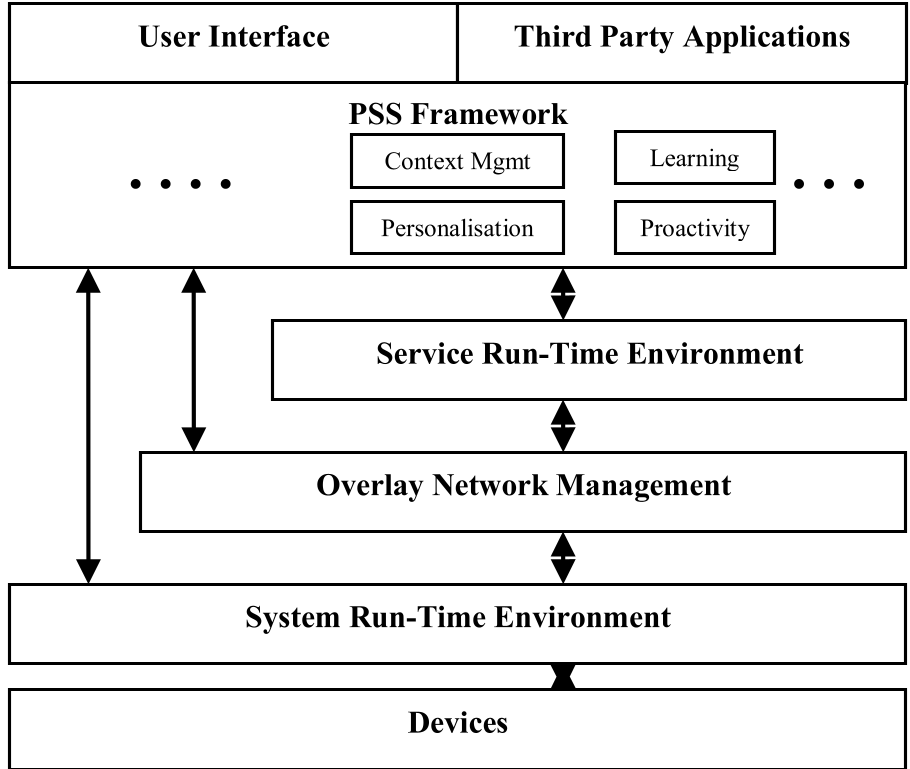 Figure 1: High-level PSS architecture showing the integration of context management and personalization.
Experiments: Real-World Deployment
The paper outlines three critical trial domains for this hybrid system:
- Student Trial: Long-term usage patterns in social academic settings.
- Disaster Management: High-stakes adaptation where preferences for communication and hierarchy change instantly during emergencies.
- Enterprise: Managing service access (e.g., lighting vs. temperature control) based on user roles (Cleaner vs. Executive).
The Neural Network topology (Figure 2) highlights how context attributes (location, time, task) map directly to preference outcomes through a weighted association layer.
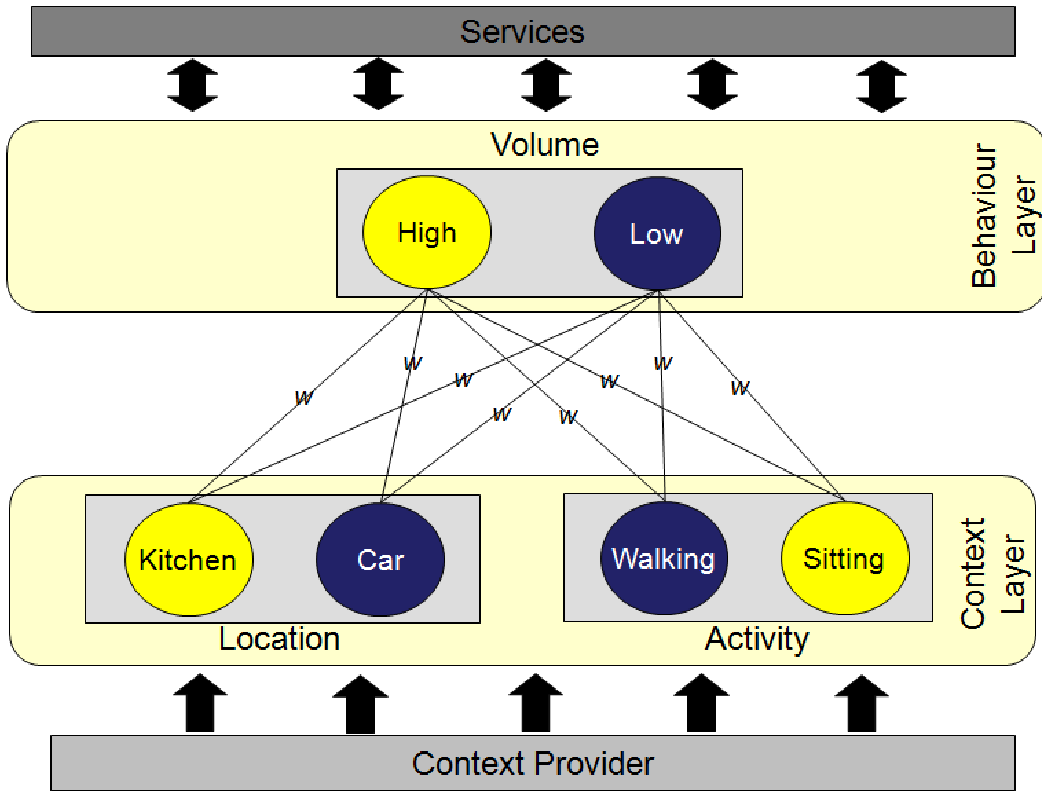 Figure 2: The incremental learning topology used for rapid adaptation.
Critical Insight: Who Owns the Intelligence?
A major architectural breakthrough here is the decoupling of smarts from the building. In traditional smart offices, the building learns your habits. In the SOCIETIES model, your Mobile PSS (on your smartphone) carries your "intelligence."
When you enter a room, your PSS "negotiates" with the room's PSS. This not only protects privacy but allows the learning algorithm to gather data across multiple environments, significantly accelerating the "Training-to-SOTA" timeline for personal assistants.
Conclusion & Future Outlook
The SOCIETIES framework proves that the future of the "Intelligent Environment" is not about smarter rooms, but about smarter digital shadows that follow us. By bridging the gap between social networking (interaction with people) and pervasive computing (interaction with things), this work lays the groundwork for the next generation of truly ubiquitous AI.
Limitations: The paper notes that the selection of "relevant" context still relies heavily on developer intuition. Future work should focus on automated feature selection to reduce the storage overhead of context monitoring.