
Lecturers’ Attitude to Social Network Media: Bridging the Gap in Distance Education Usability
Lecturers’ Attitude to Social Network Media: Implication for Accessibility and Usability Need in Open and Distance Education
This study investigates lecturers' attitudes toward social network media (SNM) in Open and Distance Learning (ODL) contexts in Nigeria. Using a multi-stage stratified random sampling of 80 lecturers, the research assesses how SNM influences accessibility and usability for distance learners, achieving a reliability coefficient of 0.75.
TL;DR
This research highlights that while lecturers in Nigeria’s Open and Distance Learning (ODL) systems possess a very positive attitude toward social media (over 90% favorable), their effectiveness is hindered by demographic factors like years of experience and specialization. The study argues that for ODL to truly "remove barriers," we must move beyond simple access and focus on training lecturers to optimize the usability and accessibility of social platforms for diverse learners.
Background & Motivation
Open and Distance Learning (ODL) is built on the philosophy of "learning what you want, when you want, and where you want." However, the bridge between content and student is often the lecturer’s choice of medium. The study pivots on a critical insight: No education system can rise above the quality and attitude of its teachers. If lecturers viewed social media as a mere distraction rather than a tool for interaction, the digital divide in ODL would only widen.
Methodology: The ODL Pulse Check
The study utilized a sample of 80 lecturers from the National Open University of Nigeria (Single-mode) and the University of Lagos (Dual-mode).
Key Metrics Tracked:
- Accessibility: The ability of the environment to adjust to all learners.
- Usability: The efficiency and satisfaction with which learning goals are achieved.
- Social Network Media (SNM): Leveraging Facebook, YouTube, and Messenger for real-time feedback and collaboration.
The Core: How Attitudes Shape Digital Pedagogy
The research found a high "Excitement Factor." 100% of participants agreed that the challenge of learning SNM to teach is exciting. However, the depth of knowledge varied significantly across different platforms.
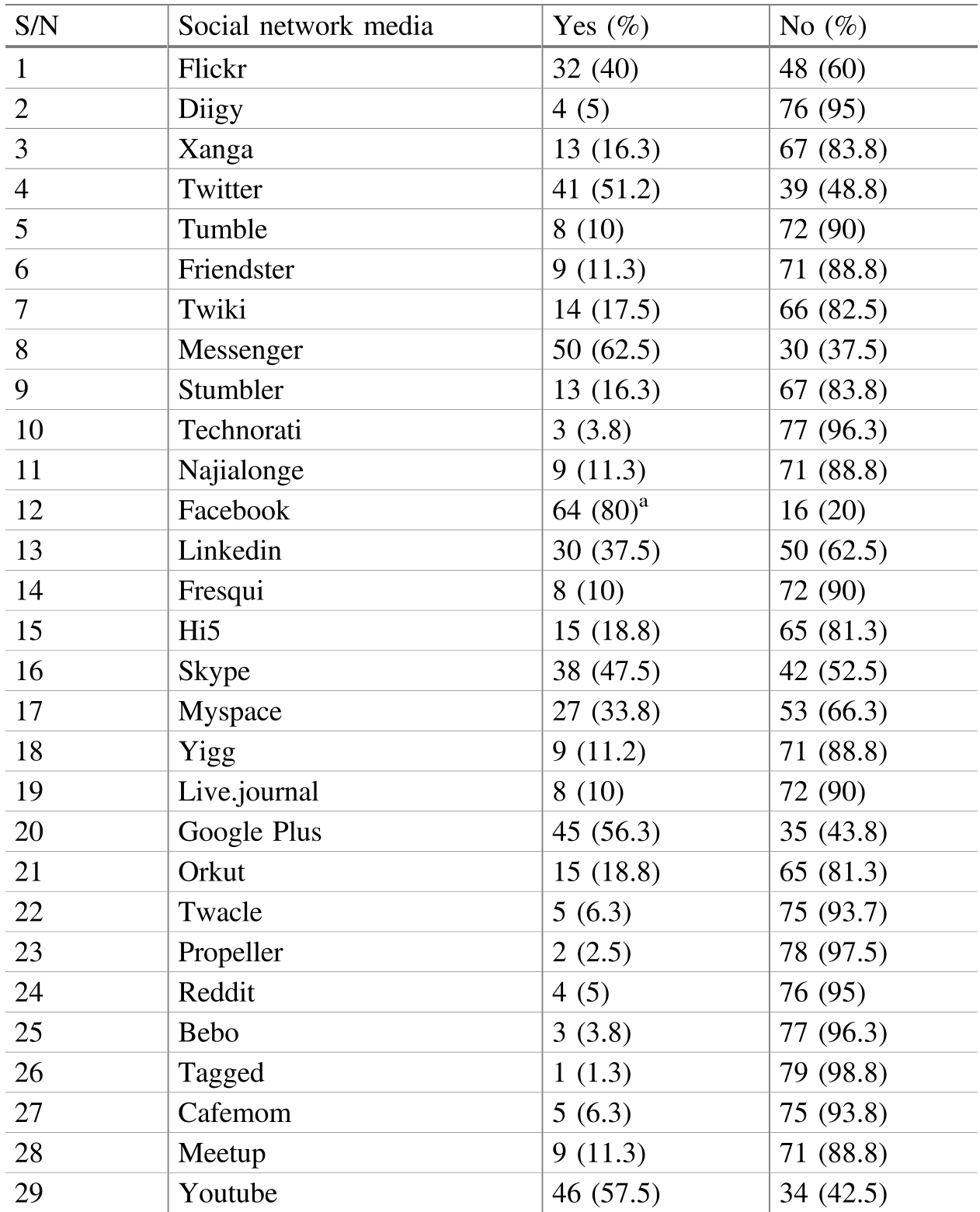 Most ODL lecturers are comfortable with Facebook (80%) and YouTube (57.5%), but niche academic tools like LinkedIn or professional repositories remain underutilized.
The "Experience Curve" Paradox
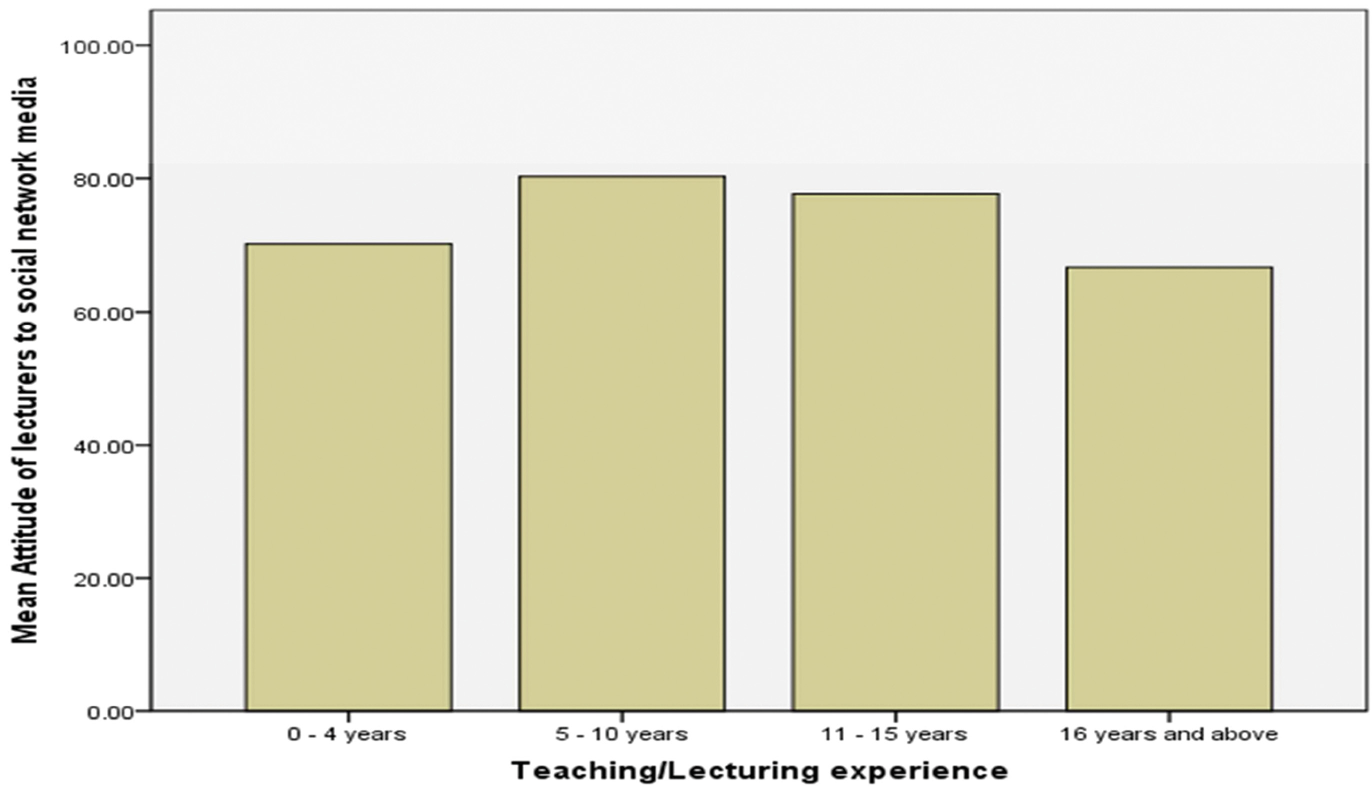
One of the most profound findings was that attitude does not follow a linear path with experience.
- Less Experienced (0-4 years): Surprisingly lower attitude scores, potentially because they are still mastering core pedagogical skills.
- Mid-Career (5-15 years): The "Sweet Spot." These lecturers showed the highest positive attitude and adaptability.
- Vetern Lecturers (16+ years): Lower scores, often attributed to a "face-to-face" orientation inherited from conventional systems.
Institutional Performance: Single vs. Dual Mode
A common assumption is that "Single-mode" (pure distance learning) universities would have staff more attuned to digital tools than "Dual-mode" (hybrid) universities. The study debunked this.
 With a p-value of 0.430, there was no statistically significant difference, suggesting a nationwide "digital culture" is emerging across all Nigerian higher education institutions.
Critical Insight & Conclusion
While the positive attitude is encouraging, the researcher notes that attitude alone doesn't guarantee accessibility. The disparity between Science/Technology lecturers (highest score) and Law lecturers (lowest score) suggests that "subject-matter bias" still dictates how technology is deployed.
The Takeaway: To maximize the potential of Web 2.0 in ODL, institutions must shift from generic ICT training to discipline-specific e-learning workshops. We need to help the "new" and "old" generations of lecturers find the middle ground where SNM becomes a standard instructional tool rather than an experimental one.
Future Outlook: Future research should focus on "Student Perception"—does the lecturer’s positive attitude actually translate to better grades or lower dropout rates for distance learners?