
Mobile Live-Streaming: The Legal and Ethical Frontiers of Real-Time Broadcasting
Legal and ethical implications of mobile live-streaming video apps
This study investigates the legal and ethical ramifications of the rise of mobile live-streaming apps like Periscope and Facebook Live. It identifies critical research gaps in public policy (e.g., surveillance, IP piracy) and HCI literature, proposing a mixed-methods framework to evaluate user and bystander attitudes toward real-time broadcasting.
TL;DR
The explosion of apps like Periscope and Facebook Live has turned every smartphone owner into a potential broadcaster, but our legal and ethical "operating systems" aren't ready for it. This paper from MobileHCI '16 maps out the collision course between real-time video technology and privacy laws, surveillance norms, and intellectual property rights, proposing a roadmap for "Privacy by Design" in the streaming era.
Background: The "Should I?" vs. "Can I?" Gap
In 2015, live-streaming became a mainstream phenomenon. While the technology was hailed for its democratizing potential, it created a massive lag in social and legal norms. The authors argue that while users often exult in the technical capability ("Wow, I can do this!"), they rarely stop to consider the ethical implications ("Should I do this?"). This work positions itself at the intersection of Human-Computer Interaction (HCI) and Jurisprudence, aiming to fill the void where current literature fails to address the live, ephemeral, and audio-visual nature of mobile broadcasting.
The Five Policy Friction Points
The researchers identified five critical areas where mobile live-streaming disrupts the status quo:
1. Citizen Videographers vs. Law Enforcement
With the rise of citizen recordings of police actions (e.g., the Eric Garner case), the paper asks how live-streaming—which makes it harder for authorities to seize or delete evidence—alters the power dynamic and legal protections for "citizen journalists."
2. The Persistence of Surveillance
Unlike "nanny cams," mobile live-streaming frequently violates wiretapping laws because it records audio without consent. The paper questions how individuals can "opt-out" of a broadcast they didn't know was happening.
3. Video Voyeurism and Revenge Porn
The ease of broadcasting allows for malicious acts like "upskirting" or sharing intimate videos without consent. The authors highlight the need for specific statutes to address these crimes in a live-streaming context.
4. Live-Event Piracy
A major economic threat identified is the "Periscope Pirate." During the 2015 Mayweather-Pacquiao boxing match, over 10,000 users watched a single illicit stream instead of paying for the broadcast. This challenges the very foundation of intellectual property for sports and entertainment.
 Figure 1: Example of intellectual property infringement via live-streaming at a high-stakes sporting event.
5. Global Legal Concepts
The paper contrasts the U.S. "patchwork quilt" of privacy laws with the E.U.'s "Right to be Forgotten." How does one "forget" a live-stream that might have been archived by someone else?
Methodology: Studying the "Wild" Bystander
The authors don't just theorize; they propose a sequential mixed-methods study to see how people actually react.
- Phase 1: Online survey (N>100) to measure familiarity with streaming tech.
- Phase 2: In-situ observations. Researchers simulated live-streaming in two contexts—a public stadium and a semi-private social gathering—to see at what point bystanders felt their "social borders" were crossed.
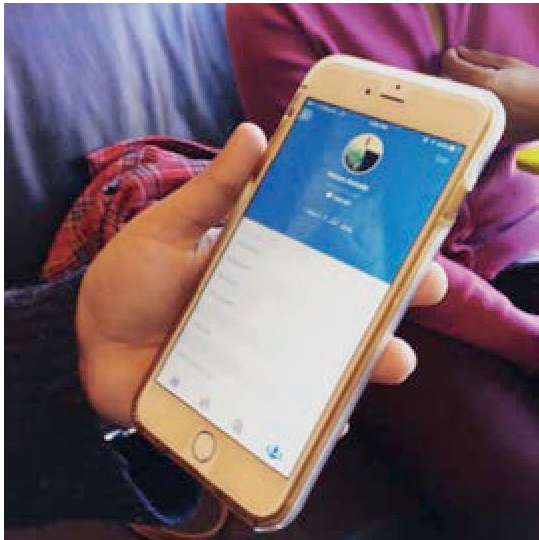 Figure 2: The UI affordances of apps like Periscope, which balance user engagement with privacy concerns (or a lack thereof).
Deep Insight: Beyond Terms of Service
The core of the paper’s argument is that Terms of Service (ToS) are a failure. Users don't read them, and even if they did, the ToS rarely protects the bystander who never agreed to the broadcast in the first place.
The authors advocate for Technical Affordances:
- Optical Sabotage: Systems like "Kaleido" that use light patterns to disrupt camera sensors while leaving the human eye unaffected.
- Privacy-Mediating Signals: Designing apps that explicitly signal to those nearby that a broadcast is live, moving toward "social translucence."
Critical Analysis & Future Outlook
This work is a vital early warning for the "Internet of Things" and the "Metaverse." As AR glasses and virtual reality become more common, the questions raised here—about who owns the "image" of a public space—will become the central battleground of digital ethics.
Limitations: Being a 2016 paper, it focuses on early platforms like Meerkat. However, the legal questions it poses regarding Section 230 and bystander rights remain unresolved and more relevant than ever in the age of TikTok and ubiquitous "IRL" (In Real Life) streaming.
Conclusion
The paper serves as a call to action for HCI researchers to stop treating live-streaming as just a "feature" and start treating it as a complex social intervention that requires robust ethical guardrails and innovative technical signals.