
Taxis, Algorithms, and the Law: Bridging the Gap in Collaborative Mobility
Legal Implications of Novel Taxi Assignment Strategies
The paper evaluates the legal feasibility of a novel collaborative taxi assignment strategy that allows dynamic customer reassignments and monetary compensations among drivers. Using the Spanish legal framework (specifically Madrid) as a benchmark, it demonstrates that this high-efficiency coordination model is legally viable and achieves significant reductions in customer waiting times and operational costs.
TL;DR
Can taxis swap customers mid-route to save fuel and time? While technically feasible, the legal barriers have often been ignored. This paper analyzes a novel "Reassignment with Compensation" strategy, proving that it not only slashes wait times by over 90% but also fits perfectly within the complex web of Spanish administrative law, provided specific transparency and fairness requirements are met.
Background Positioning
This work acts as a critical bridge between Multi-Agent Systems (MAS) research and Legal-Administrative jurisprudence. While many scholars focus purely on the mathematics of fleet optimization, Billhardt et al. place these algorithms into the "Smart City" ecosystem, testing their survival in a real-world regulatory environment.
The Motivation: Why Taxis are Inefficient
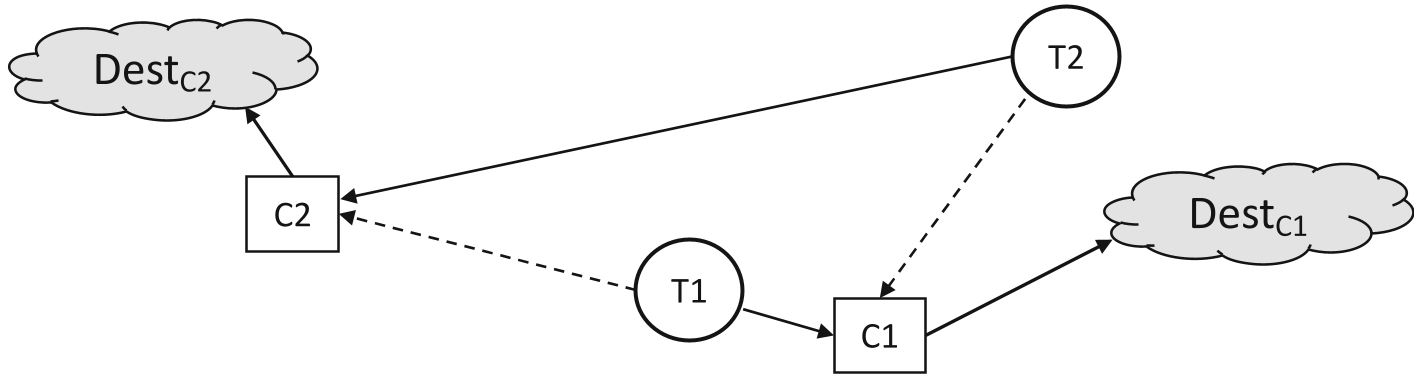
Traditional dispatching uses the First-Come First-Served (FCFS) model. Once a taxi accepts a call, the contract is locked. However, if a new customer appears closer to that taxi while it is still en route to the first one, the fleet's net efficiency drops.
The authors identify a core tension:
- Global Efficiency: Reassigning the taxi to the closer customer is better for the city (less CO2, less traffic).
- Individual Fairness: The initial driver might lose a "better" fare, and the initial customer might wait longer if not handled carefully.
Methodology: Reassignment and Compensation
The core contribution is a mediator-led algorithm that facilitates "swaps" based on economic rationality.
The Algorithm
- Initial Assignment: Use FCFS for incoming requests.
- Global Optimization: Continuously look for pairs of taxis/customers where swapping would reduce total distance.
- Compensation Calculation: The taxi that gains a more profitable (closer) trip pays a fee to the taxi that takes a less profitable one.
- Execution: The swap happens only if the net benefit is positive for all involved.
The Revenue Formula
The authors define revenue () as the customer fare minus the operational cost of the entire trip (including the "deadhead" distance to the pickup). By using a formula that accounts for distance () and fare rates (), they create a mathematically sound basis for compensations.
Experimental Results: A Massive Efficiency Boost
In environments with 1,000 taxis, the results were staggering:
- Wait Times: FCFS resulted in a 39.02-minute average wait, whereas the Reassignment method dropped this to a mere 1.98 minutes.
- Total Revenue: The total revenue for both taxis and the mediator (the service platform) was significantly higher than the FCFS baseline.
Legal Analysis: Navigating the Spanish Law
The paper's "Secret Sauce" is its deep dive into the Decree of the Community of Madrid.
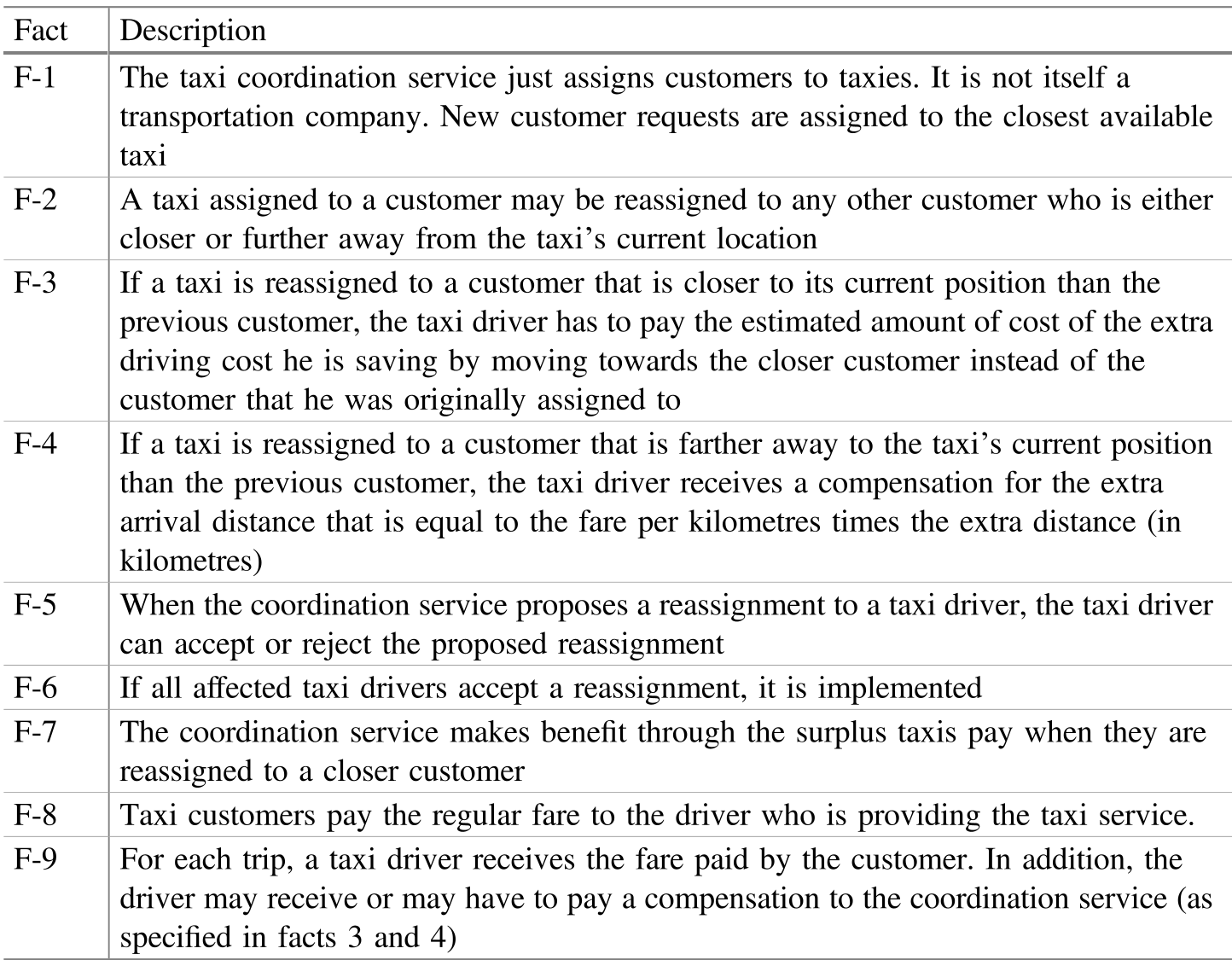
- Is the Mediator Legal? Yes. Spanish law encourages "new communication technologies" in the taxi sector.
- Pricing Constraints: The system is legal as long as the customer does not pay a cent more than the official municipal rate. The compensation happens strictly between the drivers and the platform.
- Driver Freedom: Legally, drivers can be required to accept reassignments as a condition of using the platform.
- Transparency: Following EU Regulation 2019/1150, the platform must maintain "plain and intelligible" terms regarding how these reassignments and payments are calculated.
Critical Analysis & Future Outlook
Takeaway
The study proves that the "sharing economy" and "traditional public services" can coexist. The collaboration occurs among drivers to optimize a public asset (the city streets).
Limitations
- Saturation Problems: The algorithm doesn't solve "peak hour" shortages where demand simply exceeds supply.
- User Perception: If a customer sees their assigned taxi "changing" on an app frequently, it might lower trust, even if the final wait time is shorter.
Future Work
The authors propose moving toward Ride Sharing (picking multiple passengers up on one route) and Meta-Platforms where different companies (Uber, Cabify, and traditional Taxis) could potentially exchange services to achieve global urban efficiency.
Conclusion: This paper serves as a blueprint for AI researchers: don't just optimize for the shortest path; optimize for the path that the law allows you to take.