
Decoding Algorithmic Fairness: Bridging the Gap Between Math and EU Law
Legal perspective on possible fairness measures – A legal discussion using the example of hiring decisions
The paper investigates the alignment between mathematical fairness measures used in AI (such as Independence, Separation, and Sufficiency) and EU anti-discrimination law, specifically within the context of Human Resources and hiring. It identifies a critical shift from process-oriented to result-oriented legal assessments necessitated by the "black-box" nature of AI.
TL;DR
As AI becomes the gatekeeper for hiring and promotions, the industry faces a paradox: how do we prove a machine is "fair" when we can't see how it thinks? This paper explores the friction between mathematical fairness metrics and established EU anti-discrimination laws, arguing that a shift from auditing how a machine decides (process) to what it decides (result) is inevitable, but legally perilous.
The Problem: The "Black Box" vs. The Rule of Law
Traditionally, the law cares about treatment. If you are treated differently because of a protected attribute (race, gender, etc.), it's discrimination. This is a process-oriented view.
However, Artificial Neural Networks are often unexplainable. When an AI rejects a candidate, we can't always point to a specific "rule" it followed. This creates a legal crisis: if the process is hidden, how can a judge determine if discrimination occurred? The authors argue we are being forced into a result-oriented assessment—judging fairness based solely on the statistical distribution of the outcome.
Methodology: The Taxonomy of Fairness
The authors break down the complex landscape of AI fairness into four critical camps:
- Group Fairness (Independence): Ignores "ground truth" (who is actually qualified) to achieve equal outcomes across groups. Legal Hurdle: Risks violating the individual's right to develop their personality by prioritizing quotas over merit.
- Group Fairness (Separation/Sufficiency): Relies on "ground truth" (historical data). It aims for equal error rates. Legal Hurdle: May perpetuate historical biases baked into the training data.
- Individual Fairness: Treats similar individuals similarly. Legal Hurdle: Defining "similarity" is subjective and often forces minorities to conform to majority prototypes.
- Counterfactual Fairness: Asks: "Would the outcome change if this person's gender/race were different, but all other causal factors remained same?"
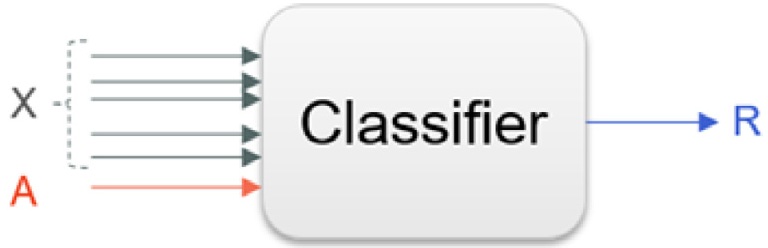 Fig 1: A schematic overview of a classifier mapping input features and sensitive attributes to a decision.
Why Counterfactual Fairness is the "Goldilocks" Solution
The most striking insight of the paper is the advocacy for Counterfactual Fairness. Unlike simple parity measures, it uses Causal Graphs to understand why a bias exists.
For example, if gender affects GPA (due to social factors), and GPA affects a hiring decision, a counterfactually fair model attempts to isolate the "pure" qualification by simulating a world where the candidate's gender was different.
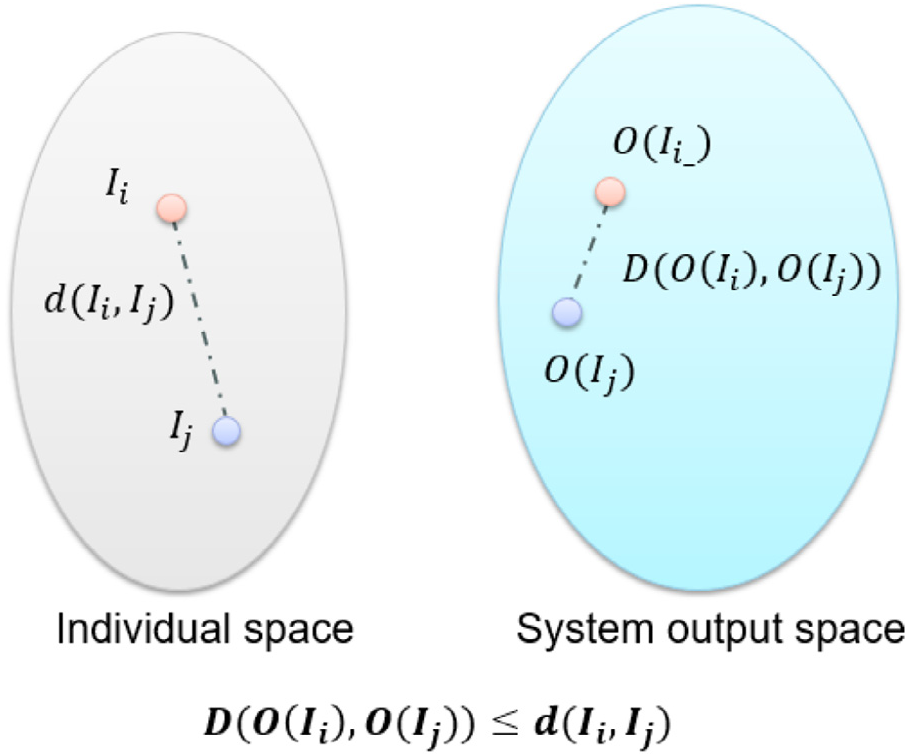 Fig 2: Individual and Counterfactual Fairness require understanding the causal relationships between attributes.
Legal Compliance and SOTA Comparison
The paper evaluates these measures against the German General Equal Treatment Act (GET):
- Independence (Quotas) is deemed "highly doubtful" for constitutionality because it sacrifices individual freedom for social engineering.
- Separation is more compliant because it respects the "ground truth" of qualification, provided the training data is audited for historical bias.
- Conditional Independence (e.g., equal hiring rates for men/women with the same GPA) is favored as it aligns with the liberal idea of "equality of opportunity."
 Table 1: The mathematical foundation (Precision, Recall, TPR) used to compute different fairness definitions.
Critical Insight: The "Ground Truth" Trap
The authors warn that many "fair" algorithms are only as fair as the data they consume. If a company's historical hiring data is biased, measures like Separation will merely learn to be "perfectly fair to a biased world."
The paper concludes that we should not just "hard-code" fairness into models. Instead, these measures should serve as indicators for human auditors and judges.
Conclusion & Future Outlook
The shift to ADM (Algorithmic Decision Making) is not just a technical upgrade; it's a legal revolution. The authors argue that instead of chasing a single "fairness formula," we must:
- Favor Whitebox models (interpretable models) over Blackboxes whenever possible.
- Develop Causal Graphs with domain experts (HR and Legal) to ensure Counterfactual Fairness.
- Acknowledge that Fairness is context-dependent—what works for a bank loan does not necessarily work for hiring a CEO.
The future of AI in society depends on our ability to translate the abstract nuance of human rights into the rigid logic of mathematics without losing the "individual" in the process.