
Social Login at Work: Navigating the Legal Minefield of Online Reputation Updates
Case study: legal requirements for the use of social login features for online reputation updates
This paper presents a legal case study on the MUSES mobile application, which utilizes social login (via LinkedIn, Facebook, etc.) to compute an "extra layer of reputation" for corporate security. It specifically maps European and Belgian data protection frameworks (Directive 95/46/EC and CBA No. 81) to the challenges of workplace authentication and reputation scoring.
TL;DR
As the "Bring Your Own Device" (BYOD) trend dominates the modern workplace, the MUSES project explores a provocative security model: using your social media profiles (LinkedIn, Facebook) to compute a "trustworthiness" score. This paper provides a rigorous legal post-mortem on how to implement such systems without violating European privacy laws, specifically under the stringent lens of Belgian data protection.
Executive Summary
The shift toward remote and collaborative work has forced Chief Security Officers (CSOs) to seek more dynamic ways to assess user trustworthiness. Enter MUSES (Multiplatform Usable Endpoint Security), an EU-funded project that leverages social login features not just for convenience, but for reputation computation. By scanning your LinkedIn endorsements or education history, the system assigns a security reputation score (1–10). However, the friction between corporate security and personal privacy creates a complex legal landscape.
Problem & Motivation: The Illusion of Informed Consent
The primary pain point identified is the transparency gap. Most users click "Authorize" on social logins without reading the fine print. In a corporate environment, this is even more dangerous. If an employer requires social login to access work data, is the consent truly "free"?
The authors argue that the "imbalance of power" in an employment relationship makes traditional consent legally shaky. If an employee feels pressured to link their personal profile to keep their job, the consent is invalid under the EU Data Protection Directive.
Methodology: The MUSES Architecture
The MUSES system acts as a "Trust Engine." It doesn't just authenticate; it evaluates.
1. The Interaction Flow
Upon installation, the user faces a policy agreement. The system then offers two paths: a traditional login or a social login. This "alternative path" is the secret sauce for legal compliance—it ensures that choosing the social login is a voluntary act, not a requirement.
2. Reputation Computation
The system maps social data into security metrics. For example, a Master's degree in Computer Science found on LinkedIn might boost a user's "security technology awareness" score.
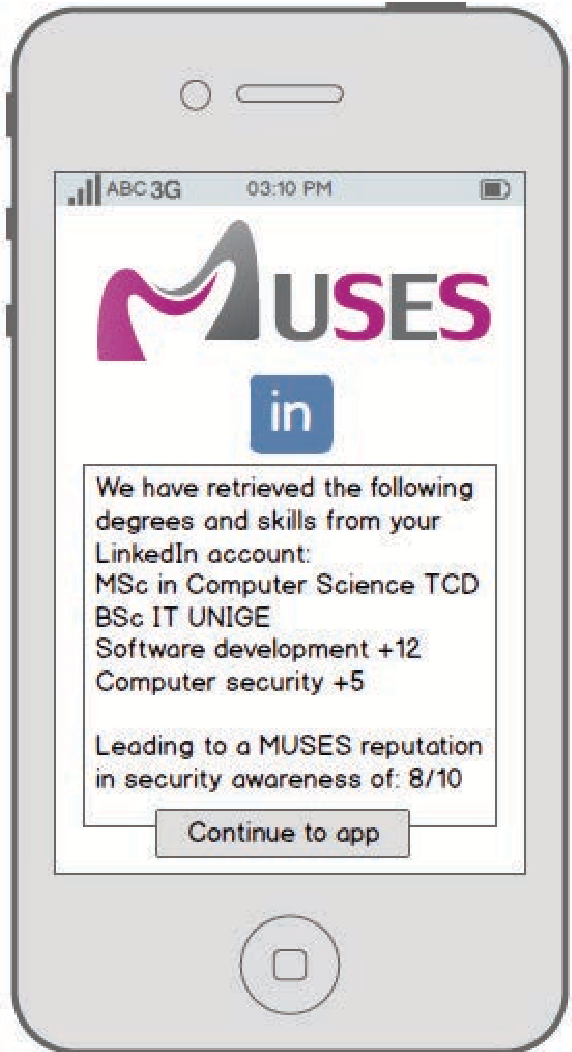 Figure 1: The UI displaying how LinkedIn data translates into a 1–10 reputation score.
Legal Deep Dive: Belgian & EU Requirements
The paper breaks down requirements into three pillars:
- Purpose Limitation: You cannot use data retrieved for reputation to suddenly start marketing to the employee.
- Data Minimization: Why scan Facebook (private life) when LinkedIn (professional life) is more relevant? The authors argue for a "professional-only" bias in data collection.
- Third-Party Rights: This is a critical legal hurdle. If your friend "endorses" you on LinkedIn, the system is technically processing the friend's data too. Without the friend's consent, the company cannot legally store the friend's identity.
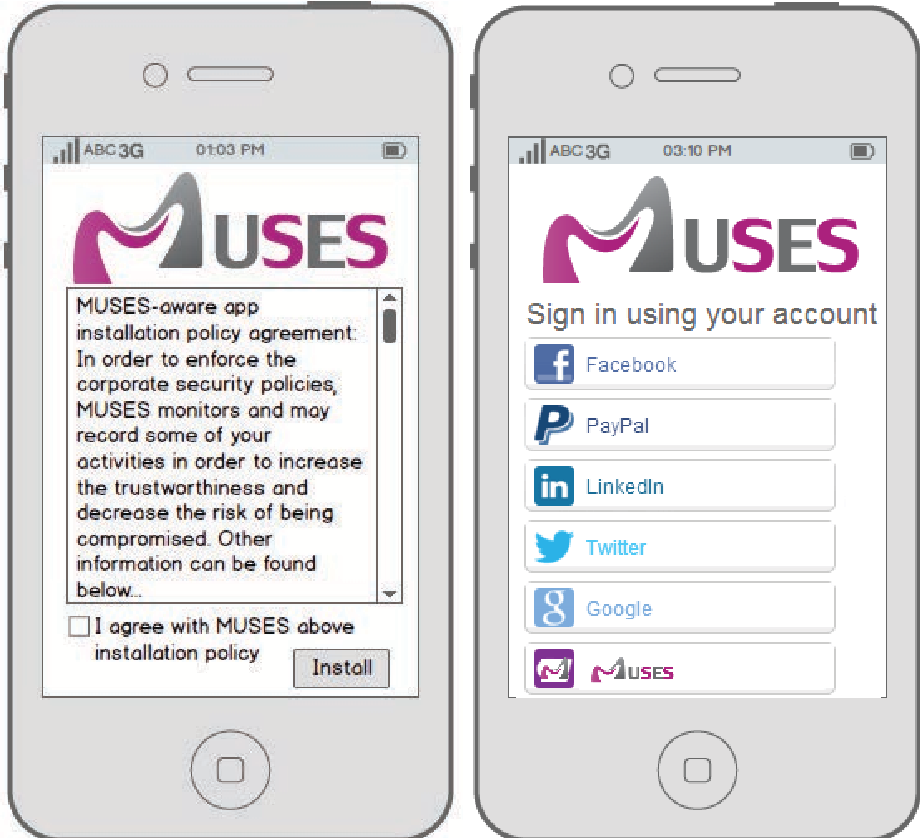 Figure 2: The mobile interface illustrating the user's choice between standard and social authentication.
Experimental Insights & Results
While the paper focuses on legal theory, it concludes with a practical framework for Data Retention:
- Retrieved Raw Data: Should be deleted as soon as the reputation score is updated.
- Computed Reputation Score: Can be stored until the next login, as it remains "relevant" for the system's functioning.
- Anonymization: Any long-term storage for "prevention or detection of criminal offenses" (security logs) must follow specific Belgian Royal Decrees and should ideally be anonymized.
Critical Analysis & Conclusion
The core takeaway is that convenience ≠ compliance. Integrating social login into enterprise software requires:
- Strict compartmentalization of professional vs. private social networks.
- Explicit alternative authentication paths to preserve the "free" nature of consent.
- Encrypted storage of any reputation results within EU borders to avoid "Export of Personal Data" complications.
Limitations
The study was conducted before the full implementation of the GDPR (referred to in the text as the "Proposed Regulation"). While the logic holds, modern "Automated Individual Decision-making" (Article 22 of GDPR) now imposes even stricter requirements for a human-in-the-loop if a reputation score leads to a denial of access.
Future Outlook
As AI-driven profiling becomes more common, the MUSES approach of "Privacy by Design" through alternative login paths will likely become the industry standard for any system measuring human "trustworthiness."