
eJRM-IRS: Bridging the Gap Between Disputant Narratives and Judicial Precedents
Legal retrieval as support to eMediation: matching disputant’s case and court decisions
This paper introduces eJRM-IRS, a legal information retrieval system designed to support eMediation by matching informal disputant case descriptions with formal court decisions. The system employs a pipeline of PCA-based dimensionality reduction, SVM classification for legal field prediction, and a novel Coherence Similarity metric to bridge the linguistic gap between litigants and the judiciary.
TL;DR
The shift from traditional litigation to Online Dispute Resolution (ODR) requires tools that empower non-experts. This paper presents eJRM-IRS, a system that uses Machine Learning and a custom "Coherence Similarity" metric to help citizens find relevant past court rulings based on their informal case descriptions. It effectively handles the contrast between concise layperson language and verbose legal prose.
Background: The Need for Informed Negotiation
Electronic Mediation (eMediation) promises significant time and cost savings compared to the 35-month average of Italian civil proceedings. However, for eMediation to work, both litigants and mediators need to be informed. They must understand potential outcomes based on similar past cases. The challenge? Litigants don't speak "Legalese," and search engines usually fail when the query style doesn't match the document style.
The Representation Gap
The authors identify a core problem: The Asymmetry of Language.
- Disputant Queries: Concise, informal, boolean-like (terms either exist or don't).
- Court Decisions: Verbose, formal, containing "trivial" recurring legal patterns and "discriminant" technical terms.
Standard Cosine Similarity often fails here because high-frequency "discriminant" terms in a court document can paradoxically enlarge the vector angle with a simple query, leading to poor rankings.
Methodology: The eJRM-IRS Architecture
The system operates through a sophisticated pipeline designed to sanitize and categorize unstructured data.
1. Special Term Detection (STD)
To fix "noise" in queries, the authors developed the STD algorithm. It categorizes terms into four types based on their "Percentage of Term Frequency per Class" (ptfc). This allows the system to ignore "Common Terms" (CTs) that appear everywhere and focus on "Special Terms" (STs) that act as fingerprints for specific legal fields (e.g., "traffic-light" for Street Law).
2. Core Mining & Dimensionality Reduction
Using Principal Component Analysis (PCA), the team reduced a massive 21,367-term feature space down to just 25–100 principal components. This not only speeded up training by orders of magnitude (from minutes to milliseconds) but actually increased classification accuracy by filtering out redundant noise.
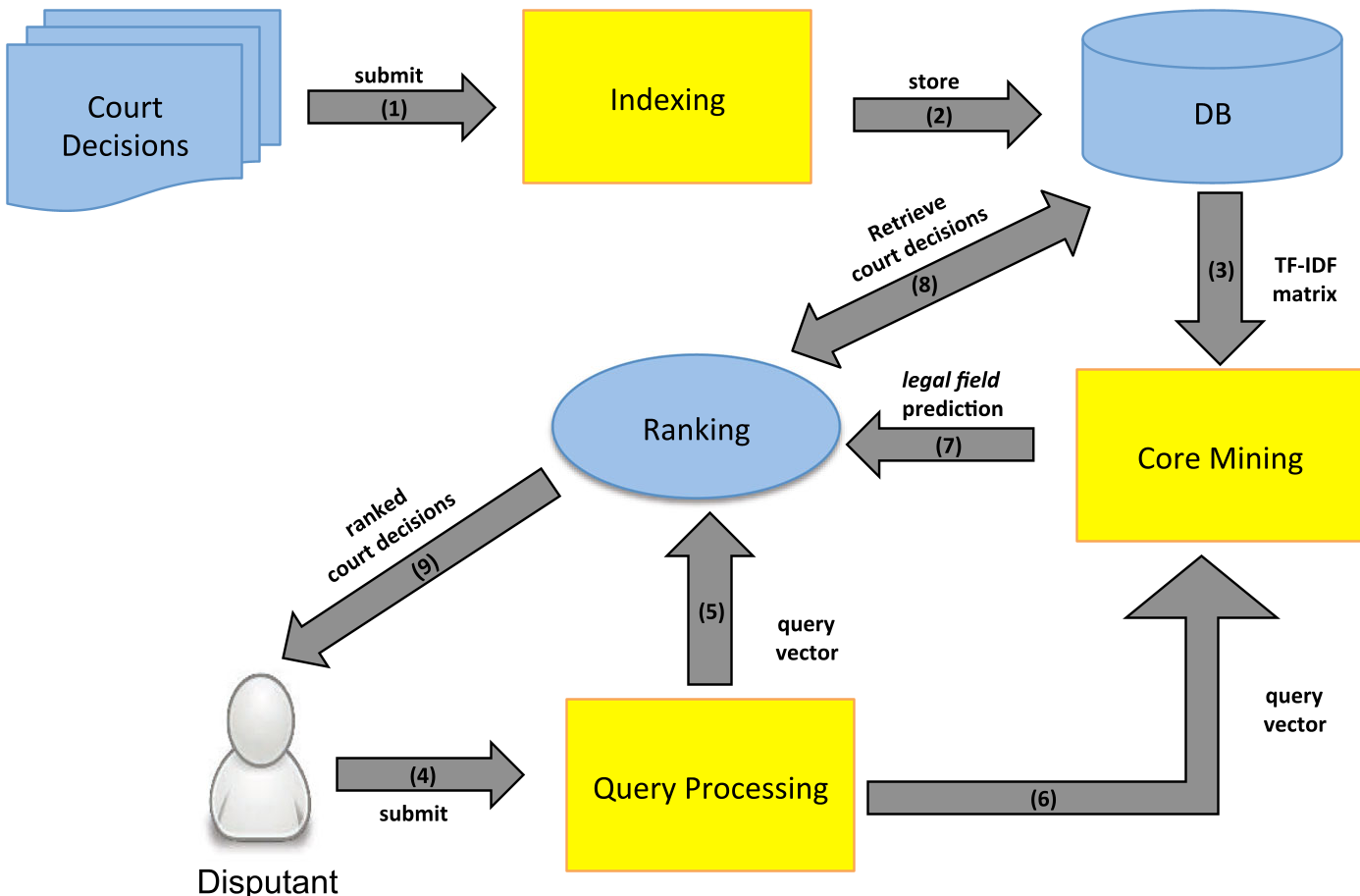 Figure 1: The functional architecture of the eJRM-IRS system.
3. Coherence Similarity (CH)
This is the paper's mathematical centerpiece. Unlike Cosine Similarity, which can be biased by high term frequencies in verbose documents, Coherence Similarity (Equation 5) uses a weighting mechanism that rewards instances where the query term and the document term are both present, regardless of the document's verbosity.
Experimental Results
The researchers tested the system on a dataset of Italian court decisions spanning fields like Bank, Family, and Job-Security law.
- Classification Power: The PCA-Linear SVM combo reached 91.30% accuracy in identifying the correct legal field for a case description.
- Retrieval Efficiency: As shown in the table below, the PCA application drastically reduced training time.
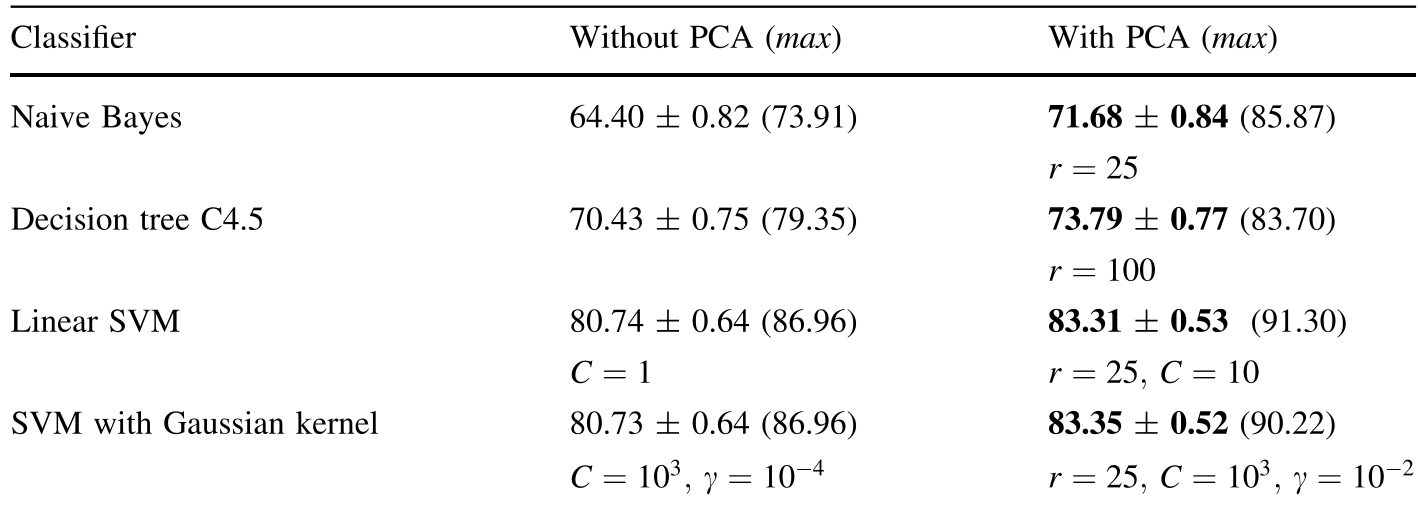 Table: Accuracy of classifiers with and without PCA.
When testing real-world queries, the CH-LSVM* (Coherence Similarity + Linear SVM + STD) was the clear winner. While standard Cosine Similarity struggled with "noisy" informal queries, the STD-augmented approach maintained high precision even when the user’s language was messy.
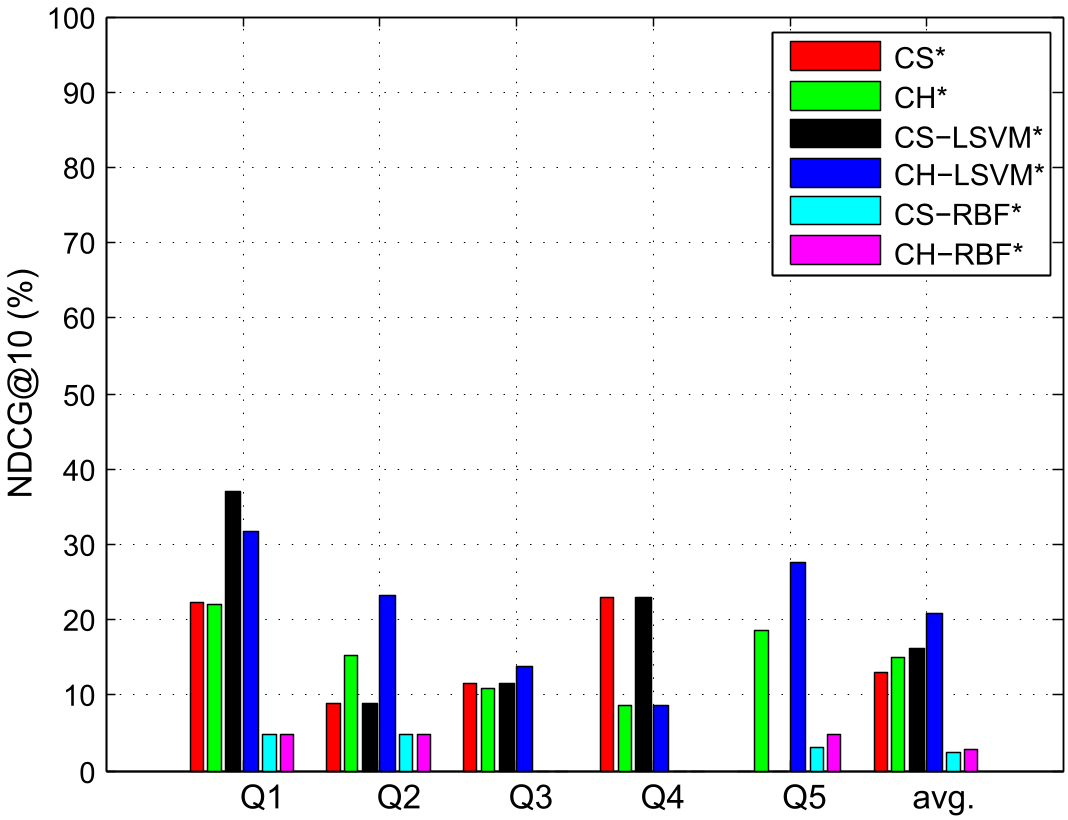 Figure 2: NDCG@10 results showing the superiority of the STD-based coherence approach.
Critical Insight: Why it Works
The brilliance of this work lies in the STD algorithm. By recognizing that the "common vocabulary" of law acts as noise, and that simple boolean presence in a query is more important than frequency in a document, the authors solved the "length bias" that plagues many traditional TF-IDF systems.
Conclusion & Future Outlook
The eJRM-IRS provides a blueprint for building accessible legal tools. While this 2015 study focuses on classical ML (SVMs and PCA), the principles of Special Term Detection and Coherence Matching remain highly relevant. The authors suggest that the next step is moving toward Unsupervised Factor Extraction, potentially allowing the system to understand legal concepts without human labeling—a precursor to the semantic embeddings we see in today's LLMs.