
Beyond Sequence Alignment: Mapping the TPR-like Superfamily in Leishmania via Multi-Relational Data Mining
The tetratricopeptide repeats (TPR)-like superfamily of proteins in Leishmania spp., as revealed by multi-relational data mining
The paper introduces an integrated Multi-Relational Data Mining (MRDM) approach combined with Hidden Markov Models (HMM) and the Viterbi Algorithm to identify protein motifs in the TPR-like superfamily (TPR, PPR, HAT) within Leishmania genomes. The method achieves superior sensitivity compared to standard tools like Pfam and SMART, uncovering significantly more motif-containing proteins.
Executive Summary
TL;DR: Researchers have developed a sophisticated bioinformatics pipeline combining Multi-Relational Data Mining (MRDM), Hidden Markov Models (HMM), and the Viterbi Algorithm to map the TPR-like protein superfamily in Leishmania. By moving beyond simple sequence matching to a relational approach, the study identifies a significantly larger repertoire of proteins (104 TPRPs and 36 PPRPs) than previously recorded, providing a new roadmap for understanding parasite biology.
Positioning: This work is a specialized methodology improvement that bridges the gap between traditional profile-based homology searches and modern relational database mining.
Problem & Motivation: The "Remote Homolog" Trap
The identification of TPR (Tetratricopeptide Repeat), PPR (Pentatricopeptide Repeat), and HAT motifs is notoriously difficult. These motifs are structural "scaffolds"—highly conserved in 3D shape (antiparallel alpha-helices) but extremely divergent at the primary sequence level.
Standard tools like Pfam and SMART often miss these "remote homologs" because:
- They rely on standard HMM profiles that penalize divergent repeat units.
- They treat sequences as isolated strings, ignoring the relational context (tandem repeat tendencies, protein localization, and functional interactions).
The authors' insight was to treat motif discovery as a multi-relational problem, where evidence from multiple tables (sequence, structure, and genomic properties) is synthesized.
Methodology: The MRDM/HMM/VA Ensemble
The core of the methodology lies in its ability to handle sequence complexity through a hierarchical approach:
- Stochastic Context-Free Grammars (SCFG): Unlike HMMs, SCFGs can model nested and branched relationships. The authors used SCFGs to interpret amino acid properties (hydrophobicity, propensity for turns) to create human-readable descriptors of motifs.
- Probabilistic Relational Models (PRMs): The authors treated the genome as a relational database. By looking at "motifs_relation" and "interactions_relation" tables, they could refine sequence-based predictions using secondary attributes like Gene Ontology (GO) terms.
- Viterbi Path Decoding: The HMMs were utilized to label motif types, and the Viterbi algorithm found the most likely "path" through a sequence, ensuring that the tendency of motifs to occur in tandem was mathematically prioritized.
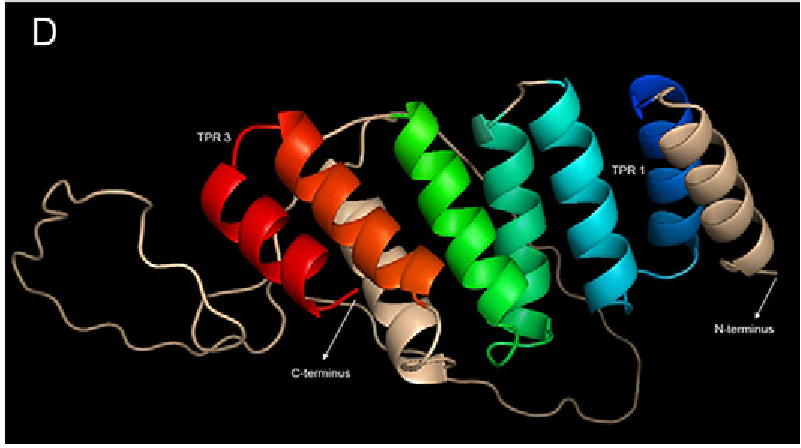 Figure 1: 3D models of identified Leishmania TPRPs showing the characteristic superhelical structure.
Experiments & Results: Shifting the Baseline
The results demonstrate a clear "sensitivity gap" in existing databases. In Leishmania major, where GeneDB previously identified only 62 TPR proteins, the MRDM approach discovered 104.
| Motif Region | GeneDB (Previous) | Pfam | MRDM (Author Proposed) |
|---|---|---|---|
| TPR (L. major) | 62 | 55 | 104 |
| PPR (L. major) | 12 | 12 | 36 |
| HAT (L. major) | 3 | 1 | 3 |
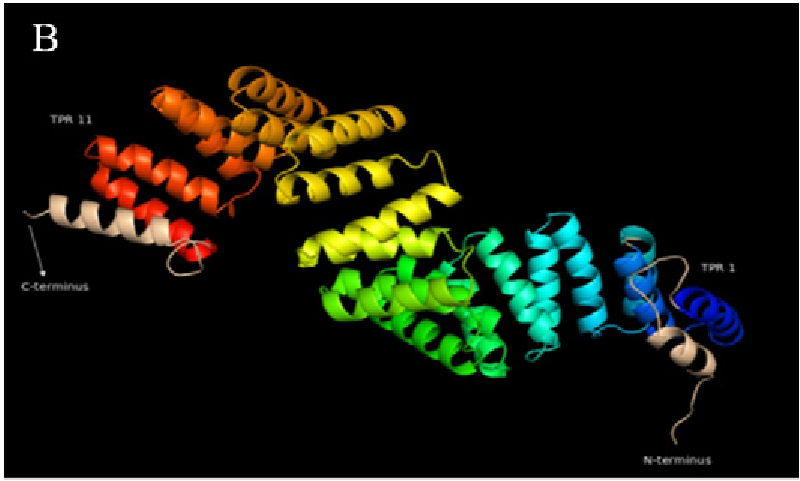 Figure 2: Statistical distribution showing that 66% of identified proteins contain 2–5 repeats, a pattern identified much more clearly by the integrated approach.
Key Findings:
- PPR Expansion: The discovery of 36 PPR-encoding genes (many previously "hypothetical") suggests a more complex RNA-binding regulatory network in Leishmania mitochondria than once thought.
- Atypical Repeats: The method successfully identified "non-canonical" repeats that lacked the highly conserved alanine/glycine residues, which standard HMMs typically ignore.
Critical Analysis & Conclusion
Takeaway
The study proves that protein annotation is no longer a localized search; it is a data-mining task. By integrating HMMs with MRDM, we can reconstruct the functional landscape of "dark matter" in the genome—those hypothetical proteins that traditional tools cannot classify.
Limitations
- Computational Complexity: SCFG induction is "cubic in time," requiring significant high-performance computing (Xeon Quad-Core systems) for even small populations of sequences.
- Missing Data: The MRDM system's accuracy dropped from 68% to 40% when handled by basic algorithms for missing values, highlighting the need for better relational "imputation" techniques.
Future Work
This framework provides a template for analyzing other repeat families (e.g., WD40, Armadillo, Ankyrin). The next logical step is moving from in silico prediction to functional genomics, testing if these newly identified TPRPs truly serve as the scaffolding for Leishmania's essential protein-protein interaction networks.