
LACCE: Defending the Dermal Scaffold Against Blue-Light-Induced Photoaging
Effects and Mechanism of the Leontopodium alpinum Callus Culture Extract on Blue Light Damage in Human Foreskin Fibroblasts
This study investigates the protective effects of Leontopodium alpinum Callus Culture Extract (LACCE) against blue-light-induced damage in human foreskin fibroblasts (HFF). By establishing a photodamage model, the researchers demonstrated that LACCE acts as a potent anti-aging agent by regulating collagen and matrix metalloproteinase levels.
TL;DR
Recent research published in Molecules identifies Leontopodium alpinum Callus Culture Extract (LACCE) as a powerful shield against blue light damage. By targeting the Opsin 3 (OPN3) receptor and inhibiting the calcium-dependent signaling pathway, LACCE prevents the degradation of Type I Collagen and suppresses the "collagen-eating" enzyme MMP-1.
Context: The Digital Aging Frontier
While UVA and UVB are well-known villains in the story of skin aging, High-Energy Visible (HEV) light, or Blue Light, has emerged as a significant modern threat. Emitted by both the sun and digital screens, blue light penetrates deeper into the dermis than UV, causing oxidative stress and long-term structural damage. This study positions LACCE—a sustainably produced extract of the rare Edelweiss plant—as a specialized solution for "screen-induced" aging.
The Mechanism: Beyond Conventional Antioxidants
Most anti-blue light ingredients focus solely on quenching Reactive Oxygen Species (ROS). However, this study dives deeper into the OPN3-Calcium-dependent pathway.
- The Sensor: Opsin 3 (OPN3) acts as a light-sensitive receptor on fibroblasts.
- The Reaction: Blue light triggers OPN3, leading to an influx of Calcium ions () and ROS production.
- The Damage: This cascade activates the MAPK pathway, which upregulates MMP-1 (breaking down collagen) and downregulates COL-I (reducing skin density).
The authors discovered that LACCE doesn't just neutralize surface ROS; it actually downregulates the expression of OPN3 and blocks the subsequent calcium influx, cutting off the damage at the source.
 Figure 1: While not a traditional "architecture," the chemical profiles identified via HPLC/UPLC-MS/MS reveal Leontopodic Acid A and B as the primary structural bioactives.
Experimental Insights
By subjecting Human Foreskin Fibroblasts (HFF) to an 18 J/cm² dose of blue light, the researchers created a robust damage model.
1. Restoration of the Extracellular Matrix (ECM)
Experimental results showed a stark contrast between the blue-light-damaged cells and those treated with 15 mg/mL of LACCE. The extract significantly boosted COL-I (Collagen Type I) levels while bringing the elevated MMP-1 levels back down to baseline.
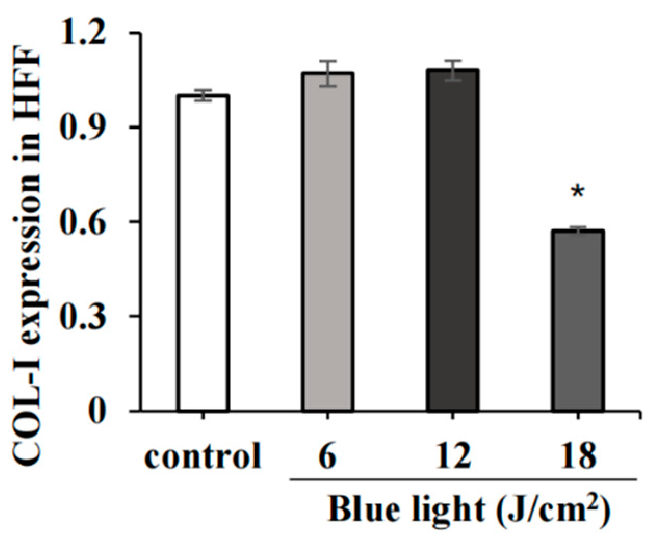 Figure 2: ELISA and Western Blotting data demonstrate the dose-dependent recovery of collagen levels (COL-I) and the inhibition of collagenase (MMP-1).
2. Blocking the Calcium Influx
Flow cytometry analysis proved that LACCE effectively reduced the "signal" for aging. Cells treated with the extract showed significantly lower fluorescence for Calcium ions compared to the blue-light-only group, confirming the interruption of the OPN3 pathway.
The Power of Callus Culture
Because Leontopodium alpinum is a rare and protected alpine species, the use of Callus Culture Technology is a critical highlight of this paper. This method allows for the sustainable production of high-purity extracts rich in Leontopodic Acid A and B without harming wild populations.
Critical Analysis & Conclusion
This study provides clear evidence that LACCE is more than just a generic antioxidant; it is a biopharmaceutical-grade bioactive that targets specific light-sensitive receptors in the skin.
Pros:
- Establishes a clear molecular link between OPN3, Calcium, and Collagen degradation.
- Quantifies nine distinct active components, providing high chemical transparency.
Limitations & Future Work:
- The study was conducted on isolated HFF cells. Future research in 3D skin equivalents or human clinical trials is necessary to account for the skin's complex barrier properties.
- The interaction between OPN3 and the TGF- signaling pathway remains a promising area for further exploration.
Key Takeaway: LACCE represents a new generation of "photo-intelligent" skincare ingredients that protect the skin's structural integrity from the pervasive digital environments we inhabit.