
ASU Crisis Response: Bridging the Gap Between Digital Signals and Physical Rescue
Lessons Learned in Using Social Media for Disaster Relief - ASU Crisis Response Game
This paper presents the ASU Crisis Response Game, a live-action simulation designed to evaluate the efficacy of social media (Twitter and SMS) in disaster relief operations. Utilizing specialized tools like TweetTracker and QuickNets, the study establishes a framework for training first responders and testing information-to-action pipelines in a controlled environment.
TL;DR
Social media is the heartbeat of modern disaster reporting, yet first responders struggle to process the chaos. The ASU Crisis Response Game demonstrates that while software like TweetTracker can collect data, the bridge to "actionable missions" remains a significant bottleneck. This study highlights the urgent need for automated text prioritization and solves the mystery of why geotagging remains a major hurdle for rescue teams.
Context: Social Media as a Double-Edged Sword
In disasters like the Japan Tsunami or Haiti Earthquake, social media shifted from a luxury to a lifeline. However, the sheer volume of data creates a paradox of information: we have too much data to find the people who truly need help. The ASU team recognized that we cannot wait for a real disaster to test our relief systems; we need a "sandbox" where first responders and victims can clash, communicate, and collaborate safely.
The Problem & Motivation
The researchers identified three primary gaps in existing Disaster Relief (HA/DR) systems:
- Noise Overload: Most tweets are conversational or spam, not requests for help.
- Missing Metadata: Victims rarely provide coordinates (geotags), making physical location difficult.
- Process Fragmentation: There is no smooth transition from a "tweet" to a "physical mission" assigned to a medical or fire team.
Methodology: The Anatomy of a Crisis Game
The game utilizes a sophisticated architecture to simulate the lifecycle of an emergency request.
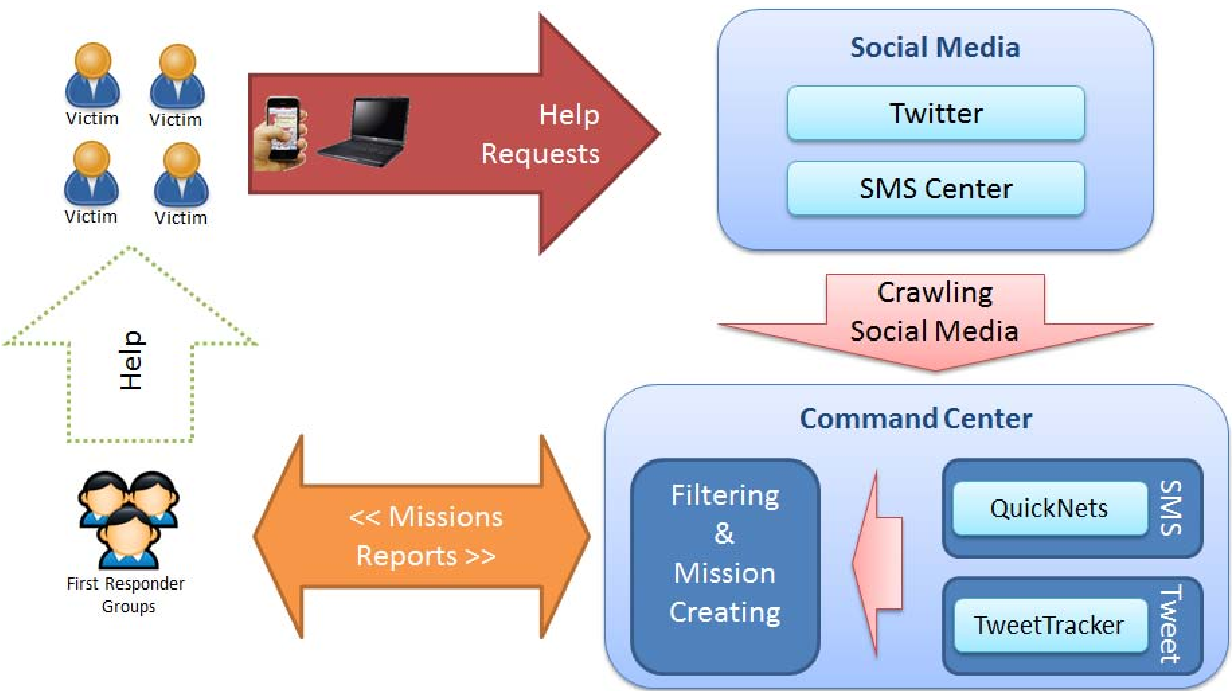
The workflow consists of three distinct roles:
- Victim Teams: Dispersed across campus, they send SOS messages via Twitter (using
#ASUGAME) and SMS. - The Filtering Team: The "Intelligence Hub." They monitor raw feeds, determine if a message is a "mission," categorize the need (Medical, Fire, Security), and pinpoint the location.
- First Responders: Real teams with specific "capability cards" who navigate the physical campus to resolve the victims' problems.
Experiments & Lessons Learned
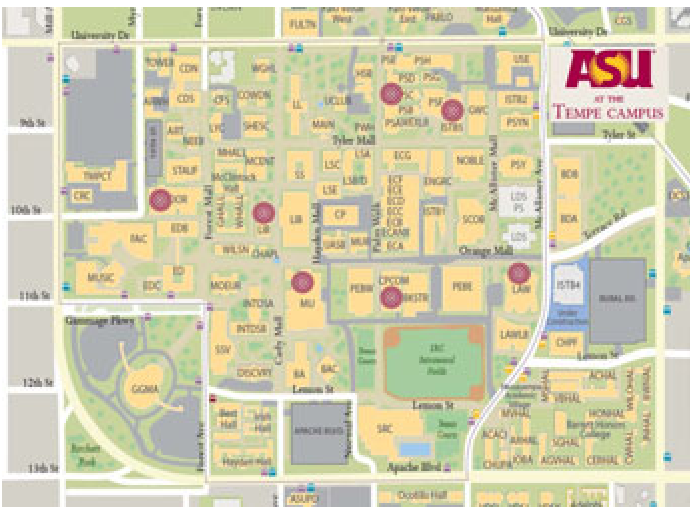
The simulation was conducted at ASU with 75 volunteers. Despite being a "game," the data revealed harsh realities for digital humanitarianism.
1. The Filtering Bottleneck
Though only 230 tweets were generated, the Filtering Team was immediately overloaded. In a real-scale disaster with millions of tweets, manual filtering is impossible.
- Insight: We need "Intelligent Analytic Systems" that can rank tweets by urgency and actionability automatically.
2. The Geolocation Crisis
The study confirmed a frustrating trend: even when told to turn on location services, the vast majority of participants did not.
- Data Point: Less than 5% of users naturally provide location info. This forces filtering teams to spend precious time cross-referencing text descriptions with maps.
3. Language & Safety
The team found that translation is a massive error-prone hurdle in multi-lingual disasters. Additionally, the researchers had to enforce a "NOT REAL THIS IS A GAME!" prefix to prevent local police from reacting to simulated emergencies—a lesson in the "spillover" effect of digital simulations.
Critical Analysis & Conclusion
Takeaway
The ASU Crisis Response Game proves that social media is viable for rescue coordination but only if we solve the Information Extraction problem. The human-in-the-loop approach is currently the weakest link due to cognitive load.
Limitations
- Scale: 75 students do not mimic the millions of voices in a city-wide disaster.
- Simplicity: The game used "capability cards" which simplified the complex logistics of real medical or fire rescue.
Future Outlook
The next generation of HA/DR research must focus on LLM-based classification to instantly filter "conversational noise" from "specific requests" and privacy-preserving geotagging to help responders find victims without compromising their long-term security. The future of life-saving is not just in the hardware of rescue, but in the software of signal analysis.