
T-SCANeR: Orchestrating Social Evolution to Solve Real-World Optimization
16831_Leveraged Neighborhood Restructuring in Cultural Algorithms for Solving Real-World Numerical Optimization Problems.
This paper introduces T-SCANeR (Tribal Socio-Cultural Algorithm with Neighborhood Restructuring), a novel Cultural Algorithm variant that uses dynamic social fabric reconfiguration to solve high-dimensional real-world optimization problems. By partitioning the population into "tribes" and adaptively restructuring their communication topologies based on search stagnation and Knowledge Source (KS) interactions, the method achieves superior performance on complex landscapes.
TL;DR
In the world of numerical optimization, "stagnation" is the enemy. T-SCANeR introduces a Tribal Cultural Algorithm that fights local optima by dynamically "rewiring" the social connections between individuals. By organizing the population into tribes and adaptively switching between Ring, Von Neumann, and Global topologies, it achieves state-of-the-art results on high-dimensional (up to 240D) real-world engineering problems.
Context & Motivation: The Rigidity of Social Structures
Most Evolutionary Algorithms (EAs) treat the population's communication structure as a static graph. Whether it's a "Global Best" (everyone talks to everyone) or a "Local Best" (neighbors talk), the structure is usually fixed.
The authors point out a critical flaw: different phases of search require different social densities. In early exploration, high connectivity leads to premature convergence. In late-stage exploitation, low connectivity leads to inefficient refinement. T-SCANeR solves this by treating the "social fabric" as a dynamic variable that responds to the optimization landscape.
Methodology: The "Tribal" Architecture
T-SCANeR splits the population into small-world clusters called Tribes. The core innovation lies in how these tribes exchange information across three stages:
- Seclusion Stage: Tribes evolve independently to maintain diversity.
- Rapport Stage: Tribes begin using a two-class structure where "Elite pairs" (an Explorer and an Exploiter) guide others.
- Cohesive Stage: Information is bartered across the entire population.
Tactical Restructuring
The "magic" happens through Tactical Restructuring. If a tribe stops improving (stagnation), the algorithm checks the "patches" (bounding boxes) of its Knowledge Sources (Situational, Normative, Topographic).
- Large overlap + Stagnation: The system "downgrades" the topology (e.g., from Global to Ring) to force agents apart and encourage exploration.
- No improvement + Diversity: The system "upgrades" (e.g., to Global) to sharpen the focus on the current best region.
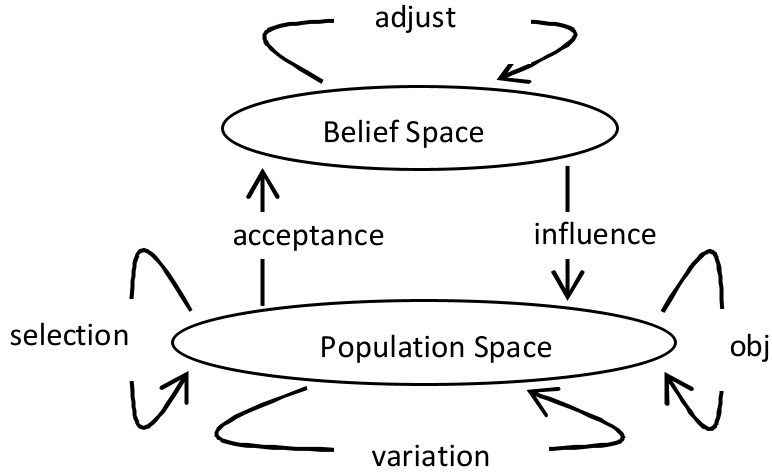 Fig 1: The Cultural Algorithm framework connecting the Belief Space (Knowledge) and Population Space.
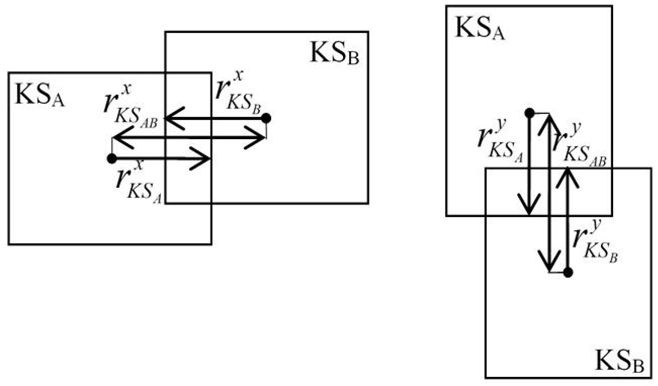 Fig 2: The spectrum of topologies used—from the low-connectivity Ring (a) to the high-connectivity Global (d).
Experimental Battleground: CEC2011 and ESA Problems
The algorithm was pitted against heavyweights like Differential Evolution (DE) and the 2011 competition winner, GA-MPC.
Key Result: The High-Dimensional Challenge
On Problem T11.2 (240 dimensions), T-SCANeR achieved an average fitness of 1.027E+06, significantly outperforming the GA-MPC's 1.083E+06. This suggests that as dimensionality increases, the value of adaptive communication structures grows exponentially.
Real-World Impact: Satellite Trajectories
The authors tested T-SCANeR on NASA/ESA space mission problems:
- Cassini Problem (T13): Found a best value of 8.383 km/s, matching the industry-standard MIDACO algorithm and beating the CEC2011 official winner.
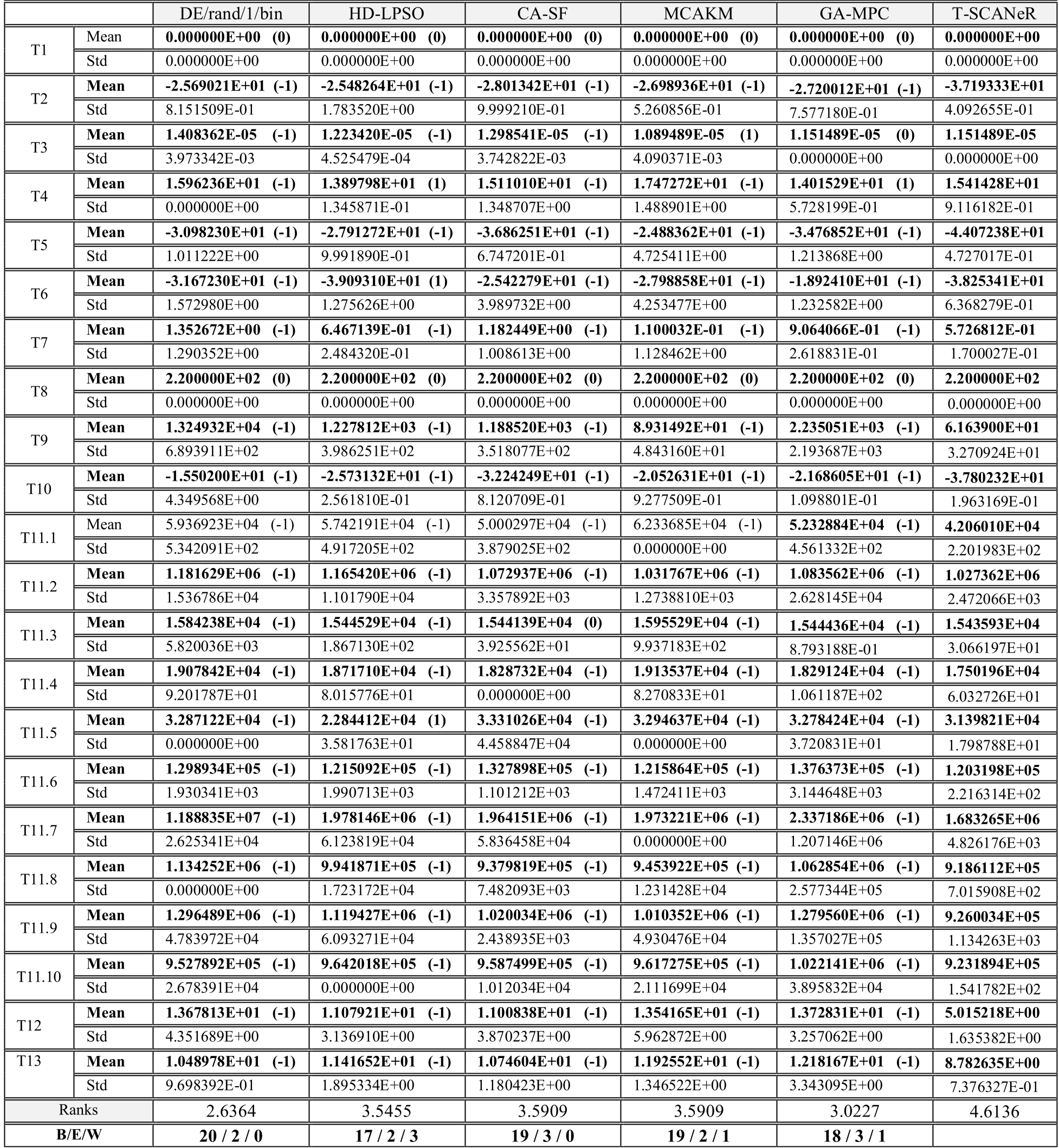 Table: Comparison of T-SCANeR against state-of-the-art baselines across 22 benchmark problems.
Critical Insight: Why Does It Work?
The success of T-SCANeR stems from Update Rule Heterogeneity. By utilizing different Knowledge Sources (KSs) and dynamically adjusting who talks to whom, the algorithm creates a "Knowledge Swarm" that effectively maps the topology of the solution space. It doesn't just search for the global optimum; it learns the structure of the problem and adjusts its social behavior accordingly.
Conclusion
T-SCANeR demonstrates that a "segmented society" (Tribes) with flexible kinship relations (Dynamic Topologies) is more resilient and capable of solving complex engineering tasks than rigid populations. For researchers in AI and Evolutionary Computation, it serves as a masterclass in how to integrate domain knowledge with swarm intelligence.
Future Outlook: The next frontier for this work lies in "Automated Fabric Selection"—using Machine Learning to predict the optimal social structure before the search even begins.