
SPORANGIUM: Breaking the Digital Bubble via Sporadic Social Networks
Leveraging Short-Lived Social Networks in Museums to Engage People in History Learning
The paper introduces SPORANGIUM, a platform designed to create Sporadic Social Networks (SSN) among physically proximate individuals. It specifically showcases the REENACT system, which uses these short-lived networks to facilitate immersive, collective history learning in museums through Augmented Reality (AR) and collaborative role-playing.
TL;DR
The digital age has ironically led to a form of "de-socialization," where museum visitors are more connected to their remote Twitter feeds than the people standing next to them. This paper introduces the SPORANGIUM platform and its application, REENACT, which leverage short-lived, ad-hoc social networks to turn a solitary museum visit into a high-stakes, collective reenactment of historical events using Augmented Reality (AR).
The Problem: The "Virtual Bubble" in Physical Spaces
Social networking today is based on semi-permanent relationships (followers/friends). While powerful, these networks often isolate us from our immediate environment. In a museum, even if two strangers share a deep interest in the Battle of Thermopylae, current technology does nothing to connect them. Existing mobile guides are "individual-centric," focusing on personal itineraries rather than collective engagement.
Methodology: The SPORANGIUM Architecture
To bridge this gap, the authors developed a layered architectural approach that prioritizes local, ad-hoc interaction over "the WhatsApp way" (sending data to a distant server just to reach someone two meters away).
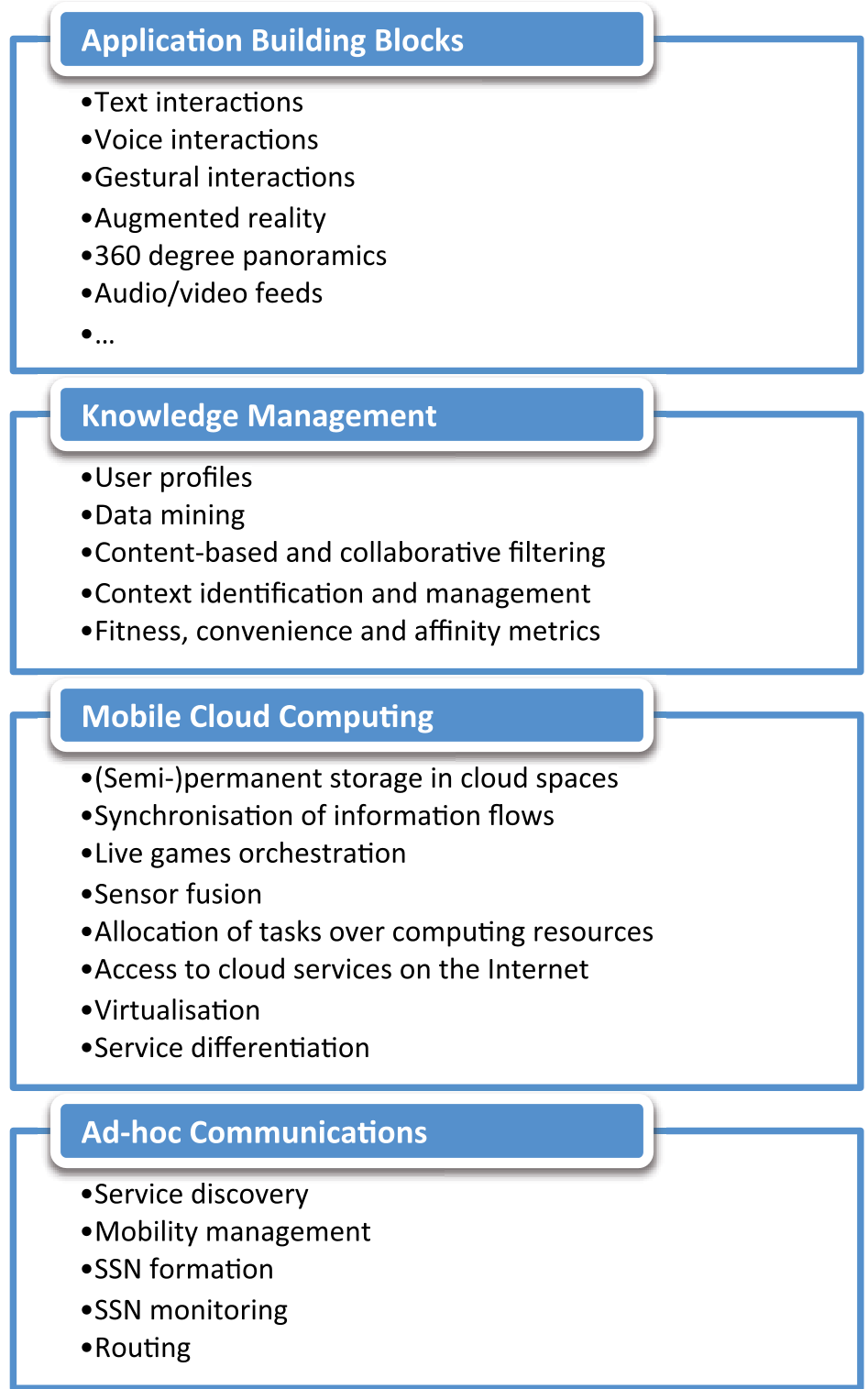
Core Components:
- Mobile Cloud Computing (MCC) Layer: This acts as the "glue." It stores information dynamically, synchronizes information flows (photos, comments), and allows multiple devices to collaborate as a single "Mobile Cloud."
- Knowledge Management Layer: Uses semantic reasoning to select relevant info for the group based on user profiles.
- Application Building Blocks: Includes the UI elements like AR overlays and 360-degree views.
The REENACT System: History as a Team Sport
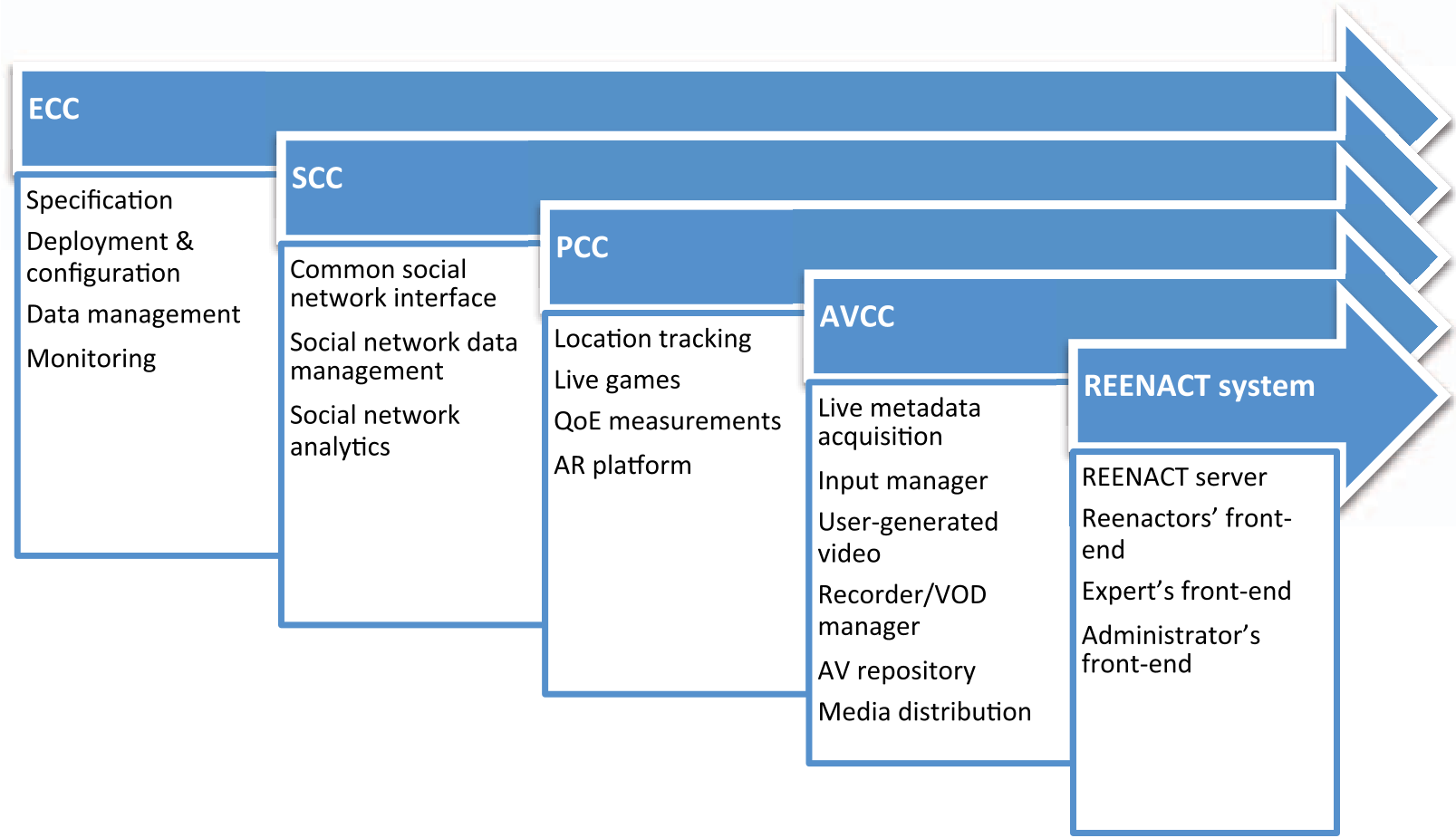
The paper highlights REENACT, a system that transforms the museum experience into a three-stage historical thriller:
- Stage 1: Reenactment: Users take on roles (e.g., King Leonidas or a Persian soldier), seeing different information on their tablets and making decisions that impact the "battle's" outcome via a synchronized script.
- Stage 2: Replay: An expert (often remote) analyzes a timeline of the users' actions, comparing their choices to real historical facts.
- Stage 3: Debate: A collective brainstorming session where the audience votes on "what if" scenarios, displayed on a shared screen.
Experiments and Results
Testing at the Foundation of the Hellenic World (FHW) featured a remote expert leading a "Battle of Thermopylae" session. The results showed that participants naturally transitioned from being "strangers in a room" to a "sporadic social network."
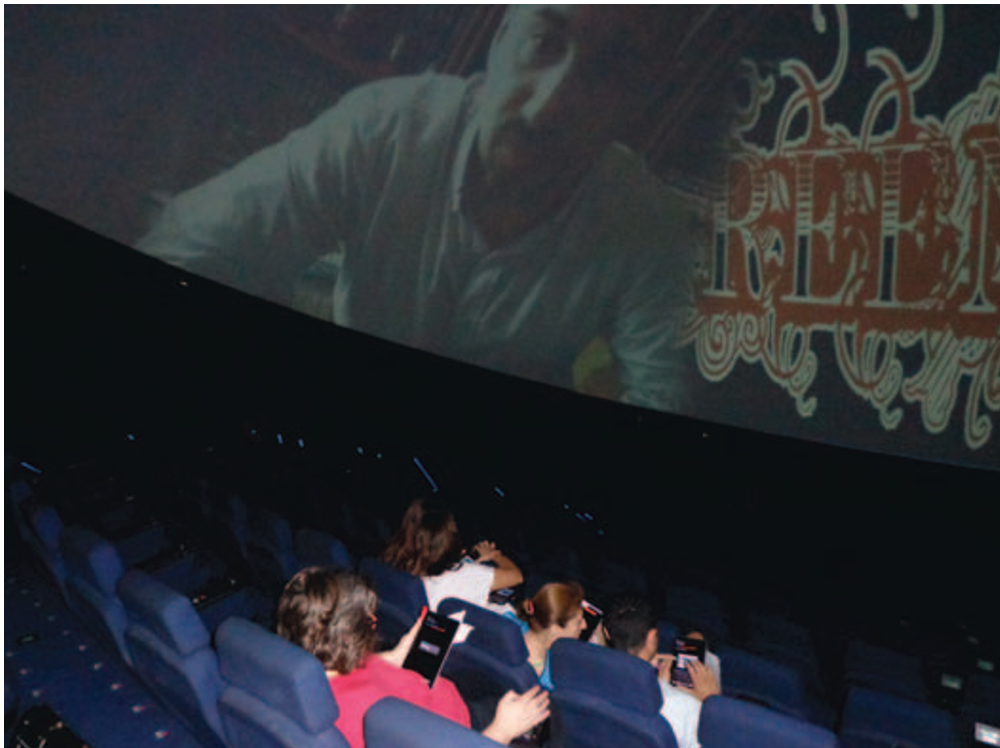
The experiment successfully proved that:
- Ad-hoc networking is viable for real-time AR synchronization.
- Gamification and role-playing provide the "social incentive" needed to break the ice between strangers.
- Remote Experts can effectively drive high-quality educational debates across distances.
Critical Insight & Future Outlook
The brilliance of SPORANGIUM lies in its recognition that physical proximity is an underutilized signal for social relevance. While the paper focuses on museums, the implications for smart cities and vehicular networks (VANETs) are massive.
Limitations: The system relies heavily on stable ad-hoc connections, which can be finicky in high-interference environments. Furthermore, user adoption depends on the willingness to install a custom app upon entry—a friction point in the age of web-based AR.
Future Work: The team is now moving toward personalizing content based on "cognitive profiles," ensuring that the history lesson adapts not just to the group's location, but to how they specifically learn best.