
Beyond the Clinic: Leveraging Social Intelligence for ACL Recovery
12106_Leveraging Social Supports for Improving Personal Expertise on ACL Reconstruction and Rehabilitation.
This paper introduces a specialized social health support system designed for ACL (Anterior Cruciate Ligament) reconstruction and rehabilitation. It leverages hierarchical patient clustering and patient-specific 3D knee modeling to facilitate personalized expertise sharing between patients and clinicians, achieving over 80% user satisfaction in improving recovery experiences.
TL;DR
ACL injuries affect over 250,000 people annually, often leading to long-term disability. This paper presents a novel social health support system that moves beyond generic advice. By combining 3D biomechanical modeling of a patient's knee with hierarchical social matching, the system connects patients with "peer specialists" who share similar injury levels and lifestyle constraints, significantly enhancing rehabilitation outcomes.
The Missing Link in Rehabilitation
Recovering from ACL surgery is a long, arduous process where clinical "medical expertise" meets the "personal expertise" of daily management. Standard medical care often lacks the granularity of how a specific patient’s job (e.g., a construction worker vs. a desk clerk) or hobbies (e.g., a marathon runner vs. a swimmer) affect their recovery trajectory.
Existing communities like PatientsLikeMe focus on diagnosis-based matching. However, the authors argue that for ACL, motion patterns are the true north. If two patients have similar cartilage degeneration but entirely different social principles, the recovery strategy of one might be useless—or even dangerous—for the other.
Methodology: High-Tech Biomechanics Meets Social Graphs
1. Patient-Specific 3D Modeling
The foundation of the system is the Patient-Specific Knee Joint Model. Instead of requiring expensive, high-radiation full-scale CT/MRI scans for every update, the authors use an incremental learning algorithm. They take a base knee model and "reshape and rescale" it using limited patient data (X-rays, range images).
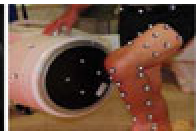 Fig 1: The diagnostic pipeline integrating physical exams, X-rays, and motion capturing to feed the 3D model.
2. Hierarchical Clustering (Mixture-of-Kernels)
To find the "perfect peer," the system employs a two-tier clustering approach:
- Visual Similarity (The Injury): Using kernels for pixel depth, surface normals, and motion patterns to group patients with similar knee mechanics.
- Social Similarity (The Person): Sub-clustering these groups based on BMI, diet, occupation, and exercise equipment.
The mathematical engine uses Affinity Propagation (AP), allowing clusters to emerge naturally based on the "responsibility" and "availability" messages passed between patient nodes.
 Fig 2: The conceptual framework for hierarchical patient clustering based on multi-modal data.
Collective Behavior & Dynamics
A key innovation is the use of Markov Random Field Chains to analyze "micro" social networks. The researchers didn't just look at the community as a static group; they modeled how groups emerge, shrink, or split over time. They identified that Health-Care Cost Reduction and Exercise Skill Training are the primary drivers for patient engagement, outperforming "social reputation" or "pleasure of helping."
Experimental Insights: Does it Work?
The results are compelling:
- High Satisfaction: Over 80% of patients agreed the system improved their personal expertise and recovery experience.
- Data Efficiency: The incremental model generation significantly reduced the medical data size needed compared to traditional methods.
- Clustering Accuracy: Integrating both model properties (3D data) and social principles (lifestyle data) yielded the highest accuracy in patient assignment.
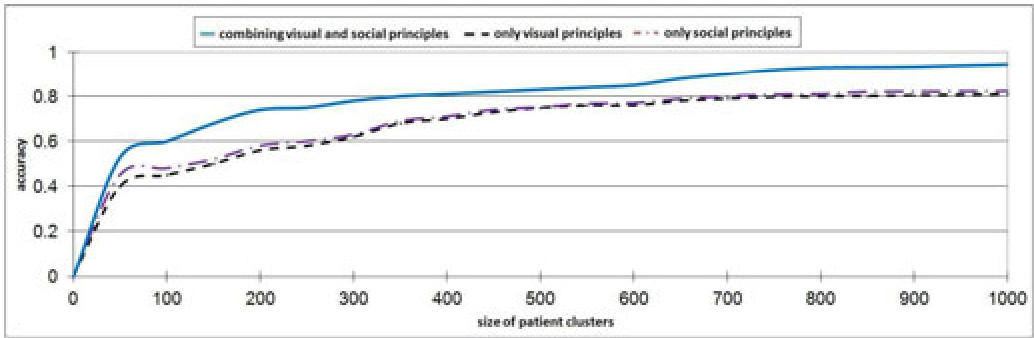 Fig 3: Accuracy rates demonstrating that combined feature sets significantly outperform single-modality clustering.
Critical Analysis & Future Outlook
The beauty of this research lies in its acknowledgment that medical data is social data. While the modeling of the knee is technically rigorous, the real "SOTA" achievement is the structured way it captures why patients help each other.
Limitations: The current study relies heavily on self-assessment data. Future iterations could benefit from integrating real-time wearable sensor data (like smart knee braces) to feed the Markov chains automatically, rather than relying on surveys.
Conclusion: This work serves as a blueprint for "Niche Social Health Networks." By combining high-fidelity biomechanical modeling with sophisticated social graph theory, we can move from generic care to a truly personalized rehabilitation ecosystem.