
Beyond the Script: Identifying Social Malice through Deep Behavioral Analysis
Leveraging Analysis of User Behavior to Identify Malicious Activities in Large-Scale Social Networks
This paper introduces an integrated social media content analysis platform designed to detect malicious behaviors and Sybil accounts across large-scale networks like Twitter and YouTube. By leveraging a multi-layered architecture and three distinct feature levels—user-generated content, social graph connections, and profile activities—the system achieves high accuracy in identifying adaptive attackers.
TL;DR
Social networks are increasingly besieged by sophisticated malicious actors—from Sybil accounts to bots—that manipulate public opinion. This paper proposes a robust, multi-layered platform that integrates User Behavior Analysis with LDA-based topic modeling. By analyzing 600M+ tweets and 13M+ YouTube activities, the authors demonstrate a 96% accuracy rate in distinguishing malicious pros from ordinary users.
Background Positioning
In the landscape of cyber-security, we have moved past simple CAPTCHAs. We are currently in an "Arms Race" where attackers use AI to mimic human behavior. This work positions itself as a comprehensive architectural solution that bridges the gap between Social Graph Theory and Content Mining, moving the field toward "Entity-Awareness."
The Problem: The "Blind Spot" of Infrequent Users
Most security systems struggle with a fundamental ambiguity: Is a user inactive, or just a clever bot?
- Prevention Mechanisms (CAPTCHAs/IDs) are bypassed by human-operated "click farms."
- Social Graph Defenses assume attackers can't make friends, but "Collusion Networks" prove otherwise. The authors argue that the "Semantic Value" of content and the "Temporal Rhythm" of activity are the only true fingerprints and are much harder to fake.
Methodology: The Four-Layer Architecture
The proposed system doesn't just look at a profile; it reconstructs the user's digital life through four distinct layers:
- Social Sensing Layer: Interfaces with Twitter/YouTube APIs to handle real-time and historical queries.
- Data Acquisition & Preparation: Cleanses raw JSON/XML data using a concurrent task controller.
- Data Storage (Hadoop): Uses a Big Data framework to manage the heterogeneous nature of social data.
- Analysis Representation: The "Brain" of the system. It uses Principal Component Analysis (PCA) to rank features and a modified LDA (Latent Dirichlet Allocation) to understand topic-behavior correlations.
The Behavioral-Topic Model
Unlike standard LDA which only clusters words, the authors' version correlates Behaviors () with Topics (). A malicious user might focus heavily on one topic with high-frequency "Retweets" but zero "Original Content," creating a specific statistical signature.
 Figure 1: The Integrated Multi-Layer Platform for Malicious Activity Detection.
Experiments & Results: Real-World Testing
The study was conducted on a massive scale:
- Twitter: 364,000 accounts and 600 million tweets.
- YouTube: 51,000 users and 13 million channel activities.
Performance Comparison
The authors tested five algorithms. While standard Supporting Vector Machines (SVM) struggled (85.67% accuracy), the Random Forest (RF) and the authors' Iterative Regression (OIR) models both hit 96% accuracy.
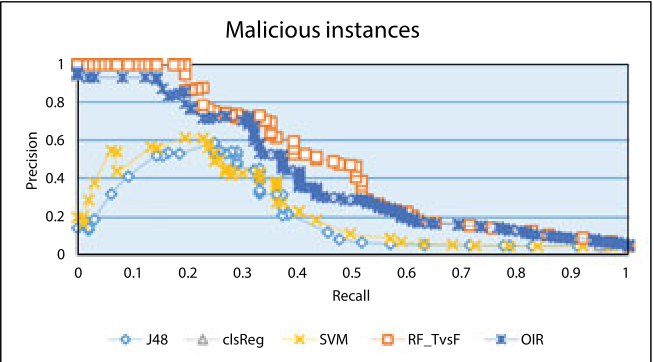 Figure 2: ROC analysis showing the trade-off between sensitivity and specificity.
The paper emphasizes that for security, we prefer Specificity (avoiding labeling a real user as a bot) while maintaining high precision. The OIR model achieved a superior Kappa Statistic of 0.4111, indicating high reliability beyond random chance.
Critical Insights & Conclusion
Takeaway
The research concludes that User Intent is reflected in their patterns. For example:
- Malicious users target specific topics with high-intensity, repetitive actions (spikes in retweet/like counts).
- Normal users show a "dispersed" action profile across multiple interests.
Limitations & Future Work
While the system is powerful, it is computationally intensive due to the Hadoop-based offline calculations required for "Implicit Features." Future advancements might look into Real-time Stream Mining to catch malicious spikes as they happen, rather than retrospectively.
Ultimately, this work proves that in the age of bots, the way you interact is much harder to fake than what you say.