
From Frustration to Fire: Deciphering the Deprivation-Aggression Link in Social Networks
Lexico-Semantical Indices of “Deprivation – Aggression” Modality Correlation in Social Network Discourse
The paper investigates the correlation between "deprivation-aggression" modalities within Russian-language social network discourse (SND). Using a quantitative and qualitative analysis of 398 statements from the VKontakte platform, the study identifies how social-cognitive deprivation triggers specific indices of verbal aggression, categorized by gender and stylistic modality.
TL;DR
This research explores how socio-political and economic "deprivation"—the gap between expectation and reality—fuels verbal aggression on social media. By analyzing Russian-speaking users on VKontakte, researchers found that nearly half of the analyzed discourse is aggressive, with men and women employing distinct strategies of provocation and response.
Background: The Psychology of Digital Hostility
In an era of global instability, "deprivation" is no longer just a biological or economic term. In linguistics, it refers to a state where an individual's inability to achieve desired social or cognitive goals leads to a negative worldview. This paper positions itself at the intersection of sociolinguistics and psychology, moving beyond simple sentiment analysis to identify how specific social stressors translate into "Aggressogen Discourse."
Problem & Motivation
Traditional linguistics often ignores the "Why" behind online toxicity. The authors argue that long-term deprivation (e.g., economic crisis, political coups) creates a specific communicative modality. The challenge is identifying how this hidden frustration manifests in written, "quasi-spontaneous" speech and determining whether gender influences these aggressive patterns.
Methodology: The SND Framework
The authors employ the concept of Social Network Discourse (SND), viewing online threads as "electronic macropolylogues."
Key Indices Measured:
- Speech Activity Index: Frequency of participation.
- Speech Provocation: Statements designed to trigger a negative reaction.
- Aggressive Speech Response: The reactive blowback to a provocation.
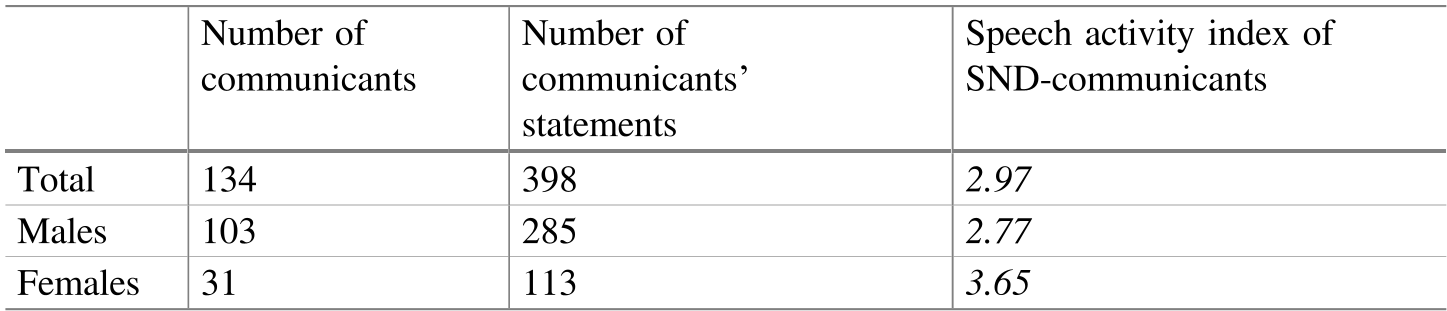
The study utilized a specialized database of Russian-language aggressive discourse, categorizing 398 statements from 134 participants (103 males, 31 females).
Core Findings: The Mechanics of Aggression
The analysis reveals a cycle of digital violence where 36.4% of all communication consists of reactive aggression.
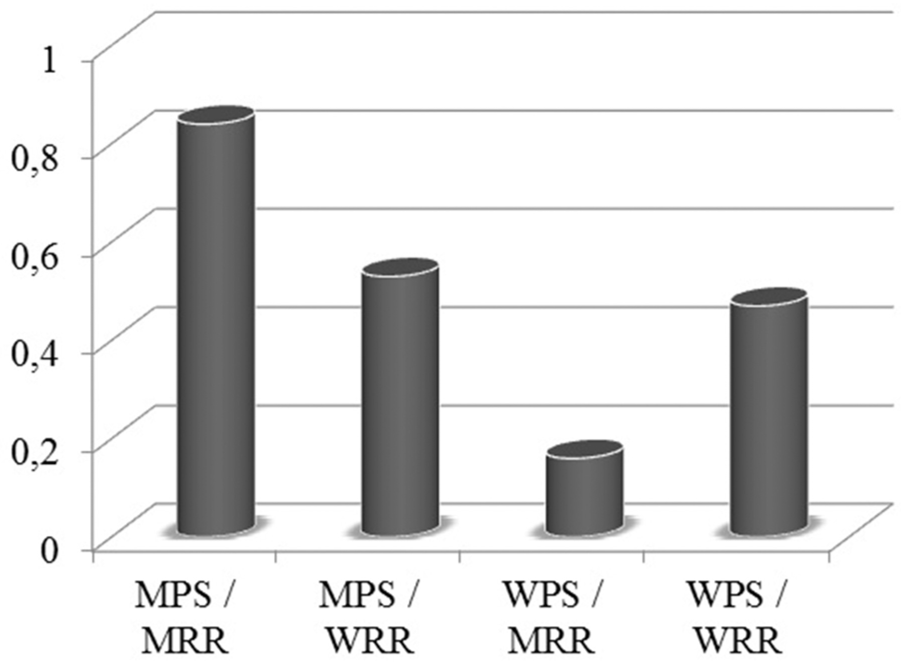
- Gender Dynamics: Men are more likely to respond to provocations, whereas women in this sample showed higher proactive speech activity. Men's provocations were "more productive," meaning they successfully baited more users into aggressive exchanges (1.12 response ratio).
- Echo Chambers of Aggression: A fascinating intra-gender trend was observed—men primarily direct aggression toward other men, and women toward women.
Lexical Markers
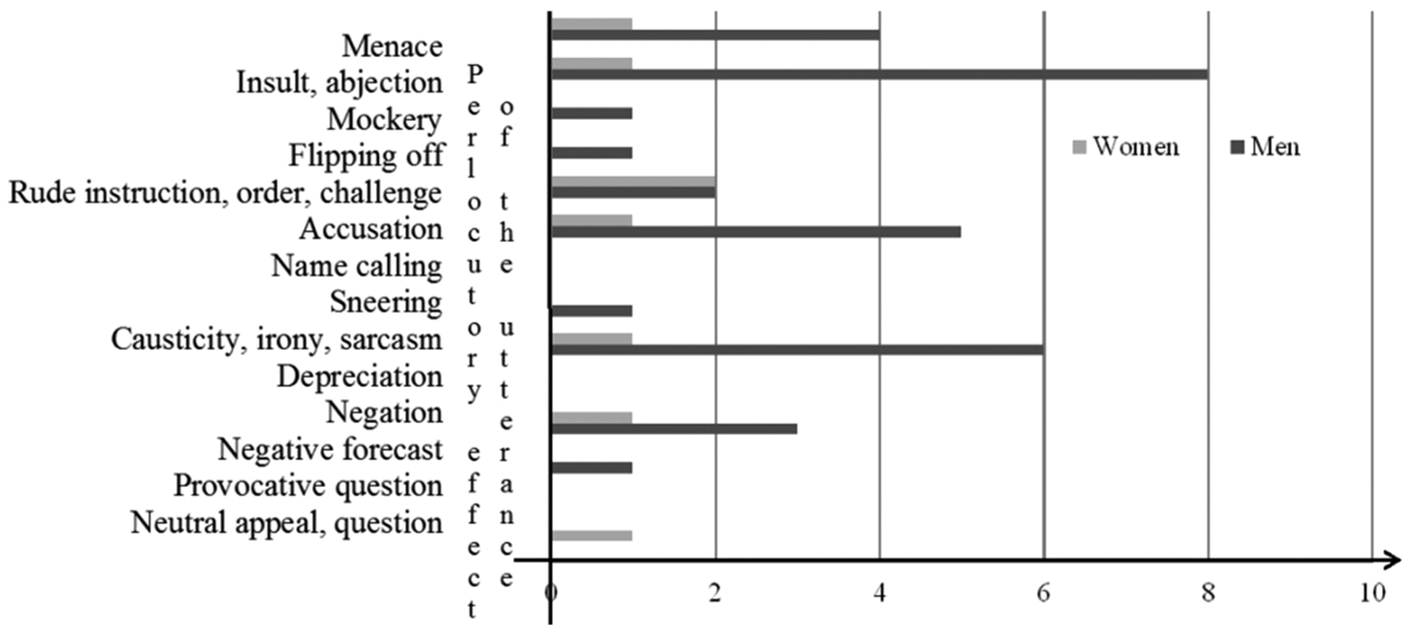
The most frequent modalities identified were:
- Insult
- Accusation
- Causticity
Men utilize a broader stylistic range of toxicity, including mockery, which was almost entirely absent in the female dataset.
Critical Analysis & Conclusion
Takeaway
The study confirms that digital aggression is not just "trolling" but a linguistic symptom of deep-seated social-cognitive deprivation. When people feel the reality of their environment is hostile, their communication follows suit.
Limitations
The sample size (398 statements) is relatively small for a "big data" era, and the gender imbalance (103 men vs. 31 women) may skew the representativeness of the gender-based indices.
Future Outlook
This research paves the way for "Deprivation-Aware" moderation tools. Instead of merely flagging "bad words," future AI might identify the modality of aggression to understand the social stressors driving a community's toxicity.