
Lifelogging for Mental Well-being: Detecting Stress in the Wild via Wearables
A Lifelogging Platform Towards Detecting Negative Emotions in Everyday Life using Wearable Devices
The paper presents a mobile lifelogging platform designed to detect stress in real-world settings using heart rate (HR) and Galvanic Skin Resistance (GSR) data from a Microsoft Band 2. Utilizing supervised machine learning on data from a 10-day pilot study, the system achieved a maximum stress classification accuracy of 70% using a Decision Tree algorithm.
TL;DR
Chronic stress is a silent killer linked to cardiovascular disease and inflammation. This paper details a mobile lifelogging platform that captures Heart Rate (HR) and Galvanic Skin Resistance (GSR) using consumer wearables. By applying advanced signal cleaning and Decision Tree classification, the researchers successfully detected stress episodes with 70% accuracy during a 10-day field study.
Background: The Shift from Diaries to Digital Archives
For decades, understanding our emotions meant keeping a diary. However, human memory is fickle; we often forget the intensity of a stressful meeting by the time we sit down to write. The paradigm of lifelogging—permanently archiving personal experiences through multimodal sensors—offers a way to capture "affective body memorabilia" in real-time.
The challenge? Lab results rarely translate perfectly to the real world. Moving your arm, sweating, or a loose watch strap creates "noise" that can render data useless.
Technical Deep Dive: Cleaning the Noise
The core technical contribution of this work lies in its pre-processing pipeline. Data collected "in the wild" suffers from baseline drift—a slow degradation of signal quality caused by motion and respiration.
To combat this, the authors used:
- Empirical Mode Decomposition (EMD): To break the signal into Intrinsic Mode Functions.
- Top-Hat Morphological Transformation: A non-linear filtering technique that modifies the signal's shape to strip away wandering baselines without distorting the underlying physiological shifts.
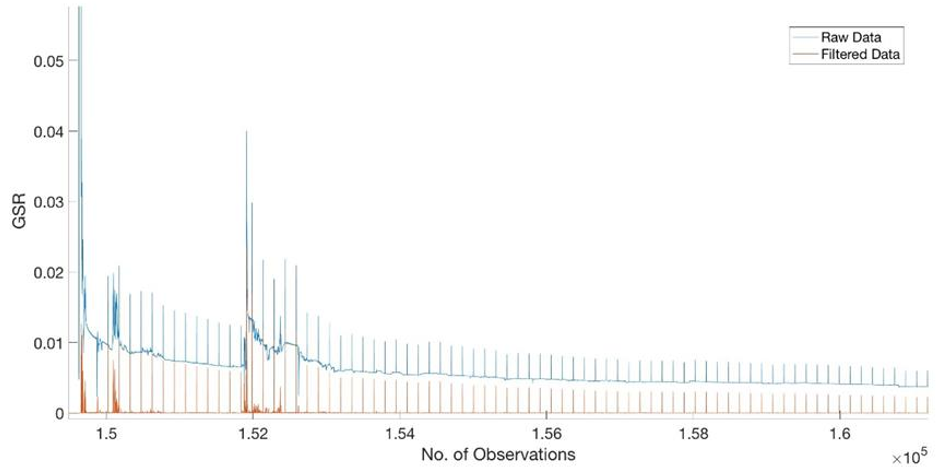 Figure 1: The visual impact of morphological filtering on GSR data—blue shows the raw drifting signal, while orange shows the corrected version.
Methodology: The Pilot Study
The researchers tracked six undergraduate students for 10 days.
- Hardware: Microsoft Band 2 and a custom Android App.
- Ground Truth: Participants completed the Perceived Stress Scale (PSS) twice daily to provide subjective labels for the machine learning models.
- Data Balancing: Since stress is less frequent than relaxation, the authors used Under-sampling to ensure the models didn't become biased toward the "relaxed" state.
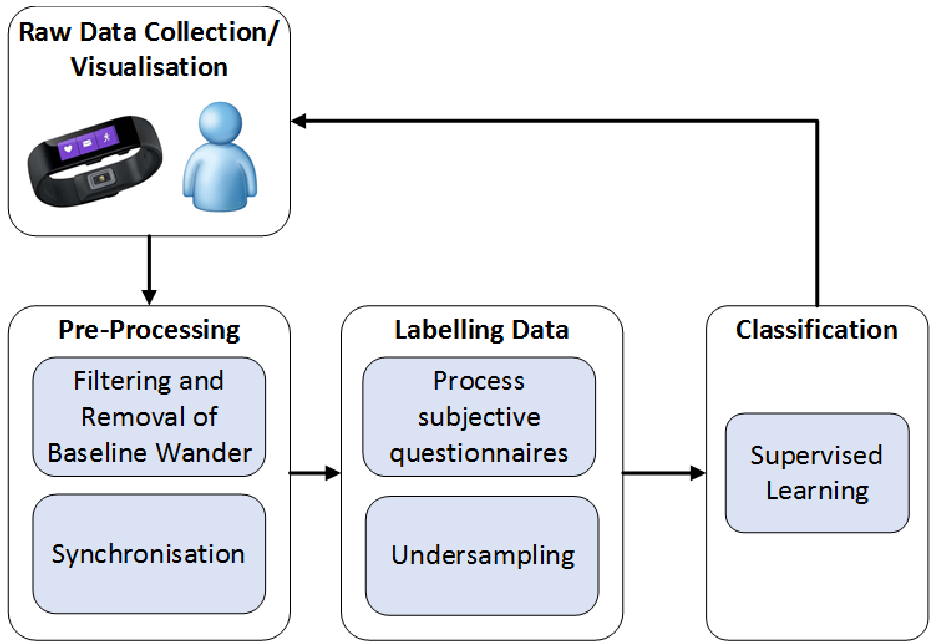 Figure 2: The high-level architecture of the mobile lifelogging system.
Performance: Why Decision Trees Won
The study compared three algorithms: Linear Discriminant Analysis (LDA), Quadratic Discriminant Analysis (QDA), and Decision Trees (DT).
The results revealed a fascinating insight: GSR was the heavyweight champion.
- Models using only Heart Rate (HR) performed poorly (accuracies ~52-56%).
- Decision Trees using GSR or a combination of HR+GSR hit the 70% accuracy mark.
- While LDA achieved high sensitivity (it caught almost all stress), its "False Alarm" rate was nearly 88-100%, making it practically useless for a consumer app. The Decision Tree offered the best balance between precision and recall.
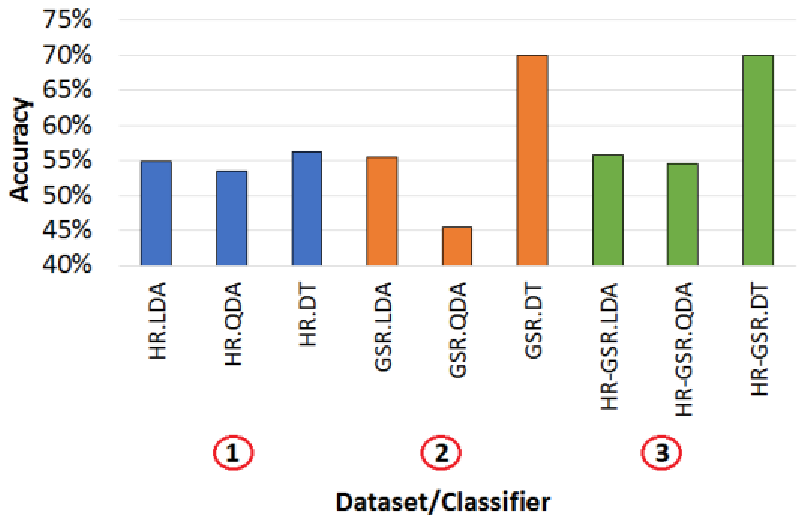 Figure 3: Accuracy breakdown across different sensor combinations and algorithms.
Critical Insight & Future Outlook
The study highlights a crucial trade-off in affective computing: False Alarms vs. Misses.
- In a clinical setting, we might tolerate more false alarms to ensure we never miss a dangerous physiological spike.
- In a wellness app, too many false "You are stressed!" notifications might actually cause the user stress.
Limitations: The current study ignores sleep data and relies on a small sample size. Future work aims to integrate nighttime monitoring to distinguish between conscious daytime stress and unconscious physiological recovery during sleep.
Conclusion
This work moves us closer to a future where our devices act as an "emotional mirror," reflecting our physiological states back to us to help build better coping mechanisms. With a 70% accuracy rate using a $200 wearable, the gap between lab-grade medical monitoring and daily wellness tech is rapidly closing.