
SVM-Powered Health: Democratizing Disease Prediction Without DNA Testing
A Proposed Model for Lifestyle Disease Prediction Using Support Vector Machine
This paper proposes a lifestyle disease prediction model utilizing Support Vector Machine (SVM) to identify individual susceptibility to conditions like diabetes and heart disease based on behavioral data. By streamlining the "One-Against-All" multiclass SVM approach, the system achieves a classification accuracy of 92.3% for identifying high-risk individuals.
TL;DR
Researchers have developed a low-cost, high-accuracy (92.3%) prediction model for lifestyle diseases using Support Vector Machines (SVM). By analyzing daily habits—such as sleep, diet, and physical activity—the model serves as a "digital alternative" to expensive DNA testing, providing instant risk assessment via a cloud-deployed web application.
Background & Motivation
Lifestyle diseases like obesity, Type II diabetes, and cardiovascular conditions are no longer just products of genetics; they are heavily influenced by the environment and daily choices (Epigenetics). However, clinical diagnostic tools are either reactive or prohibitively expensive (e.g., DNA tests).
The authors identify a critical gap: the healthcare industry is "data rich but insight poor." There is a systemic failure to mine behavioral data to discover hidden patterns that precede the onset of chronic illness.
Methodology: The Core Engine
The heart of this system is the Support Vector Machine (SVM). While basic SVMs are binary classifiers, the researchers implemented a Multiclass SVM using the "One-Against-All" (OAA) approach.
1. The Feature Space
Instead of biological markers, the model uses 11 behavioral predictors:
- Habitual Metrics: Eating habits, sleep quality, stress levels (graded 1-5).
- Physical Indicators: Obesity status, physical activity levels.
- Risk Factors: Smoking, alcoholism, and family history.
2. Finding the Optimal Hyperplane
The SVM works by finding a hyperplane that maximizes the margin between different classes (e.g., "At Risk" vs. "Healthy"). The OAA strategy ensures that for potential diseases, the system trains classifiers, each distinguishing one class from all others.
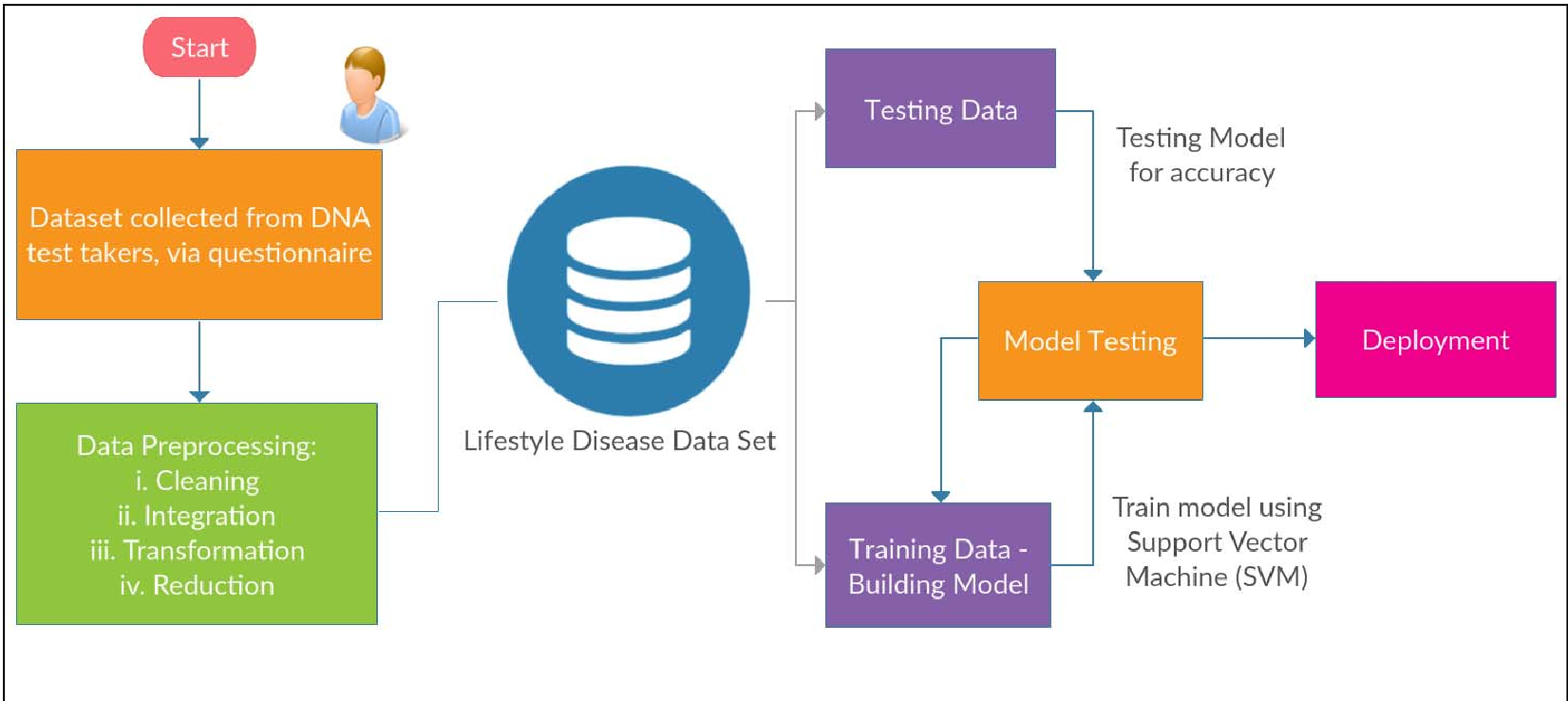 Fig 1: The proposed system block diagram, from data integration to cloud deployment.
Experimental Results
The model was trained on a 70/30 split of collected patient data.
- Performance: Using a linear kernel, the confusion matrix revealed only one false negative, resulting in a 92.3% accuracy rate.
- Preprocessing Impact: The authors noted that data integration and cleaning (handling missing values with median imputation) accounted for 80% of the project's effort, highlighting the "Garbage In, Garbage Out" challenge in medical ML.
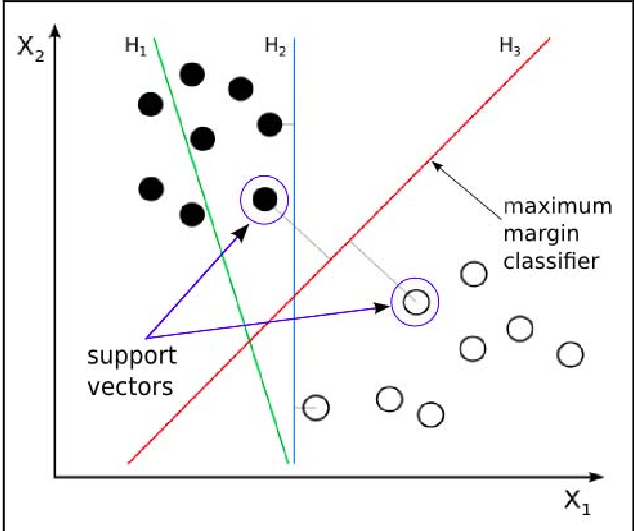 Fig 2: Conceptual representation of the Linear SVM separating data points with a maximal margin.
Deployment & User Interaction
The system was deployed as a web application via a localhost/cloud environment. Users fill out a quantitative questionnaire, which is converted to JSON format, reshaped into a NumPy array, and fed to the pre-trained classifier for an instant diagnosis.
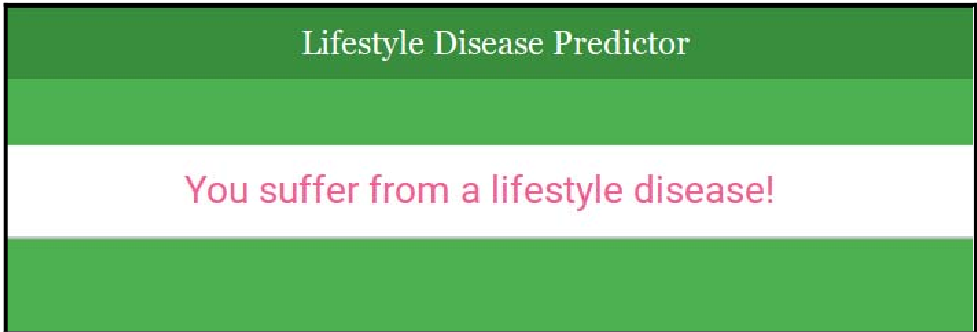 Fig 3: The system outputting a positive prediction for lifestyle disease susceptibility.
Critical Insight & Future Outlook
While the current model is highly effective, the authors acknowledge the rise of Deep Learning (DL). As datasets grow larger and more complex (incorporating real-time IoT sensor data), DL architectures may eventually surpass SVMs in handling non-linear relationships.
Takeaway: This work represents a shift toward Actionable Preventative Medicine. By making disease prediction as simple as filling out a web form, we can identify high-risk individuals years before they require intensive clinical intervention.
Limitations: The current simulation used a relatively small dataset (50 tuples for the final reduced set). Scaling this to larger, more diverse populations will be essential to validate its robustness across different ethnicities and age groups.