
LiO-IoT: Bridging Semantic Interoperability and Efficiency with Dynamic Ontologies
A light-weight dynamic ontology for Internet of Things using machine learning technique
The paper introduces LiO-IoT, a light-weight dynamic ontology designed for the Internet of Things (IoT) that achieves semantic interoperability using machine learning. By utilizing K-means clustering to organize concepts and detect novel nodes, it achieves significantly lower query latency and memory overhead compared to standard models like SSN.
TL;DR
Achieving a "common language" in the Internet of Things (IoT) is notoriously difficult due to device heterogeneity. Traditional ontologies like SSN are too bloated for edge devices, while lighter versions like IoT-Lite are too static. This paper introduces LiO-IoT, a light-weight dynamic ontology that uses K-means clustering to automatically categorize new devices, reducing query response times by 6x and memory usage by nearly 80% compared to heavy-weight benchmarks.
Context: The Heavy Cost of Meaning
In the IoT ecosystem, "Heterogeneity" is the primary enemy. Devices from different manufacturers speak different "languages," and Semantic Models (Ontologies) were proposed to act as a universal translator. However, we face a classic trade-off:
- The SSN (Semantic Sensor Network) Approach: Extremely detailed, but static and heavy. It's like carrying a 20-volume encyclopedia to look up the definition of "thermometer" on a low-power gateway.
- The IoT-Lite Approach: Fast and lightweight, but too abstract. It fails to adequately describe actuators or RFID tags, which are crucial for "Smart" actions.
The Insight: Dynamism through Machine Learning
The authors posit that an ontology shouldn't just be a static file; it should be a living structure. Their core methodology involves two pillars:
- Abstraction: Filtering out non-essential relationships to create a "LiO-IoT" base.
- Clustering-based Dynamism: Instead of manually updating the ontology when a new sensor type appears, the system uses a machine learning pipeline.
Methodology: How it Works
The system converts the ontology individuals into a coordinate space and applies a K-means Clustering algorithm.
- Centroid Positioning: Each cluster (Sensor, Actuator, Tag) has a mean value (centroid).
- Novelty Detection: When a new device is connected, the system calculates the Euclidean distance between the device's features and the existing centroids.
- Automatic Addition: If a device is close to an existing cluster, it is classified automatically. If it falls beyond a threshold, the system flags it as a "New Node," ensuring the ontology grows with the network.
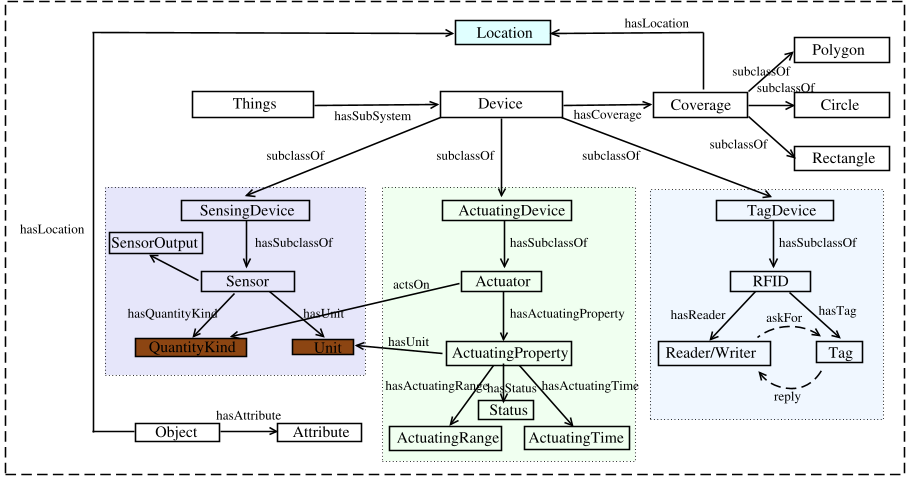 Figure 1: Outline of the proposed dynamic ontology process.
Experimental Results: Speed vs. Scale
The true value of LiO-IoT is revealed as the network scales. The authors measured Query Response Time (QRT) using SPARQL queries.
- Efficiency: At 200 nodes, SSN's response time skyrockets to nearly 1000ms. LiO-IoT remains stable around 160-170ms.
- The "Clustering Dividend": Interestingly, the authors found that while clustering adds a tiny bit of overhead at small scales, it actually speeds up performance at large scales (80+ nodes) because the system doesn't have to brute-force compare new nodes against every single existing concept.
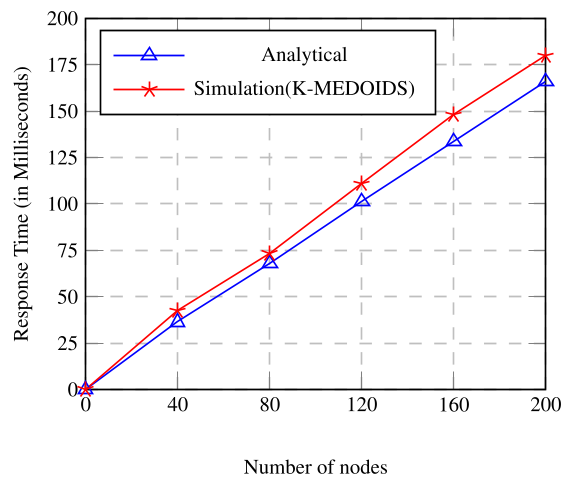 Figure 2: (a) Query Response Time (Static), (b) Response Time with/without Clustering, (c) Classification Accuracy.
Memory Footprint
For resource-constrained environments, memory is gold.
| Ontology | Primary Memory (kB) | Secondary Memory (kB) |
|---|---|---|
| SSN | 19.7 | 74 |
| LiO-IoT | 4.1 | 15 |
| IoT-Lite | 3.7 | 12 |
While IoT-Lite is slightly smaller, LiO-IoT supports twice the device types (including Actuators and RFID), making it far more practical for real-world automation.
Critical Insight & Future Outlook
The genius of this work lies in the mathematical interpretation of semantics. By treating ontology individuals as data points in a feature space, the authors transition from "knowledge engineering" to "data science."
However, a noted limitation is the use of Euclidean distance for semantic similarity, which may struggle with high-dimensional, non-linear relationships. Future iterations might benefit from Graph Embeddings (like Node2Vec) to capture the topological relationships of the ontology more accurately.
Takeaway
LiO-IoT proves that we don't need to choose between semantic depth and hardware efficiency. By utilizing "just-in-time" machine learning, we can build IoT systems that are self-organizing, lightweight, and ready for the massive scale of the future.