
The Power of "Cheap Talk": How Lightweight Interactions Build Trust in Social Games
Lightweight Interactions for Reciprocal Cooperation in a Social Network Game
This study investigates reciprocal cooperation in the Social Network Game (SNG) "Girl Friend BETA," demonstrating how players use low-cost, lightweight messaging (direct, group, and forum) to establish and maintain altruistic relationships. By analyzing large-scale behavioral data, the authors show that these "cheap talks" act as reliable signals of cooperativeness, facilitating trust between strangers.
TL;DR
Why do we say "hello" to strangers before doing business? This paper explores the "Social Grooming" hypothesis in the digital age. By analyzing the SNG "Girl Friend BETA," researchers found that low-cost, risk-free interactions—like simple text messages—serve as reliable signals of a player's intent to cooperate. These lightweight interactions are critical for "breaking the ice" and establishing reciprocal altruism in risky social environments.
Contextualizing Rediprocity: The Stranger's Dilemma
In evolutionary biology and game theory, cooperating with a stranger is a high-stakes gamble. If you cooperate and they exploit you, you lose; if both defect, the potential for a mutually beneficial relationship is lost. Most classical models, like the Iterated Prisoner’s Dilemma, assume players jump straight into the trial-and-error of cooperation.
However, the authors of this study point out a gap: in the real world, we employ preliminary interactions (bowing, greeting, eye contact) to gauge others. The central question is: Can these "low-cost" signals—which cost nothing to send and could easily be used to lie—actually be reliable?
Methodology: Gaming as a Social Laboratory
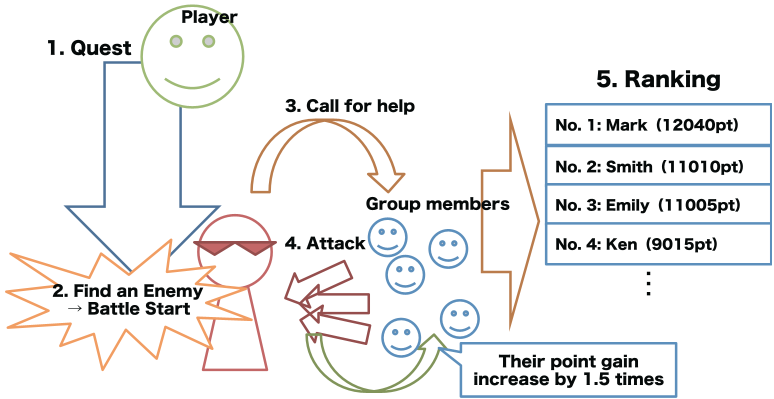
The researchers turned to Girl Friend BETA, a popular Japanese SNG, to observe real human behavior at scale. They focused on a specific "Social Dilemma" within the game’s "Raid Events":
- The Scenario: An enemy is almost defeated.
- The Dilemma: Attacking the enemy now is "inefficient" for the individual (yielding fewer points than their power allows) but "efficient" for the group (clearing the enemy so the group can move on).
- The Definition of Cooperation: Choosing to perform these "inefficient attacks" to help the group.
They analyzed three types of lightweight interactions: Direct Messaging, Group Messaging, and Forum Posts.
Key Insight: Messaging as "Digital Grooming"
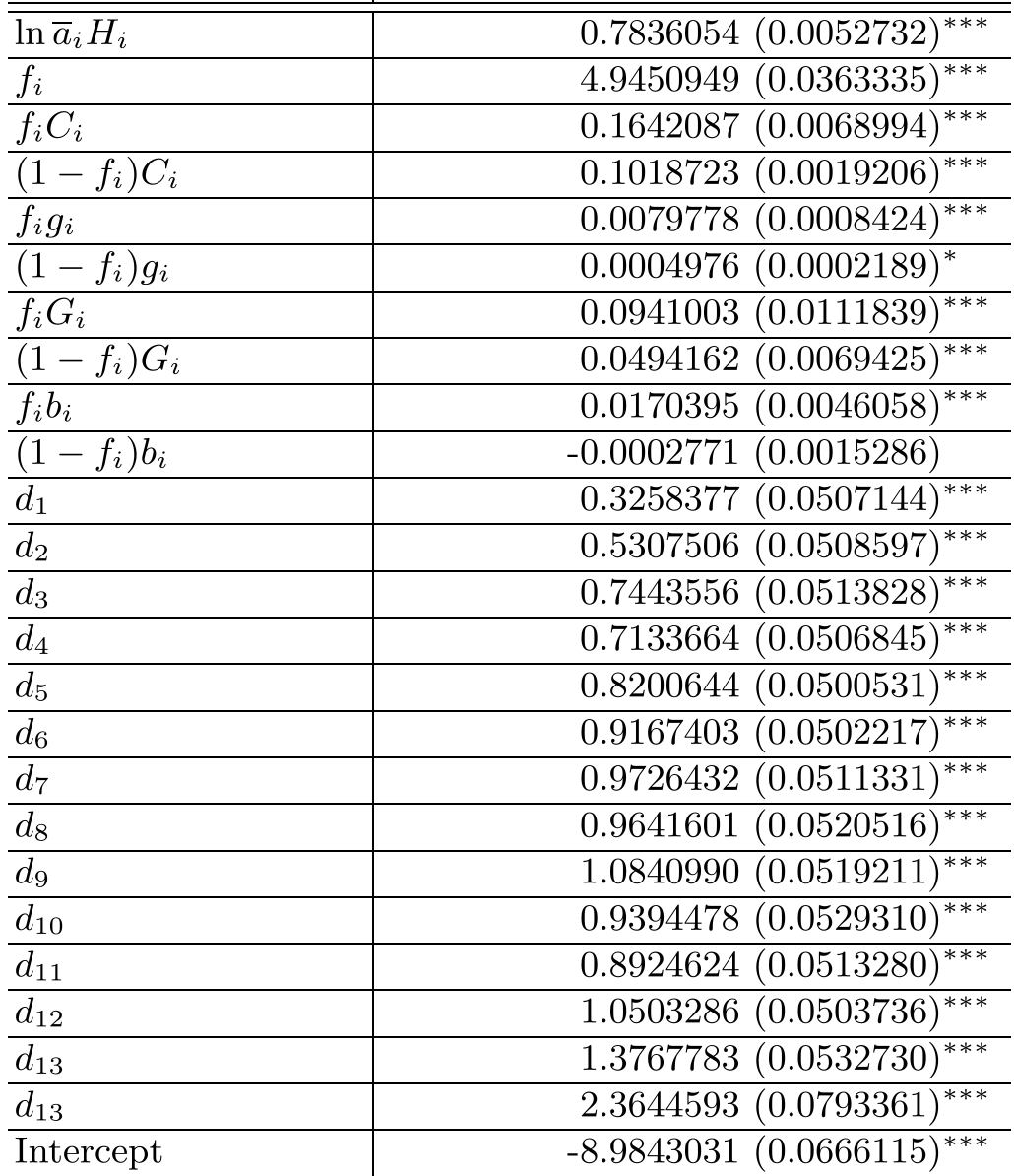
The study used a Generalized Linear Model (GLM) to predict cooperative behavior. The results were striking:
- Constructing vs. Maintaining: Messaging was far more predictive of cooperation for newcomers (migrants) than for established members. For someone new to a group, a message isn't just a chat; it's a credentials check.
- Reliability of Low-Cost Signals: Despite theoretical suggestions that "cheap talk" shouldn't be trusted because it's easy to fake, the data showed that those who messaged more were statistically much more likely to actually help the group later.
Results Table Analysis
The coefficients in the GLM (Table 2 and 3) highlight that for newcomers (), messaging behaviors () had a significantly higher impact on receiving cooperation from others compared to long-standing members.
Deep Insight: From Apes to Avatars
The authors link these findings to the Dunbar Hypothesis. In primate societies, "Grooming" (picking lice, etc.) is a high-cost signal (it takes time/energy) used to bond. As human groups grew too large for physical grooming, we evolved "vocal grooming"—language and gossip.
This paper suggests that in modern digital environments, simple text interactions have become our new form of "Gaze Grooming." They are low-cost, yet they successfully signal an individual's "Social Type."
Critical Analysis & Future Outlook
While the paper provides strong empirical evidence, it leaves some questions open:
- The "Lie" Factor: Why don't exploiters simply message a lot to "fake" being a cooperator? The authors suggest that human evolution has likely baked-in mechanisms to detect these discrepancies over time, or the "social cost" of being caught lying in a tight-knit guild is too high.
- Platform Specificity: Would this hold true in a more anonymous or toxic gaming environment? "Girl Friend BETA" has a specific social culture that might encourage this more than a high-intensity FPS might.
Conclusion: If you want to build a cooperative community—whether in a game, a DAO, or a workspace—never underestimate the "boring" stuff. The greetings, the "how are yous," and the simple forum posts are the structural glue that makes high-stakes cooperation possible.