
PAFL: Revolutionizing Private Friend Locators with Order-Preserving Encryption
A Lightweight Privacy Aware Friend Locator in Mobile Social Networks
This paper introduces PAFL (Privacy Aware Friend Locator), a lightweight proximity detection scheme for Mobile Social Networks. By leveraging Order Preserving Encryption (OPE), it enables a Location Service Provider (LSP) to determine if friends are nearby without ever learning their actual coordinates, achieving significantly lower overhead than traditional cryptographic methods.
TL;DR
The "Friend Locator" is a staple feature of modern social apps, yet it creates a significant privacy paradox: how can a server tell you if a friend is nearby without actually knowing where either of you is? This paper proposes PAFL (Privacy Aware Friend Locator), a system that uses Order Preserving Encryption (OPE) to allow untrusted servers to perform proximity checks directly on ciphertexts. It cuts computational latency by nearly 98% compared to traditional cryptographic methods.
The Problem: The High Cost of Privacy
In the world of Location-Based Services (LBS), privacy-preserving proximity detection usually falls into two inefficient camps:
- Spatial Generalization (Cloaking): Users hide in "grids." This requires complex multi-level partitions and high communication bandwidth between the phone and the server.
- Heavyweight Cryptography: Protocols like "Louis" use Homomorphic Encryption (HE). While secure, HE is a battery killer for mobile devices, requiring hundreds of milliseconds for simple distance checks.
The authors identify a gap: we need a TTP-free (Trusted Third Party-free) system that is fast enough for real-time mobile use.
The Insight: Comparison vs. Calculation
The core genius of PAFL is realizing that for a "Friend Locator," we don't necessarily need to calculate the exact distance (Eulerian distance). We only need to know if a person's coordinates fall within a specific Minimum Bounding Rectangle (MBR).
By using Order Preserving Encryption (OPE), the numerical relationship (greater than/less than) is maintained in the encrypted state. If , then . This allows the server to perform a simple range query:
- Is ?
System Architecture
The architecture involves two primary entities: the Mobile User and the Location Service Provider (LSP).
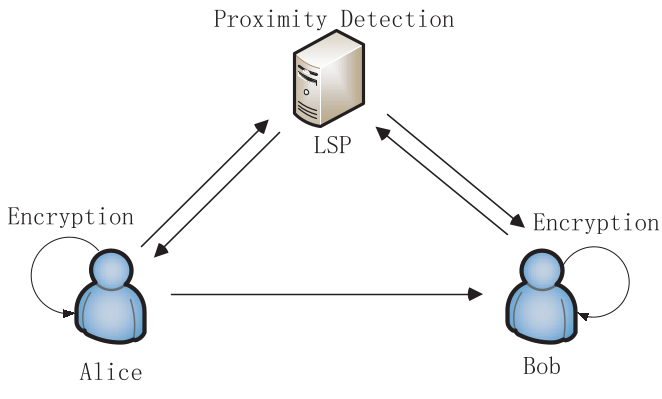 Fig 1: The PAFL workflow: Alice (Requester) setup, Bob (Provider) response, and LSP detection.
Methodology: How PAFL Works
The implementation follows a 3-step geometric transformation before encryption:
- Shifting: Alice chooses a secret reference point to shift the coordinate space.
- Scaling: Coordinates are scaled by to transform decimals into large integers suitable for encryption.
- OPE Encryption: The shifted/scaled coordinates are encrypted using an OPE algorithm that maps plaintexts to ciphertexts while maintaining order through piece-wise linear splines.
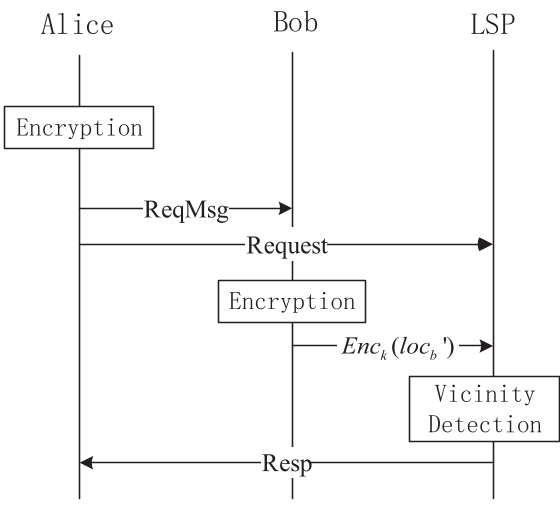 Fig 2: Detailed protocol steps between Alice, Bob, and the LSP.
Performance: Lightweight is an Understatement
The experimental results highlight the massive efficiency gap between PAFL and existing SOTA methods like VicinityLocator (VL) and the Louis protocol.
- Computation: PAFL processes a query in 1ms at the server level, whereas the competition takes significantly longer as the number of friends increases.
- Scalability: Unlike grid-based methods (VL), PAFL's overhead remains constant regardless of whether the "nearby" radius is 1km or 20km.
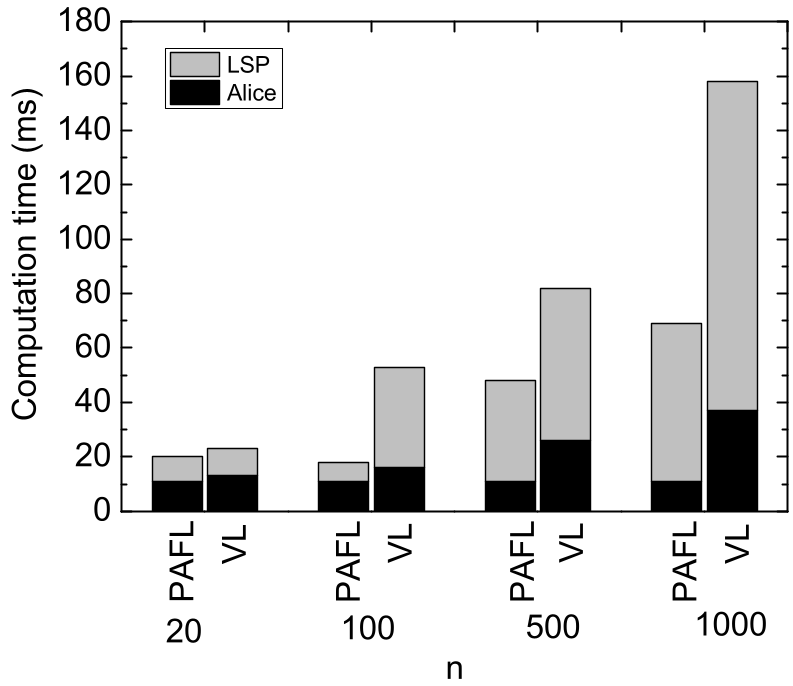 Fig 3: Efficiency vs. Number of Friends. PAFL maintains a near-flat growth curve.
Critical Analysis & Conclusion
Takeaway
PAFL proves that for industrial-grade LBS privacy, we should prioritize Order Preserving Encryption over Homomorphic Encryption. The shift from "calculating distance" to "comparing encrypted ranges" is a paradigm shift that makes privacy-preserving LBS viable for low-power mobile hardware.
Limitations
- Irregular Shapes: Currently, the system only supports rectangular vicinity regions. Real-world "proximity" might follow complex city blocks or hexagonal cells.
- Honest-but-Curious Model: The security assumes the LSP follows the protocol. If a server is actively malicious and performs "inference attacks" by tracking OPE movements over time, more advanced differential privacy might be needed.
Future Outlook
The authors suggest moving toward irregular-shape vicinity detection, which would likely involve mapping complex polygons into multiple OPE ranges, potentially setting a new standard for private "Geofencing" in commercial apps.