
Lilliput: Solving the Availability Crisis in Decentralized Social Networks
Lilliput: A Storage Service for Lightweight Peer-to-Peer Online Social Networks
Lilliput is a specialized P2P storage primitive designed for decentralized Online Social Networks (OSNs). It achieves high data availability (up to 99.64%) by separating "social glue" (metadata, updates, messages) from bulk data (media) and utilizing agile, lightweight replica groups (3 to 9 nodes).
TL;DR
Lilliput addresses the "Reliability Gap" in Peer-to-Peer (P2P) social networks. By separating critical social interactions ("social glue") from heavy media files and managing them via small, dynamic replica groups (3-9 nodes), it achieves 99.6% availability even under realistic, heavy user churn.
Academic Positioning: This work identifies a "sweet spot" between the total decentralization of Distributed Hash Tables (DHTs) and the rigid limitations of friend-based static replication.
The "Bulk Data" Fallacy: Why P2P OSNs Failed Before
Most decentralized social networks (like Diaspora or Safebook) attempted to replicate a user's entire profile across the network. Under realistic churn rates—where users frequently disconnect their phones or laptops—guaranteeing 24/7 access to multi-gigabyte profiles requires an impossible number of stable replicas.
The authors' core insight is based on user behavior: 84.79% of news-feed views are for content less than 24 hours old. By treating photo albums and videos as "bulk data" (stored encrypted in the cloud) and focusing P2P resources only on the "social glue" (profile updates, messages, notifications), the system becomes lightweight enough to actually function.
Methodology: The Architecture of Lightweight Replicas
Lilliput operates by creating small, overlapping data overlays for every user.
1. Dynamic Replica Groups
Instead of relying on a static set of friends, a user (the data owner) invites peers to form a group of size .
- : The safety threshold to prevent data loss if a node dies.
- : The upper bound to prevent flooding traffic from exploding.
2. The Invitation Protocol
When a node goes offline and the group size drops below , the group leader (the node closest to the overlay ID) must find a replacement. The paper introduces an elegant selection strategy: filterShortTimeThenEqualizeConnections. This strategy ignores "newcomers" (who are likely to churn immediately) and chooses nodes that are currently managing the fewest overlays to balance the resource load.
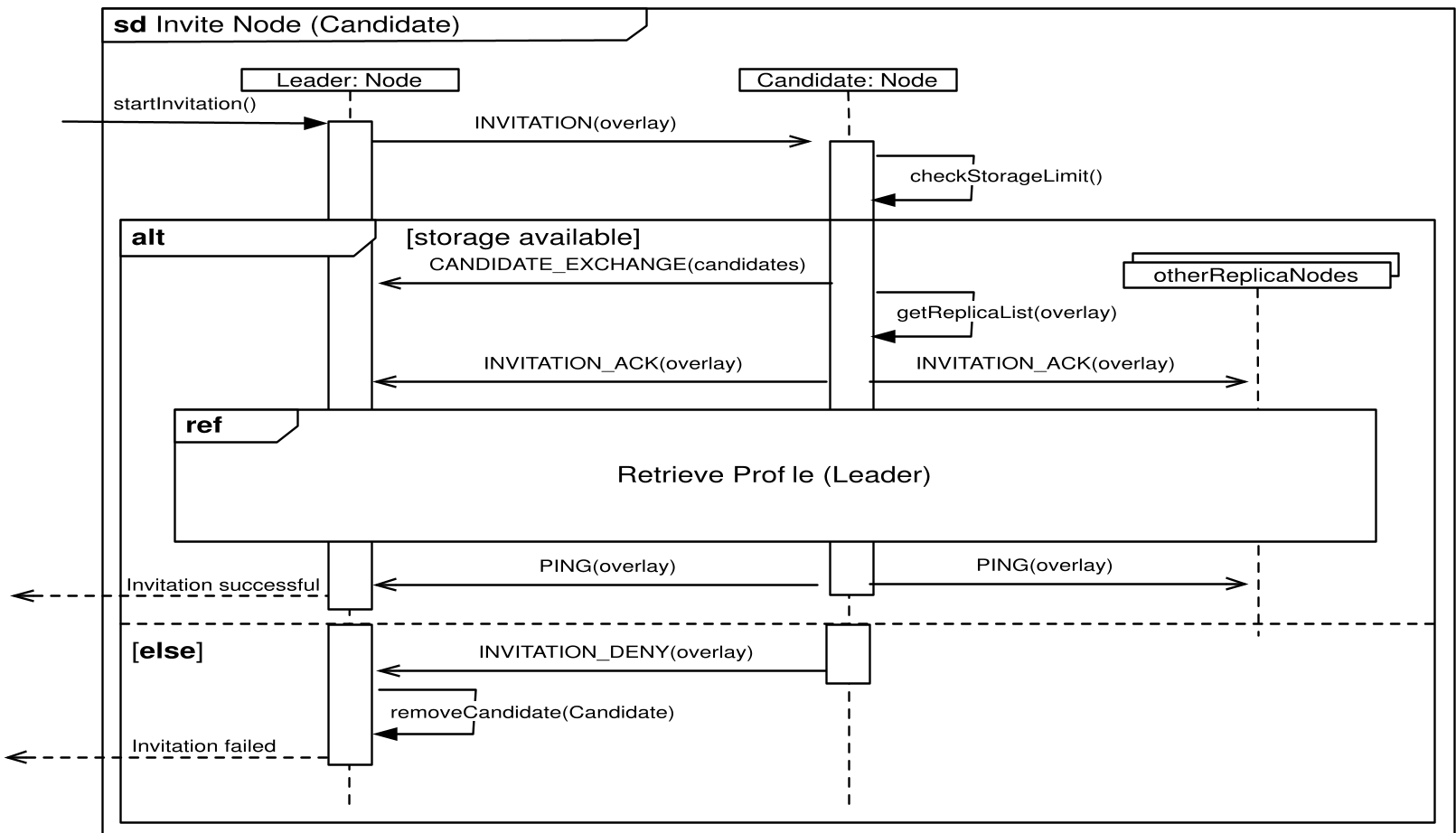 Figure 1: The sequence of events involving leader election and new member invitation to maintain redundancy.
Experimental Validation
Using the KAD trace (a gold standard for realistic P2P churn patterns), the researchers simulated networks of up to 15,000 nodes.
Key Findings:
- High Availability: With , the system achieved over 99% availability.
- Scalability: As shown in the figures, increasing the network size from 1,000 to 15,000 nodes had negligible impact on availability, proving the local management of replica groups scales effectively.
- Bandwidth Efficiency: By updating only the deltas (changes) in a profile rather than re-transmitting the whole 10MB social glue, bandwidth remains within reasonable limits for home and mobile connections.
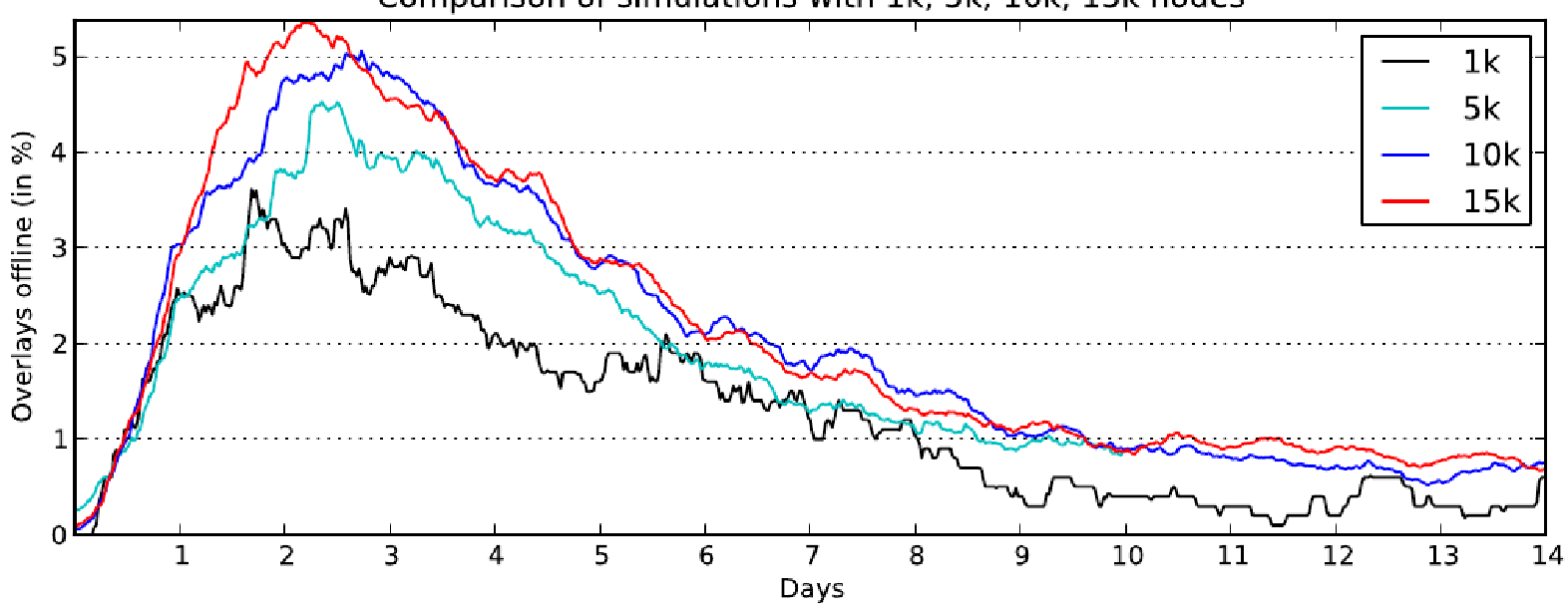 Figure 2: Profile availability remains stable regardless of the total number of users in the network.
Industrial Insight: The Future of P2P Social
Lilliput proves that decentralization doesn't require "all-or-nothing" storage. The industry takeaway is clear:
- Metadata is the priority: Keep the social graph and latest messages in a high-speed, agile P2P layer.
- Hybrid is healthy: Use "dumb" encrypted cloud storage for bulk assets to save peer bandwidth.
- Reciprocity matters: The system naturally disincentivizes "free-riders" by requiring nodes to host others' profiles to have their own profiles replicated.
Critical Analysis
While Lilliput excels at availability, it still faces challenges regarding write-consistency if a network partition occurs during a profile update. Furthermore, while it handles "selfish" nodes via resource reciprocity, a coordinated Sybil attack (creating thousands of fake nodes) remains a theoretical threat that would require integration with a Decentralized Identity (DID) solution.
Conclusion
Lilliput is a pragmatic step forward. It moves away from the utopian (and technically impossible) dream of full profile P2P replication toward a sensible, tiered storage model that aligns with how humans actually use social media.