
Limiting the Spread of Misinformation: A Viral Counter-Campaign Approach
Limiting the spread of misinformation in social networks
This paper introduces the Eventual Influence Limitation (EIL) problem, aimed at minimizing the spread of misinformation in social networks by strategically deploying a competing "good" campaign. The authors propose the Multi-Campaign Independent Cascade Model (MCICM) and demonstrate that while the problem is NP-hard, it exhibits submodularity under certain conditions, allowing for a greedy solution with a (1 - 1/e) approximation guarantee.
TL;DR
In the digital age, misinformation is an epidemic. This seminal work moves beyond passive "blocking" of fake news to a proactive "viral counter-campaign" strategy. By modeling competing cascades, the authors provide a mathematical framework (MCICM) to find the most influential individuals who can spread the truth to "save" the most people from misinformation.
Background Positioning
Published during the rise of massive social platforms, this paper shifts the focus from Influence Maximization (marketing) to Influence Limitation (public safety). It provides the theoretical foundation for how platforms can use "good" information to fight "bad" information using the same viral mechanisms.
Problem & Motivation: The Race Against Time
Misinformation often gets a "head start." Whether it's incorrect reports of active shooters or health-related panic, the "bad" campaign (C) starts at an adversary node and propagates before authorities even detect it.
The core challenge is: Given a budget of k nodes to influence with the truth, which ones will maximize the number of "saved" individuals? An individual is "saved" if they adopt the truth (L) before the misinformation (C) reaches them.
Methodology: Submodularity and the Greedy Solution
The authors prove that the eventual influence limitation (EIL) problem is NP-hard. However, they uncover a crucial property: Submodularity (the law of diminishing returns).
In the Campaign-Oblivious model (where users take whichever info hits them first) and the High-Effectiveness model (where truth is stickier than lies), the marginal gain of adding a "seed" node decreases as you add more seeds. This allows us to use a Greedy Algorithm that is guaranteed to be within 63% (1 - 1/e) of the absolute mathematical optimum.
Architectural Framework: MCICM
The Multi-Campaign Independent Cascade Model handles the temporal collision of two truths. If both reach a node simultaneously, the "good" one wins.
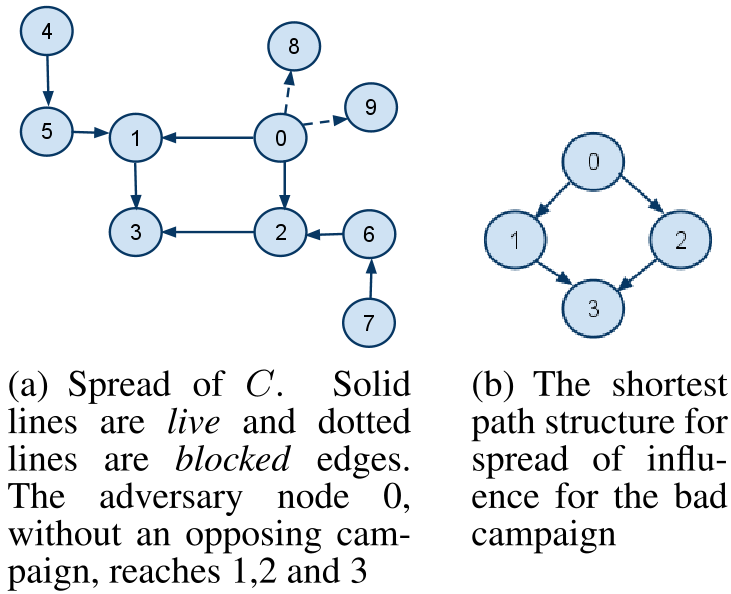 Figure 1: Visualizing how a limiting campaign intercepts a misinformation cascade.
Handling the "Unknown": Prediction Under Incomplete Data
In reality, we don't know exactly who has seen a tweet. The authors tackle this "Incomplete Data" problem using:
- Steiner Trees: To find the most likely "bridge" nodes between known infected users.
- Random Spanning Trees: To simulate likely paths of past infection.
- PHCA (Predictive Hill Climbing): A two-step process that first "imagines" the current state of the network and then runs the greedy algorithm on that imaginary map.
Experiments & Results
Testing on Facebook data (Santa Barbara and Monterey Bay snapshots), the results highlight a critical "Tipping Point":
- The Delay Factor: If the counter-campaign starts too late, even the best algorithm fails.
- Heuristic Efficiency: While the Greedy algorithm is the gold standard, Degree Centrality (picking people with the most friends) is a surprisingly strong and computationally cheap alternative for small delays.
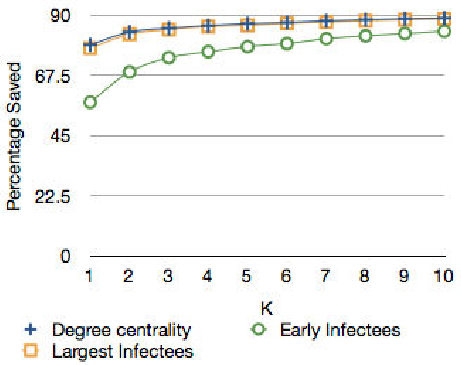 Figure 2: Performance of Greedy vs. Heuristics across different delay thresholds.
The most impressive result is the Robustness to Missing Data: The PHCA method can still save up to 90% of the potential "savable" population even when we only know the status of 10% of the network.
Critical Analysis & Conclusion
Takeaway: To fight misinformation, you don't need a perfect map of the network; you need speed and influence.
Limitations: The model assumes that "once a node adopts a campaign, it never changes." In the real world, people are fickle and can be swayed back and forth. Furthermore, the "High-Effectiveness" assumption (truth always beats lies if they arrive at the same time) may be overly optimistic in highly polarized environments.
Future Outlook: This research paves the way for automated "truth bots" or verified information cascades that can be triggered the moment misinformation is detected by AI, effectively "vaccinating" the network before the lie can take hold.