
The Linchpin Score: Identifying Structural Indispensability Through Local Uniqueness
A measure of local uniqueness to identify linchpins in a social network with node attributes
2021-07-17
Summary
Problem
Method
Results
Takeaways
Abstract
This paper introduces the "Linchpin Score," a novel node-level centrality measure that identifies indispensable nodes based on their local uniqueness regarding specific attributes. Applied to US physician patient-sharing networks, it successfully identifies specialists who are structurally irreplaceable within their local referral neighborhoods.
## TL;DR
While traditional network science tells us who is "popular" (Degree) or who is a "bridge" (Betweenness), it rarely tells us who is *irreplaceable*. This paper introduces the **Linchpin Score**, a metric that combines graph topology with node attributes to identify individuals who are the "only one of their kind" for their neighbors. In a study of US healthcare, this measure reveals that rural specialists are the true structural "linchpins" of American medicine.
## The Missing Metric: Why Topology Isn't Enough
For decades, Social Network Analysis (SNA) has relied on the adjacency matrix to find influential nodes. However, in the real world, a node's value is often tied to what it *knows* or what it *is*. In a medical referral network, a general practitioner might have hundreds of connections (High Degree), but if a patient needs a rare neurosurgeon, that surgeon is a "linchpin" regardless of their total connection count.
Existing methods like homophily or assortativity measure network-wide tendencies, but they don't pinpoint individual vulnerability. The authors argue that a network is vulnerable if the removal of a single node leaves its neighbors with **zero** alternative paths to that node's specific resource or attribute.
## Methodology: Defining the 'Linchpin'
The authors define the Linchpin Score ($l_i$) as the fraction of a node's neighbors for whom the focal node is the only provider of a specific attribute.
**The Intuition:**
If you are a cardiologist, and none of your neighbors (other doctors) are connected to *any other* cardiologist, your Linchpin Score is 1. If all your neighbors have multiple other cardiologist contacts, your score is 0.
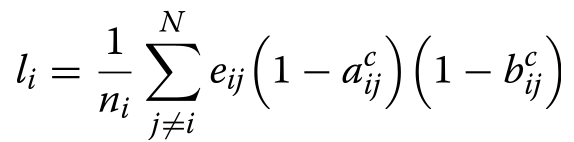
The weight for each connection depends on:
1. **Attribute Dissimilarity**: Does the neighbor have a different attribute than you?
2. **Local Monopolization**: Does that neighbor have no other ties to your attribute group?
## Mapping Physician Networks
The researchers applied this to 2015 CMS Patient-Sharing Data across 306 US hospital referral regions.
### Key Insight 1: Scarcity Drives Importance
There is a strong inverse correlation (Kendall’s $ au = -0.6$) between the number of physicians in a specialty and their average Linchpin Score. Rare specialties like **Intensive Care (0.88)** and **Endocrinology (0.40)** naturally act as linchpins compared to high-density groups like Radiology.
### Key Insight 2: The Rural vs. Urban Divide
This is where the Linchpin Score outshines traditional metrics. In rural areas:
* **Closeness Centrality** is lower for *all* doctors (indicating general isolation).
* **Linchpin Score** specifically identifies **Specialists** as having significantly higher scores than their urban counterparts, while **General Practitioners** actually have lower scores in rural settings.
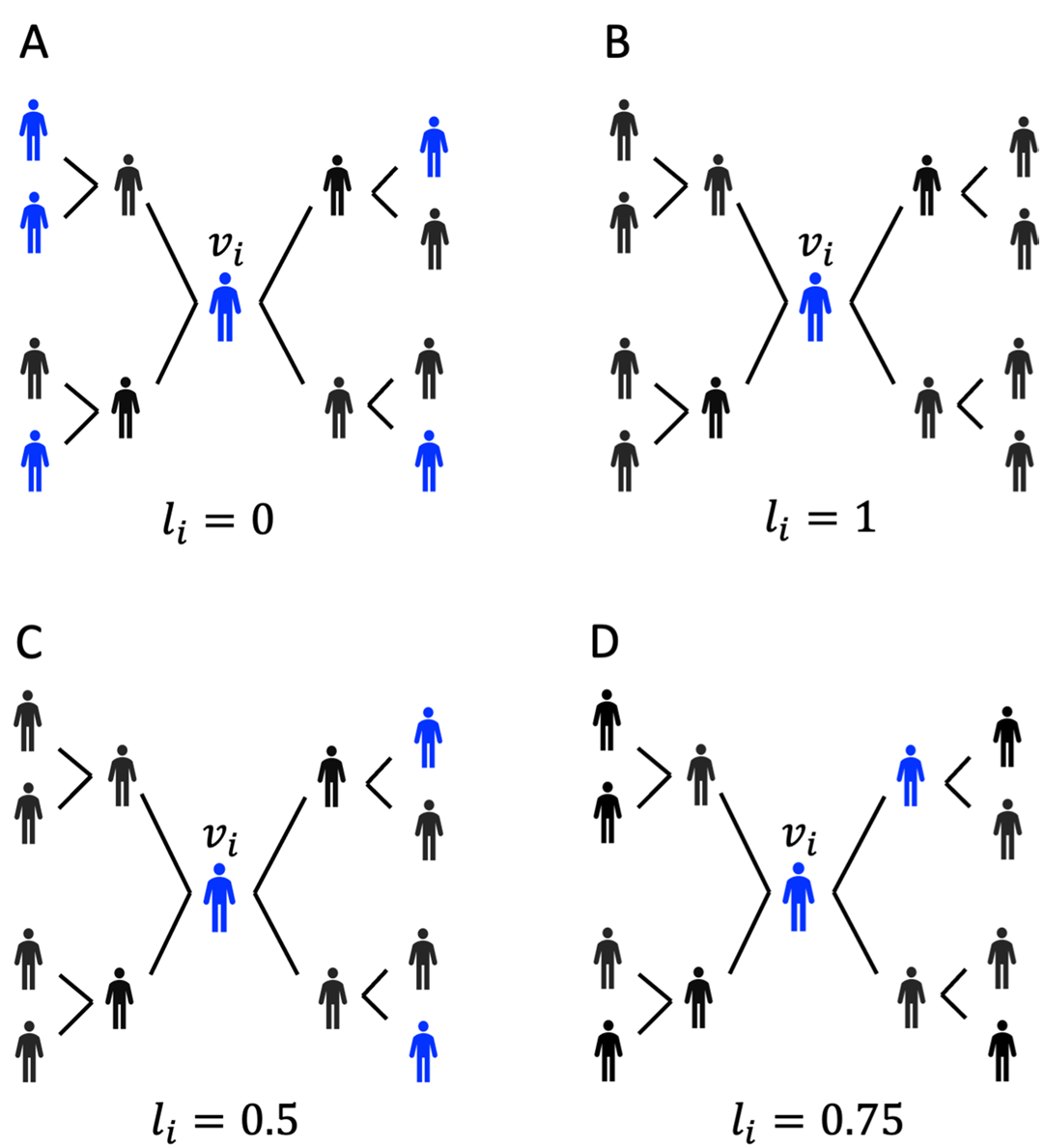
*Figure: A illustrates a node with local redundancy ($l_i=0$), while B shows a perfect Linchpin ($l_i=1$).*
## Experimental Results: Vulnerability Assessment
By comparing real networks to randomized "permuted" networks (where specialties were assigned at random), the authors found that observed healthcare networks actually have **lower** Linchpin scores than random chance would suggest.
**What does this mean?** It suggests that healthcare systems implicitly "organize" to avoid single points of failure. Doctors tend to form ties that provide redundant access to specialists, making the system more robust than a random distribution of professionals.
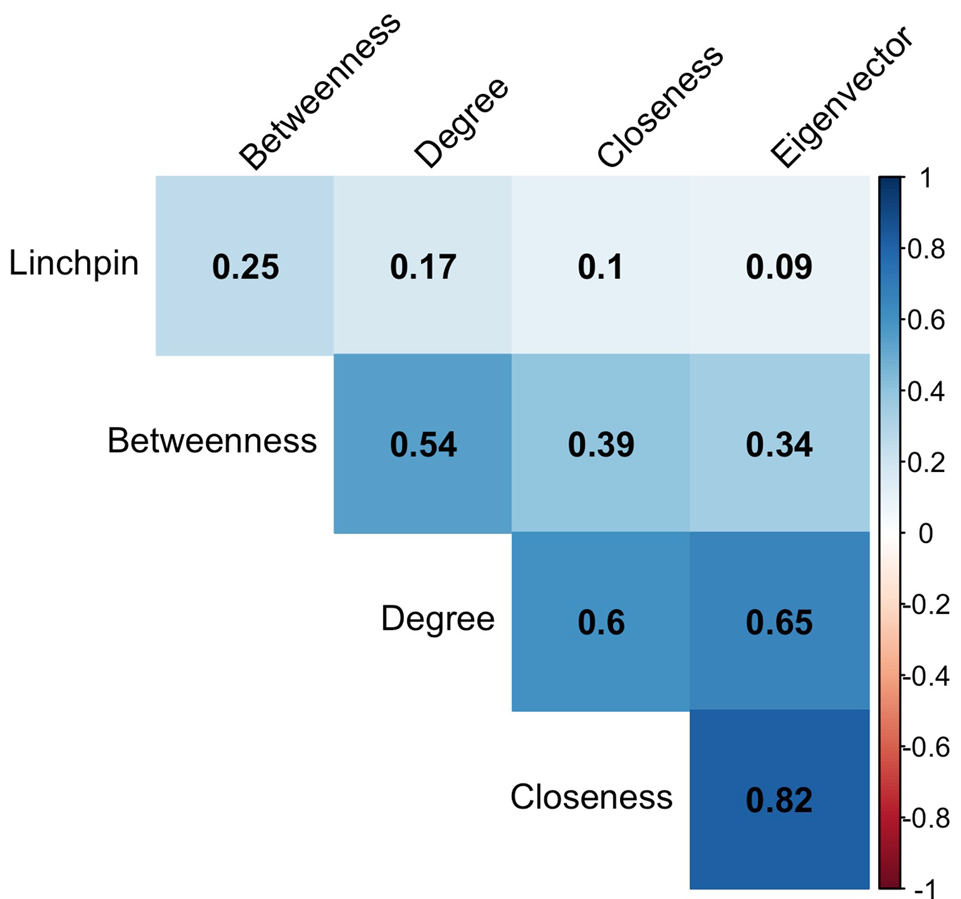
*Figure: Correlation matrix showing that Linchpin Score identifies a distinct set of nodes compared to Closeness or Eigenvector centrality.*
## Critical Analysis & Future Outlook
**Contributions:**
* **Contextual Centrality**: Moves beyond "who you know" to "what you provide."
* **Policy Tool**: Can be used by health systems to identify which physician's retirement or departure would most cripple local care coordination.
**Limitations:**
The current model uses binary categories. While the authors suggest binning continuous variables, the measure's strength lies in discrete, hard-to-change attributes (like a medical degree or a specific technical certificate).
**Future Work:**
The Linchpin Score is ripe for application in **Software Engineering** (identifying "linchpin" developers in GitHub contributor graphs) and **Supply Chain Analysis** (identifying suppliers who are the sole providers of a specific component to their downstream partners).
### Takeaway
In a world obsessed with "Big Data" and "Massive Connectivity," the Linchpin Score reminds us that **uniqueness** is as much a form of power as **connectedness**.