
Bridging the Gap Between Words and Numbers: An Interval Version of the 2-Tuple Fuzzy Model
17003_Linguistic Computational Model Based on 2-Tuples and Intervals.
This paper introduces an interval-based version of the 2-tuple fuzzy linguistic representation model for Computing with Words (CW). It generalizes traditional 2-tuple models by utilizing interval numerical scales to handle non-uniformly and asymmetrically distributed linguistic term sets, bridging the gap between simple 2-tuples and complex Interval Type-2 Fuzzy Sets (IT2 FSs).
TL;DR
The paper proposes a new linguistic computational model that combines the simplicity of 2-tuple fuzzy representation with the robustness of interval mathematics. By replacing single numerical scales with intervals, the authors create a system that captures the uncertainty of human language (like "Fair" or "Very Good") more accurately than traditional models, while remaining significantly faster than complex Type-2 fuzzy systems.
Background: Why "Words" are Hard for Machines
In the field of Computing with Words (CW), the primary challenge is that language is inherently "fuzzy." A word like "Small" doesn't represent a single point on a scale but a range of possibilities that varies between individuals.
While Interval Type-2 Fuzzy Sets (IT2 FSs) were designed to model this uncertainty by defining a "Footprint of Uncertainty" (FOU), they are mathematically heavy and computationally expensive. This paper introduces a "middle ground": an interval-based 2-tuple model that offers the precision of IT2 FSs with the processing speed of simple arithmetic.
Methodology: The Three Pillars
The authors move beyond the classic Herrera and Martínez 2-tuple model by introducing the Interval Numerical Scale (INS). The process follows a logical pipeline:
- Interval Transformation: Instead of mapping a linguistic term to a single number, it is mapped to an interval .
- Interval Computation: Aggregation operators (like IWA and IOWA) process these intervals.
- Generalized Inverse Mapping: The final result—often an interval that doesn't perfectly match a predefined word—is mapped back to a "Linguistic 2-tuple Interval," keeping the translation information () intact to prevent information loss.
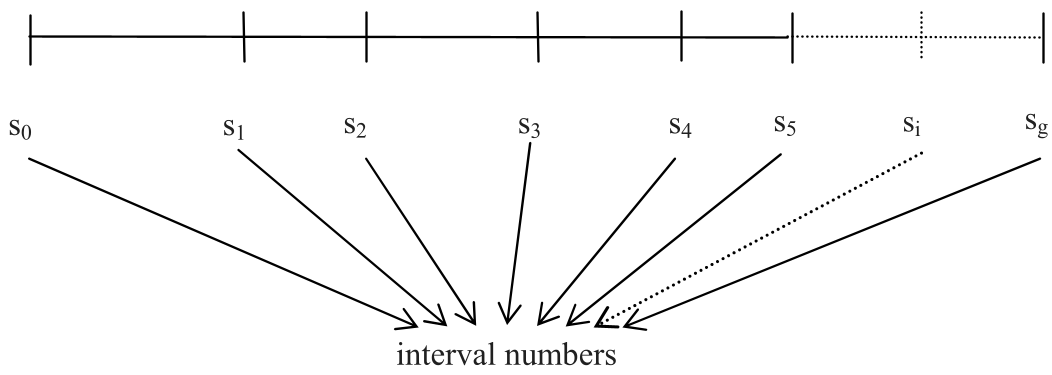 Figure 1: The architecture showing the transformation from linguistic terms to interval numbers and back.
Validating with IT2 FS: The Simulation
To prove that this simplification doesn't sacrifice accuracy, the authors ran simulations using a library of 32 real-world words (e.g., "A bit," "Some," "Extreme amount") and compared their model's output to the standard (but slow) IT2 FS engine.
Key Findings:
- Consistency: The simplified interval results were consistent with the complex IT2 FS results in nearly 95% of cases.
- Reduced Complexity: By avoiding the iterative KM (Karnik-Mendel) algorithms required for Type-2 fuzzy sets, the model operates with much lower latency.
- Flexibility: It handles "unbalanced" term sets—where words aren't spread evenly (e.g., having many words for "Good" but few for "Bad").
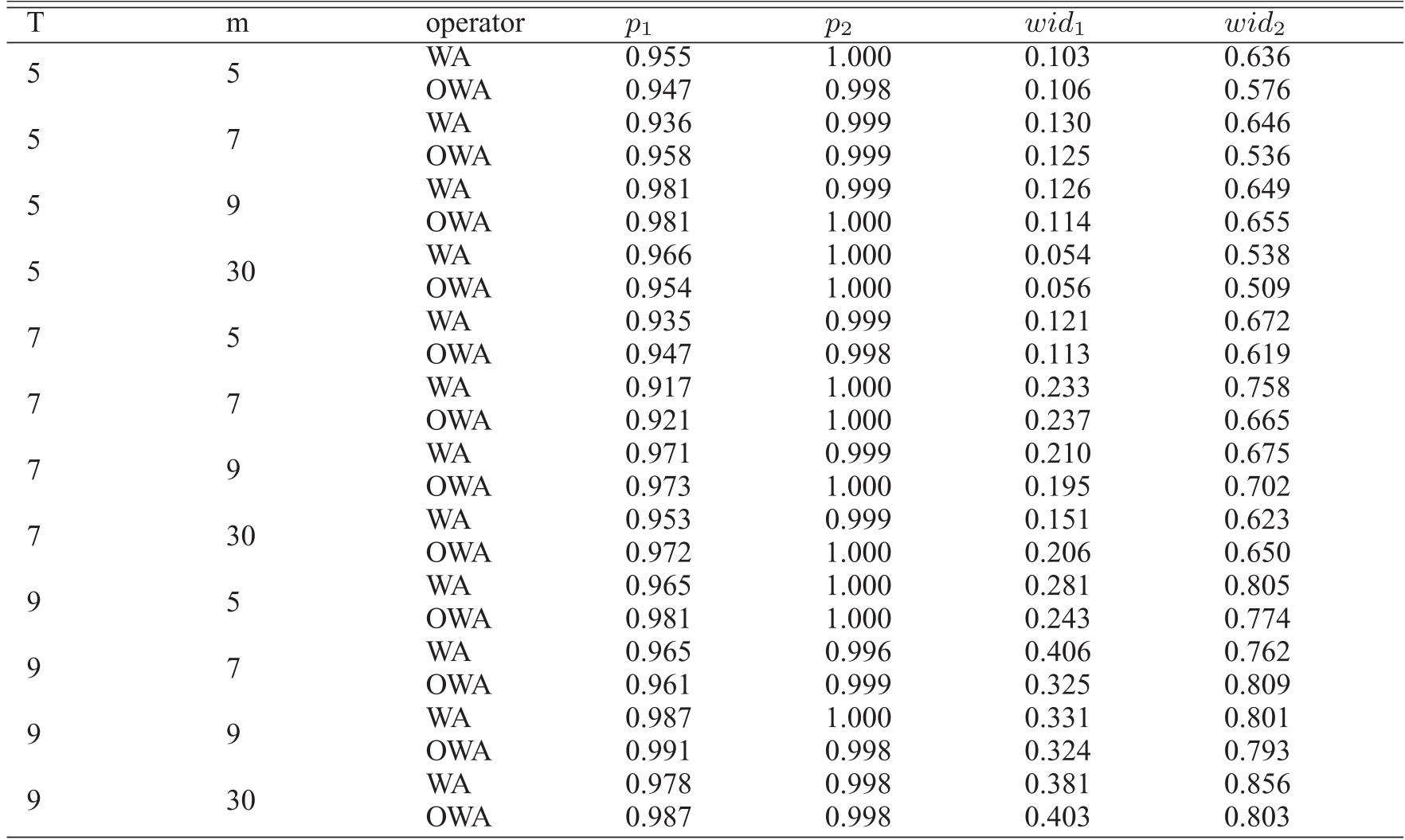 Table 1: Simulation results (Methods I, II, III) showing high p1 and p2 values, indicating strong consistency with traditional fuzzy benchmarks.
Critical Insight: Why This Matters
The real value of this research lies in its scalability. In modern AI applications—such as sentiment analysis, expert system feedback, or human-in-the-loop decision making—we need models that can handle "vague" human input without crashing the server.
The authors have essentially provided a lossless compression for linguistic uncertainty. By utilizing the Centroid of IT2 FSs to set the Interval Numerical Scale, they've ensured that the "physics" of the uncertainty is preserved while the math is streamlined.
Conclusion & Outlook
This paper succeeds in generalizing the Wang and Hao model to a more flexible, interval-based context. While the current work focuses on decision-making simulations, the potential for applying this to Multi-modal AI (where linguistic labels must be reconciled with numerical sensor data) is vast.
Future Work: The authors suggest extending this with optimization-based approaches to calibrate scales dynamically, which could lead to "Self-Tuning" linguistic interfaces for human-AI collaboration.