
Precise Qualitative Fusion: Optimizing Linguistic Distributions for Large-Scale Group Decisions
Linguistic Distribution-Based Optimization Approach for Large-Scale GDM With Comparative Linguistic Information: An Application on the Selection of Wastewater Disinfection Technology
This paper proposes a linguistic distribution-based optimization approach to transform Comparative Linguistic Expressions (CLEs) into Linguistic Distribution Assessments (LDAs) and Interval LDAs. The method is integrated into a large-scale Group Decision-Making (GDM) framework, achieving superior consistency in expert preference modeling compared to traditional hesitant fuzzy linguistic term sets.
TL;DR
In Group Decision-Making (GDM), experts often use comparative phrases like "better than fair" rather than precise numbers. Conventional models treat all possible terms in such phrases as equal, which is rarely true. This paper introduces a Consistency-Driven Optimization Approach that transforms these expressions into Linguistic Distribution Assessments (LDAs). By minimizing inconsistency during the transformation, the model "calculates" the most likely intention of the decision-maker, even in large-scale groups involving hundreds of stakeholders.
Background: The Flaw in "Equal Hesitation"
When an expert says a technology is "between good and excellent," existing models (HFLTS) assume there is a 33.3% chance they mean "good," 33.3% for "very good," and 33.3% for "excellent." However, intuition suggests they might lean 60% toward "good" and only 10% toward "excellent."
The inability to model these possibility degrees leads to information loss. To solve this, the authors leverage the concept of Linguistic Distribution Assessments (LDAs), but with a twist: instead of asking experts for tedious probability numbers, they derive the numbers mathematically by ensuring the expert's local preferences are logically consistent.
Methodology: Consistency as the Engine of Truth
The core innovation lies in the transformation from Comparative Linguistic Expressions (CLEs) to LDAs.
1. The Optimization Model
The authors posit that if an expert is rational, their preferences should satisfy additive transitivity (). The model treats the possibility degrees () as decision variables. It solves a non-linear objective (which they cleverly prove can be simplified into Linear Programming) to find the distribution that results in the lowest possible inconsistency level.
2. Large-Scale Framework
Handling "Large-Scale" (typically defined as participants) requires more than just fusion; it requires management. The paper proposes a 4-step workflow:
- Numerical Transformation: Converting CLEs to highly consistent LDAs or Interval LDAs.
- Preference Clustering: Using a similarity matrix to group experts.
- Aggregation: Weighted fusion of cluster opinions.
- Exploitation: Ranking alternatives.
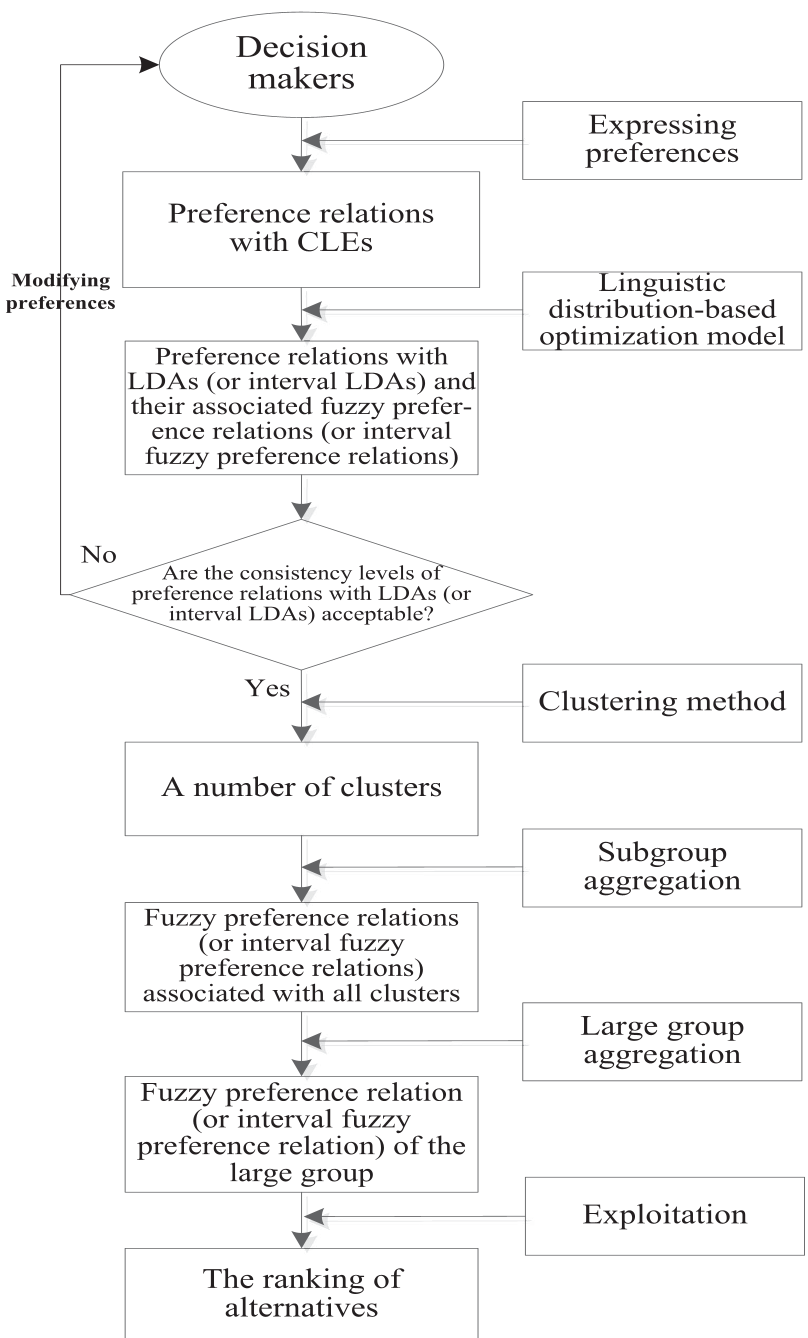 Figure 1: The proposed Large-Scale Group Decision-Making Framework architecture.
Real-World Application: Wastewater Disinfection
The framework was applied to a critical environmental task: selecting sustainable wastewater reuse technology. Four technologies were evaluated: Chlorination (CHL), Ozonization (OZO), Ultraviolet (UVR), and Membrane Filtration (MFI).
Experimental Evidence
20 experts provided their inputs via CLEs. The proposed model successfully converted these into Interval LDAs. For instance, for expert , the expression "between and " was optimized into a distribution where held more weight than to satisfy the global consistency of the matrix.
Performance vs. Baseline
The authors compared their method against the standard Hesitant Fuzzy Linguistic Preference Relation (HFLPR) approach.
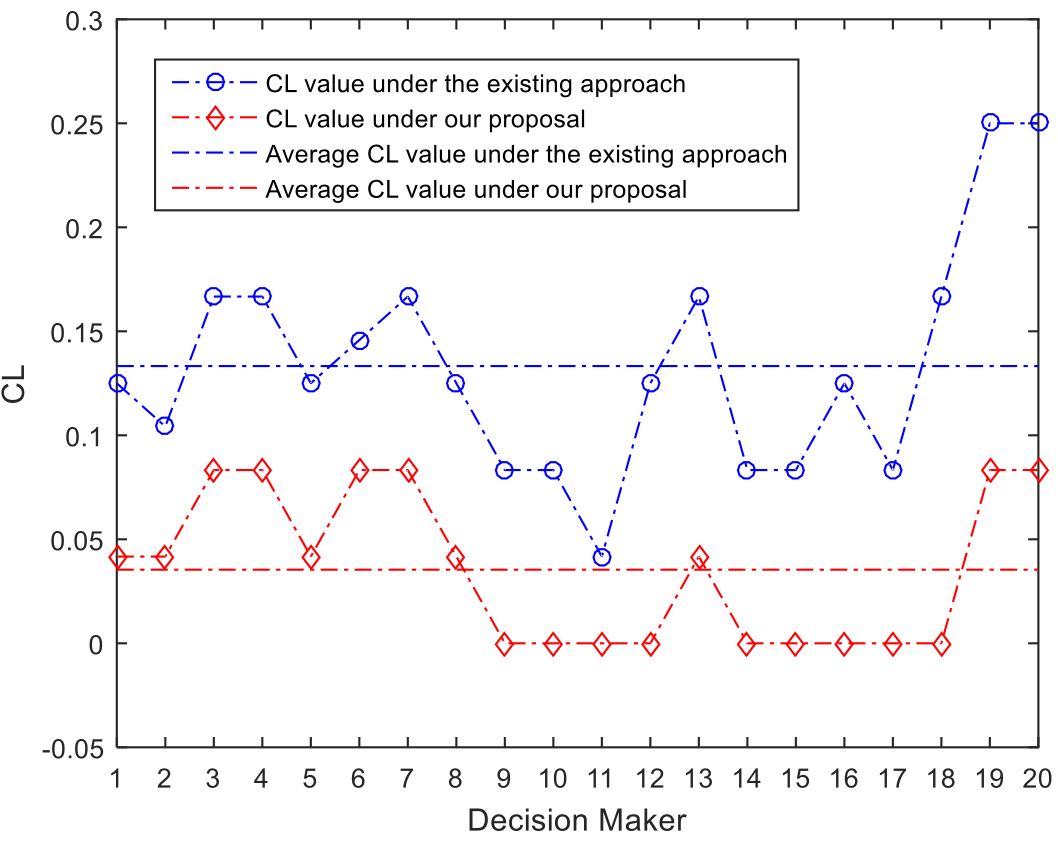 Figure 2: Consistency Index (CI) comparison. Lower values indicate better performance.
As seen in the chart, the Linguistic Distribution (LD) approach consistently produced lower (better) inconsistency levels across all 20 experts compared to the equal-possibility HFLPR assumption.
Takeaway and Future Outlook
This research provides a robust mathematical bridge between "Natural Language Thinking" and "Quantitative Decision Analysis." By treating consistency as an optimization target, the system effectively "reverse-engineers" the expert's subjective weights.
Future Directions:
- Consensus Building: How do we handle groups that are consistent individually but disagree collectively?
- Social Trust: Integrating the "Trust Network" of experts to weight their importance.
- Psychological Factors: Accounting for expert overconfidence or risk-aversion in the optimization constraints.