
Decoding the Language of Doubt: Why Linguistic Cues Outperform Community Data in MOOC Confusion Detection
What Do Linguistic Expressions Tell Us about Learners’ Confusion? A Domain-Independent Analysis in MOOCs
2020-09-29
Summary
Problem
Method
Results
Takeaways
Abstract
This paper presents a domain-independent machine learning approach for classifying learner confusion in MOOC discussion forums. By utilizing a novel set of purely linguistic and discourse features, the authors achieved a SOTA F1-score of up to 94.5%, significantly outperforming previous models that relied on community metadata or domain-specific features.
## TL;DR
Confusion is a double-edged sword in learning: managed correctly, it leads to "Aha!" moments; ignored, it leads to course dropout. This paper shifts the paradigm of confusion detection in Massive Open Online Courses (MOOCs). By moving away from "social" metadata (likes/votes) and focusing purely on **how** students frame their sentences, the researchers achieved a record-breaking 94.5% F1-score in identifying confused learners across diverse disciplines.
## The Motivation: The Latency Problem of Social Metadata
Most existing models for MOOC analysis rely on "Community Features"—voted-up posts, views, and reply counts. While these are strong signals, they have a fatal flaw: **Latency**.
In a global MOOC, a student in London might post a desperate question while the rest of the cohort is asleep. By the time that post gains enough "votes" or "views" for an algorithm to flag it as "confused," the learner may have already disconnected out of frustration. To achieve **real-time intervention**, we need a model that can read a single post in isolation and immediately sense the "bewilderment" behind the text.
## Methodology: Beyond Bag-of-Words
The authors move beyond simple keyword matching. They categorized linguistic features into two buckets:
1. **Direct Expressions**: The obvious signals. Negations ("cannot understand"), question marks, and error-related keywords.
2. **Indirect Cues (The Secret Sauce)**: This includes **Type-Token Ratio (TTR)**—which measures lexical diversity—and **Pedagogical terms** (mentioning "lecture," "quiz," or "video").
### Critical Insight: The First-Person Singular
One of the most predictive features found was the use of **first-person pronouns ("I", "my")**. Confused learners tend to focus inward on their personal struggle ("I am struggling with..."), whereas non-confused learners often use third-person pronouns ("it," "they") to discuss objective concepts or help others.
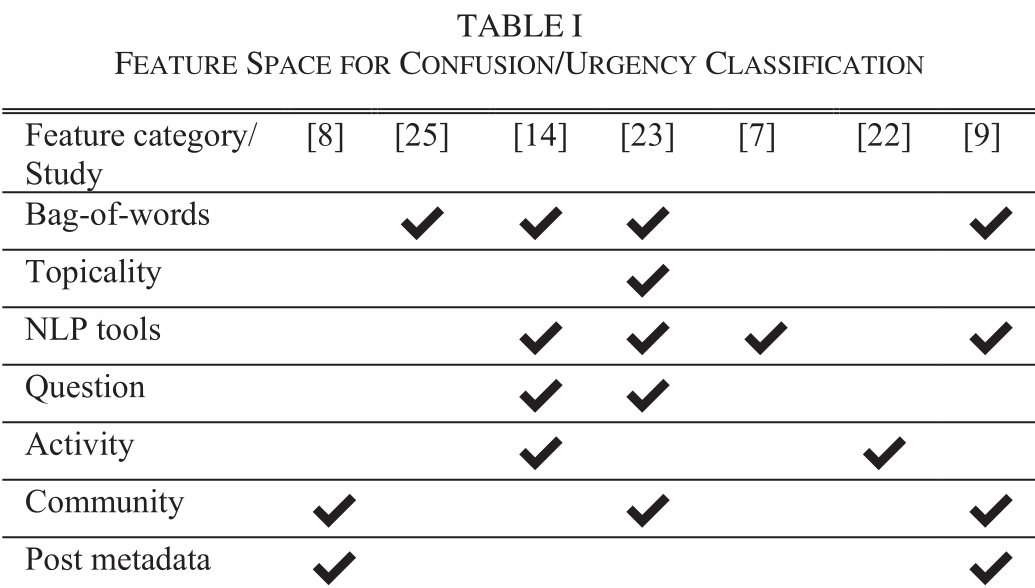
*Table 1: Comparison of feature spaces across different state-of-the-art studies.*
## Experimental Results: Breaking the Domain Barrier
The researchers tested their model on the **Stanford MOOC Posts Dataset**, covering Education, Medicine, and Humanities.
### Key Findings:
* **SOTA Performance**: The Random Forest model achieved F1-scores of **83% to 94%**.
* **Cross-Domain Robustness**: A model trained on *Education* posts could predict confusion in *Medicine* posts with high accuracy. This suggests that the "language of confusion" is a universal human trait that transcends the specific subject being studied.
* **Recall is King**: In education, missing a confused student (false negative) is worse than misidentifying a confident one (false positive). This model maintains a high recall (up to 94.8%), ensuring fewer students are "left behind."
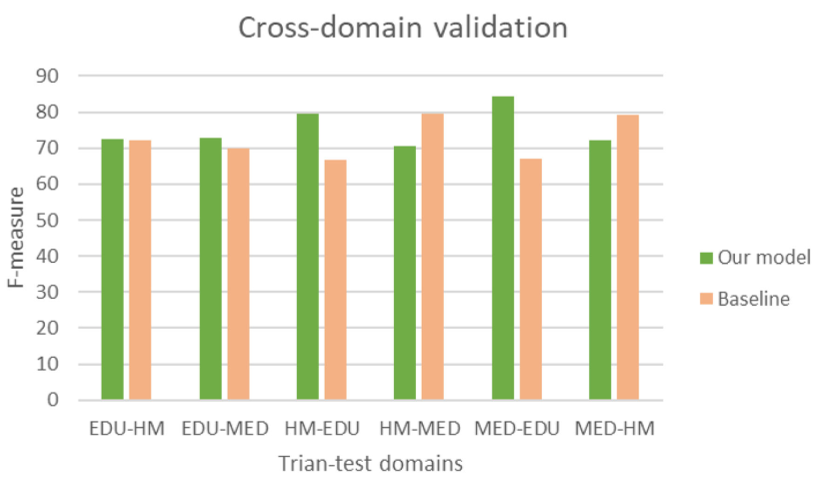
*Figure 1: Comparison of the proposed linguistic models against three major baselines.*
## Deep Insight: Neutral isn't always Safe
One of the most striking findings was that **Neutral Sentiments** are often highly correlated with confusion. A student doesn't need to use "angry" or "sad" words to be lost. Often, a simple, objective question about a "quiz" or "deadline" without any emotional valence is the strongest signal of cognitive uncertainty.
## Conclusion & Future Outlook
This work proves that we don't need complex tracking devices or delayed social data to support students. By analyzing the **Inductive Bias** inherent in how we express uncertainty, we can build "Early Warning Systems" directly into discussion forums.
**Limitations**: The model currently struggles with very short posts where linguistic features are sparse.
**Next Steps**: Integrating these features into Large Language Models (LLMs) like GPT-4 could further refine our ability to distinguish between "Productive Confusion" (which aids learning) and "Unproductive Confusion" (which leads to failure).
***
**Academic Summary (TL;DR)**: By leveraging tools like SEANCE and SiNLP, this research identifies a domain-independent linguistic signature for learner confusion, achieving an F1-score of 0.945. It advocates for a shift toward personalized, linguistic-only models to enable real-time educational interventions.