
Bridging Intuition and Data: Bayesian Regression with Linguistic Knowledge
Linguistic knowledge about temporal data in Bayesian linear regression model to support forecasting of time series
The paper introduces a Bayesian Linear Regression model that integrates imprecise temporal linguistic knowledge (e.g., "increasing," "low," "constant") into time series forecasting. By converting qualitative expert observations and data-mined patterns into quantitative "Imprecise Labeled Sequences," the method achieves forecasting performance comparable to traditional Vector Autoregression (VAR) while significantly enhancing model interpretability.
TL;DR
Predicting market trends often relies on "gut feeling" and qualitative labels like "high supply" or "steadily decreasing." This paper formalizes this intuition by converting fuzzy linguistic concepts into explanatory variables within a Bayesian Linear Regression framework. Testing on real-world pharmaceutical data, the approach matches or exceeds the accuracy of standard statistical models like VAR while being significantly easier for human experts to interpret.
The Gap Between "Crisp" Data and Human Expertise
In fields like pharmaceutical sales or medical diagnosis, experts don't just look at numbers; they look at shapes. They might notice a "weakly increasing" trend or a "highly volatile" period. Traditional models (like Autoregressive models) are mathematically rigorous but "black boxes" regarding these human-perceived patterns. The challenge is: how do we treat these imprecise words as "data" that a machine can learn from without losing their inherent meaning?
Methodology: From Words to Matrices
The authors propose a pipeline that transforms qualitative labels into quantitative inputs through three key steps:
- Linguistic Labeling: Defining a set of labels (e.g., low, constant, increasing).
- Imprecise Labeled Sequences (ILS): Using fuzzy membership functions to assign a "degree of truth" (0 to 1) to each time point for a given label.
- Bayesian Inference: These sequences serve as the matrix in a linear regression: By using Gibbs Sampling (MCMC), the model generates posterior distributions for parameters , which directly link the "weight" of a linguistic concept to the forecast.
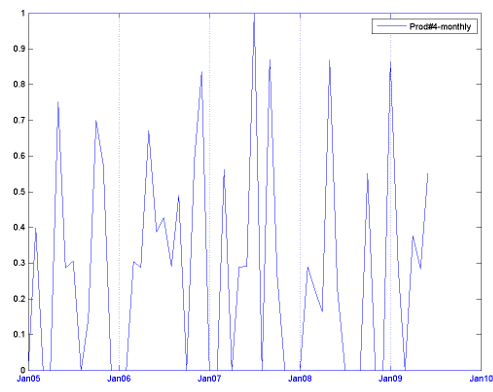 Fig 1. The workflow: Converting time series and linguistic concepts into a Bayesian predictive distribution.
Experimental Insights: Do Words Actually Help?
The authors tested the model on 5 years of pharmaceutical sales data. A critical finding was the correlation boost:
- Sales vs. Sales correlation: ~0.10
- Sales vs. "Increasing" trend correlation: ~0.14
This 20% increase in correlation suggests that the "shape" of the data (the linguistic label) is often more informative than the raw previous values.
Performance Comparison
When compared against Vector Autoregression (VAR), the Bayesian BRLK model showed a clear advantage in short-term (h=1) precision:
| Model | h=1 APE (Lower is better) | h=6 MAPE |
|---|---|---|
| BRLK (Proposed) | 0.342 | 0.402 |
| VAR (Baseline) | 0.407 | 0.402 |
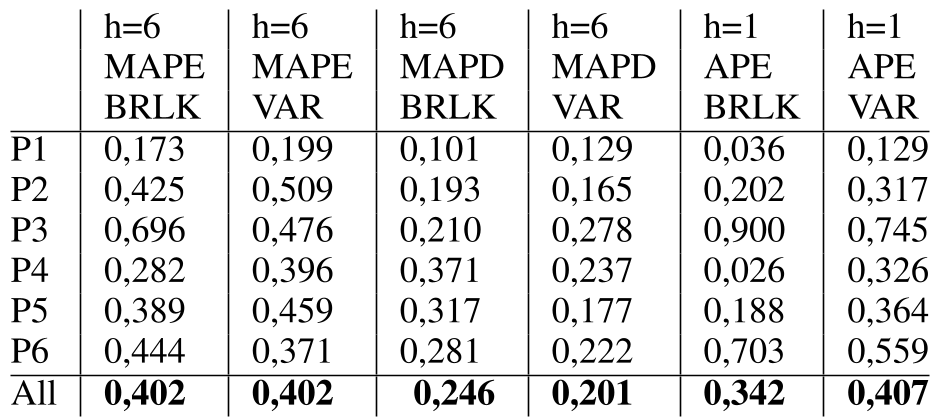 Fig 2. Detailed performance metrics across different pharmaceutical products.
Critical Analysis & Conclusion
The true value of this work isn't just the marginal improvement in MAPE; it's the transparency. Because the model's coefficients are tied to words like "high" or "decreasing," an expert can look at the model and understand why it predicted a sales spike.
Limitations: The current model uses a static interpretation of labels. In reality, "high sales" in a recession might be "low sales" in a boom. Future work needs to address context-dependent membership functions.
Future Outlook: Integrating this linguistic layer into Deep Learning (e.g., as an attention mechanism or an embedding layer) could provide the "best of both worlds"—the predictive power of Transformers with the interpretability of human language.