
From Data to Wisdom: The Power of User-Centric Linguistic Modeling
Linguistic models as a framework of user-centric system modeling
This paper presents a comprehensive framework for Linguistic Models, a user-centric modeling paradigm that utilizes Information Granules and Conditional Fuzzy C-Means (C-FCM) clustering. By leveraging "fuzzy contexts" in the output space to guide input space clustering, the method achieves a highly interpretable model that competes with and often outperforms traditional RBF Neural Networks.
TL;DR
This research introduces a systematic framework for building Linguistic Models that prioritize human interpretability without losing predictive power. By using Context-based Fuzzy Clustering (C-FCM), the model transforms raw data into semantically meaningful "Information Granules," behaving like a web of linguistic rules that provide granular (fuzzy) rather than just point-numeric outputs.
The "Precision-Interpretability" Paradox
In the world of modeling, we often face a trade-off: we can have a "black box" that is highly accurate (like a deep neural network) or a transparent model that is easy to understand but lacks performance. Pedrycz and Kwak argue that the missing link is User-Centricity.
Most clustering algorithms are "direction-blind"—they find patterns in the input data without considering what the user actually cares about in the output. This paper flips the script: it allows the designer to define "Contexts" (e.g., "Low Fuel Consumption" or "High Price") and then forces the clustering algorithm to find the structural "evidence" in the input space specifically for those contexts.
Methodology: The Granular Architecture
The core of this work is the Granular Neuron. Unlike a standard neuron that multiplies numbers by weights, a granular neuron processes Information Granules.
The 3-Phase Design Process:
- Context Definition: The user defines linguistic landmarks (fuzzy sets) in the output space.
- Conditional Clustering: Using C-FCM, the system finds clusters in the input space that are "conditioned" by these output contexts.
- Parametric Optimization: A gradient-descent loop refines the connections (fuzzy weights) to ensure the model aligns with experimental data.
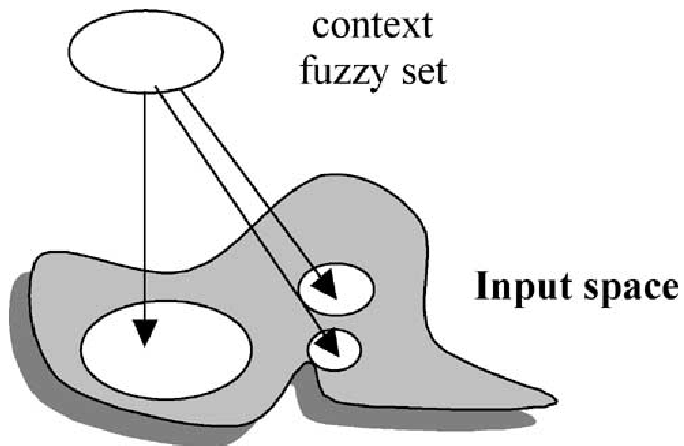 Figure: The blueprint of a linguistic model where contexts in the output space (F) direct the formation of clusters in the input space.
The Granular Neuron
The model aggregates cluster activations through a neuron with fuzzy weights. The result isn't just a number; it is a fuzzy number that represents the model's confidence and specificity.
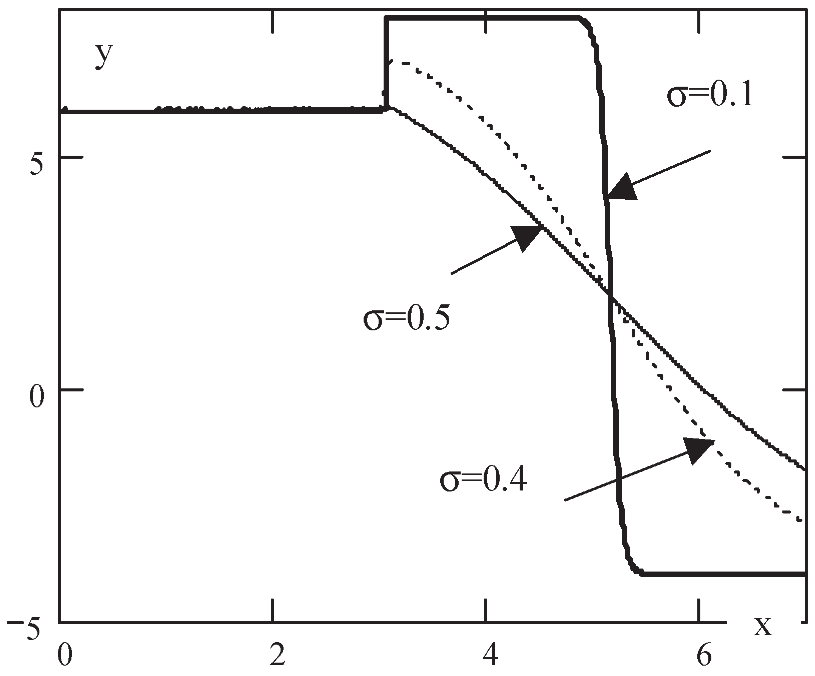 Figure: A granular neuron where connections are realized as Information Granules (e.g., triangular fuzzy numbers).
Experimental Battleground: SOTA Comparison
The authors tested their framework against Radial Basis Function Neural Networks (RBFNN), the gold standard for this type of task.
Key Findings:
- Synthetic Performance: In 1D and 2D non-linear function approximation, the linguistic model achieved lower RMSE and higher "Matching Degrees" (Q-index) after iterative optimization.
- Real-World Robustness: On the Boston Housing and Auto MPG datasets, the model outperformed standard RBFNNs. For instance, in the Computer Hardware dataset, the "Recursive Optimization" strategy nearly halved the error compared to standard RBFNNs.
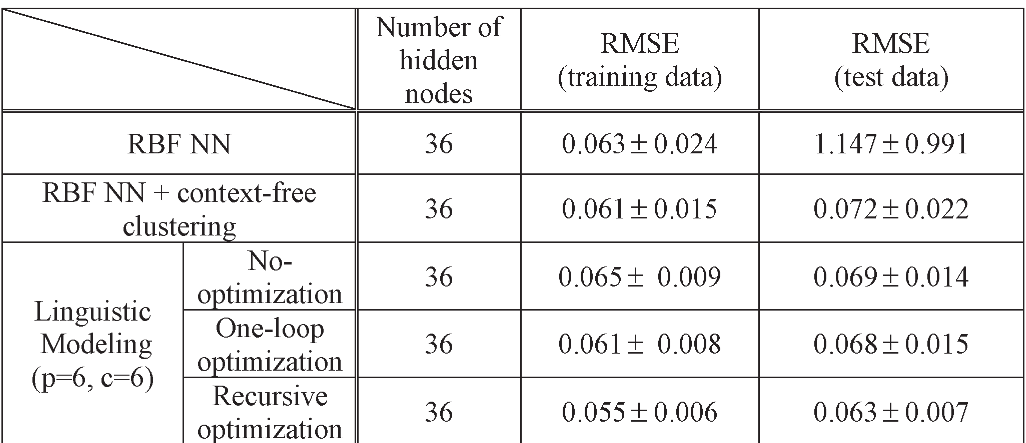 Table: Successive optimization shows a clear downward trend in RMSE, validating the iterative refinement approach.
Why It Matters: Intuition over Numbers
The beauty of this approach is the Granularity of the Result. When the model predicts an outcome, it provides a "bound" (lower and upper) and a membership function. This tells the user not just "the answer is 25," but "the answer is 'Medium' with a high degree of certainty, ranging between 22 and 28."
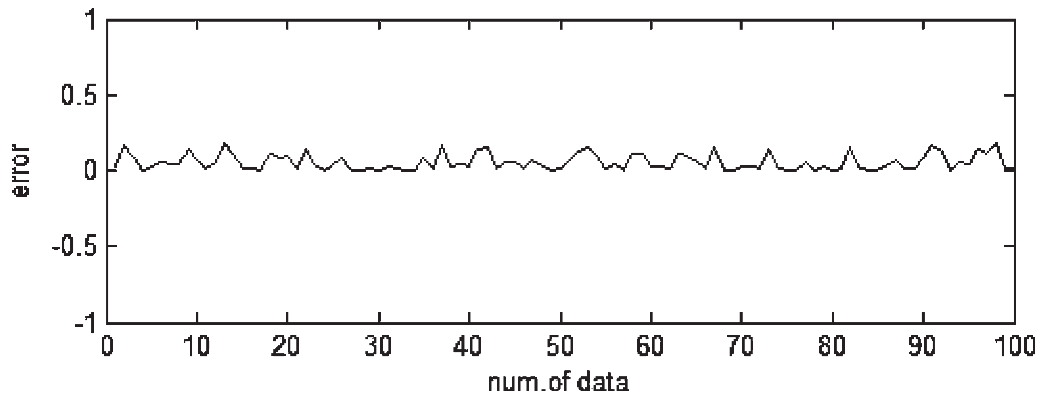 Figure: The linguistic output (solid and dashed bounds) effectively "envelops" the actual numeric data points, providing a more informative prediction than a single point.
Critical Analysis & Conclusion
While highly effective, the paper notes a limitation: as the number of contexts and clusters increases, the "data density" per context drops, making it hard to find stable clusters (the "curse of granularity").
Takeaway: This work is a cornerstone for Explainable AI (XAI). It proves that by embedding human-centric logic (Contexts) directly into the heart of the clustering process, we can build models that are both scientifically rigorous and satisfy the human need for meaning.