
Driving in Words: Bridging Sensor Data and Human Perception via Fuzzy Logic
Linguistic reporting of driver behavior: Summary and event description
The paper introduces a computational system for generating automatic natural language reports of driving behavior using Fuzzy Logic. It leverages a Granular Linguistic Model of a Phenomenon (GLMP) to transform vehicle simulator time-series data into structured linguistic summaries and event descriptions.
TL;DR
This paper presents a framework to transform "cold" vehicle simulator data into "warm" natural language reports. By utilizing Fuzzy Logic and the Computational Theory of Perceptions (CTP), the system automatically detects driving risks—like poor lane keeping or insufficient safety distances—and generates a structured linguistic summary that explains not just what happened, but why it happened.
Professional Context
While modern AI often focuses on "end-to-end" black-box models, this work sits firmly in the domain of Explainable AI (XAI) and Human-Machine Interaction. It operates within the HITO project, aiming to evaluate how secondary tasks (like using a GPS) impact driving safety. Instead of forcing experts to scroll through endless telemetry graphs, it provides a "human-readable" audit trail.
The Core Challenge: The Gap Between Numbers and Meaning
Human experts don't think in terms of "Steering Angle = 14.5°" or "Velocity = 82.3 km/h." They think in granules: "The driver made an abrupt turn" or "The speed was too high for the conditions."
The difficulty lies in:
- Granularity: How to group raw data into meaningful linguistic concepts (labels).
- Temporal Evolution: How to describe change over time (trends) and frequency (summaries).
- Diagnosis: How to trace a high-level "Bad Driving" label back to the specific sensor readings that caused it.
Methodology: The GLMP Architecture
The authors propose the Granular Linguistic Model of a Phenomenon (GLMP). Think of this as a hierarchical network where raw data flows in at the bottom and natural language flows out at the top.
1. Three Types of Computational Perceptions (CP)
Inspired by Control Theory (PID), the model categorizes perceptions into:
- Assertive CP: Describes the status quo (e.g., "Speed is High").
- Derivative CP: Captures the rate of change (e.g., "Lateral position is rapidly decreasing").
- Integrative CP: Summarizes over time (e.g., "Most of the time, security distance was low").
2. The Hierarchy
The network consists of Perception Mappings (PM) that use fuzzy membership functions to transform 13 input parameters (Speed, HE, TTLC, etc.) into intermediate perceptions like Steering Wheel Control and Vehicle Linearity.
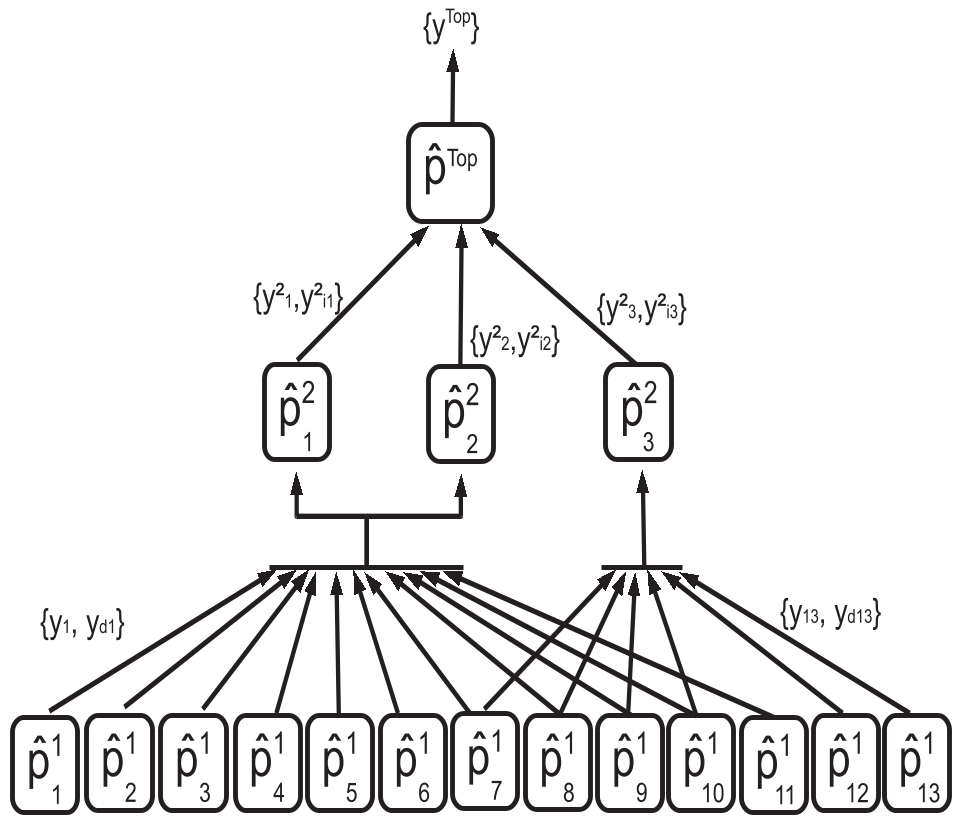 Fig. 1: The GLMP network showing how 13 lower-order parameters aggregate into the top-order "Quality of Manoeuvre."
Determining "Why": Solving the Inverse Problem
One of the most impressive technical aspects is the Root Cause Analysis. When the system detects a "Bad Manoeuvre," it doesn't just stop there. It performs a backward search through the GLMP network. By identifying which fuzzy rules were triggered at the lower levels, the system can output specific reasons, such as: "The Vehicle Linearity is Low because the Lateral Position is Rapidly Decreasing."
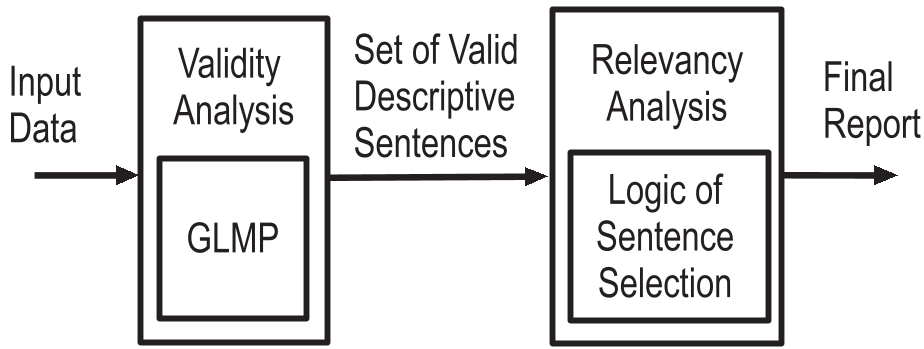 Fig. 2: The automated pipeline from simulation data to the final linguistic report.
Experimental Results
The system was tested using real data from professional truck drivers in varying scenarios (urban, inter-urban, etc.).
A key case study involved an overtaking maneuver of a group of cyclists. The system correctly identified an "incidence" because:
- The speed of the object in front was low.
- The truck was accelerating hard without braking.
- The lateral safety margin was compromised.
 Fig. 3: A generated event description showing the linguistic summary, raw telemetry graphs, and the corresponding video frame of the cyclists.
Critical Analysis & Future Outlook
Value Add: The primary contribution is the shift from "Computing with Numbers" to "Computing with Words." This significantly reduces the cognitive load for safety auditors and provides a transparent decision-making process.
Limitations: The system relies heavily on expert-defined rules and membership functions. In highly complex, edge-case scenarios, the manual definition of these rules might become a bottleneck.
Future Work: Integrating this linguistic reporting with real-time onboard device data could allow the system to definitively state: "The driver lost control because they were distracted by the GPS." This level of semantic understanding is the "holy grail" of driver monitoring systems.
Summary (Takeaway)
This paper provides a robust blueprint for how we can use Fuzzy Logic to make machine data human-centric. By modeling "Perceptions" rather than just "Values," it opens the door for more intuitive AI assistants in the automotive industry.