
Deciphering Septic Shock: Using Linguistic Summaries to Bridge Human Intuition and Clinical Data
Linguistic summaries of categorical time series for septic shock patient data
The paper introduces an framework for generating Linguistic Summaries (LS) of categorical time series data, specifically applied to medical records of septic shock patients. By extending traditional fuzzy protoforms to include Temporal and Categorical Contextualization, the authors achieve a human-interpretable method for identifying distinctive physiological patterns between surviving and deceased patient groups.
TL;DR
This research moves beyond traditional statistical averages to describe medical time-series data using Linguistic Summaries (LS). By introducing "Differential Summaries," the authors provide a framework that generates natural language sentences—such as "Most survivors maintained a medium heart rate, while deceased patients did not"—to help doctors identify subtle, non-trivial differences in septic shock outcomes.
Why Statistical Means Aren't Enough
In the Intensive Care Unit (ICU), septic shock remains the second leading cause of death. Diagnosis relies on vital signs like temperature and heart rate, but the progression of the condition varies wildly between patients.
The paper's core insight is that traditional visualization (like mean value plots with 95% confidence intervals) often shows a massive overlap between patient groups, masking the patterns that actually matter. Scientists need a way to quantify differences in behaviors over time through the lens of human-consistent logic.
The Core Methodology: Protoforms and Contextualization
The researchers utilize Fuzzy Logic Protoforms—mathematical templates that translate raw numbers into linguistic variables.
1. Temporal & Categorical Context
Existing LS methods usually look at a static snapshot. This paper adds:
- Temporal Context (): Measuring how often a state occurs (e.g., "Most of the time").
- Categorical Context (): Partitioning the data by outcomes (e.g., "Patients who survived").
2. Differential Summaries
The most significant contribution is the Differential Criterion (). It asks: "How much more true is this statement for Group A than Group B?" If a summary is 100% true for surviving patients but 0% true for deceased ones, it identifies a critical "differential" biomarker.
Caption: The flow from raw ICU data (Heart Rate, PTT) through fuzzy membership functions to the final linguistic output.
Experimental Results: Seeing Through the Noise
The study applied these algorithms to the MEDAN database, tracking 383 septic shock patients over a critical 24-hour window.
Key Findings:
- Heart Rate (HR): Global summaries showed most observations are "medium." However, the differential summary revealed that deceased patients exhibited "high" heart rate observations significantly more often than survivors ().
- The PTT Marker: By combining HR with Partial Thromboplastin Time (PTT) tests, the model found that survivors with medium HR almost always had "very low" PTT, whereas deceased patients frequently shifted into "medium" PTT ranges.
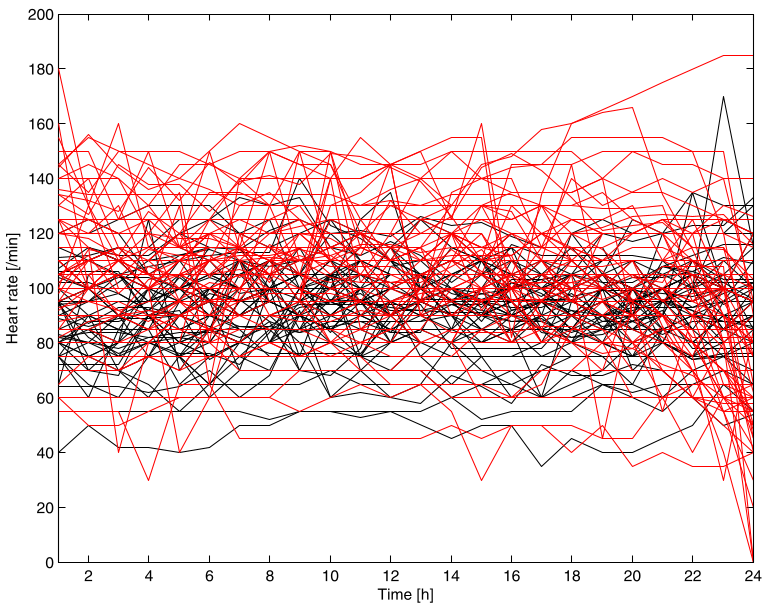 Figure 2 from the paper: Though the 95% confidence intervals overlap, the Linguistic Summaries managed to extract the distinct categorical behaviors within these bounds.
Critical Analysis & Takeaways
This work is a classic example of Explainable AI (XAI) before the term became a buzzword. It acknowledges that in healthcare, a "prediction" is useless if a doctor cannot verify the logic.
Limitations:
- The system relies on pre-defined fuzzy membership functions (what constitutes "high" heart rate?). If these are poorly calibrated by experts, the summaries lose clinical value.
- The current model uses Type-1 fuzzy sets; moving to Type-2 fuzzy sets could better handle the inherent "vagueness" of medical definitions.
Future Impact: As medical databases grow, the ability to "compress" thousands of sensor readings into ten meaningful sentences is invaluable. This approach could be integrated into real-time ICU bedside monitors to provide "Linguistic Alarms" that describe shifts in patient state rather than just threshold breaches.