
Decoding the Dialects of Distress: How AI Differentiates Online Mental Health Communities
Using linguistic and topic analysis to classify sub-groups of online depression communities
This study utilizes Latent Dirichlet Allocation (LDA) for topic modeling and Linguistic Inquiry and Word Count (LIWC) for psycholinguistic analysis to classify and differentiate various sub-groups within online depression communities on LiveJournal. The researchers developed a predictive model using Lasso regression to distinguish between general depression, bipolar disorder, self-harm, grief, and suicide based on textual cues.
In an era where "natural data" from social media serves as a digital mirror of our minds, the ability to distinguish between different forms of psychological distress is paramount. In the paper "Using linguistic and topic analysis to classify sub-groups of online depression communities," a team of researchers from Deakin University and the Black Dog Institute explores whether the way we write can reveal precisely what kind of mental health challenge we are facing.
TL;DR
By analyzing 5,000 posts from 24 LiveJournal communities, researchers used machine learning to find "linguistic fingerprints" for five specific mental health sub-groups: Depression, Bipolar Disorder, Self-Harm, Grief, and Suicide. Their model, using a combination of topic modeling and psycholinguistic analysis, successfully distinguished these groups with high accuracy, proving that different conditions have unique digital signatures.
The Challenge of a "Heterogeneous" Illness
Depression isn't a single experience; it is a spectrum of disorders and emotional states. A person grieving a loss and a person navigating a manic-depressive cycle in Bipolar Disorder might both frequent "Depression" forums, but their needs, risks, and required interventions vary wildly.
Historically, identifying these differences required intensive clinical interviews. This study asks: Can we automate this? Can we look at the "what" (topics) and the "how" (linguistic style) of online posts to tell these groups apart?
The Methodology: Science of Style and Substance
The researchers leveraged two distinct but complementary approaches to feature extraction:
- Linguistic Inquiry and Word Count (LIWC): This tool quantifies the "style" of writing. It looks at the frequency of first-person pronouns, swear words, and emotional tone. It captures the unconscious habits of the writer.
- Latent Dirichlet Allocation (LDA): This is a topic modeling technique used to discover the "substance" of conversations. It identifies clusters of words that frequently appear together (e.g., "medication," "prescription," "doctor").
To process this data, they utilized Lasso (Least Absolute Shrinkage and Selection Operator).
Why Lasso?
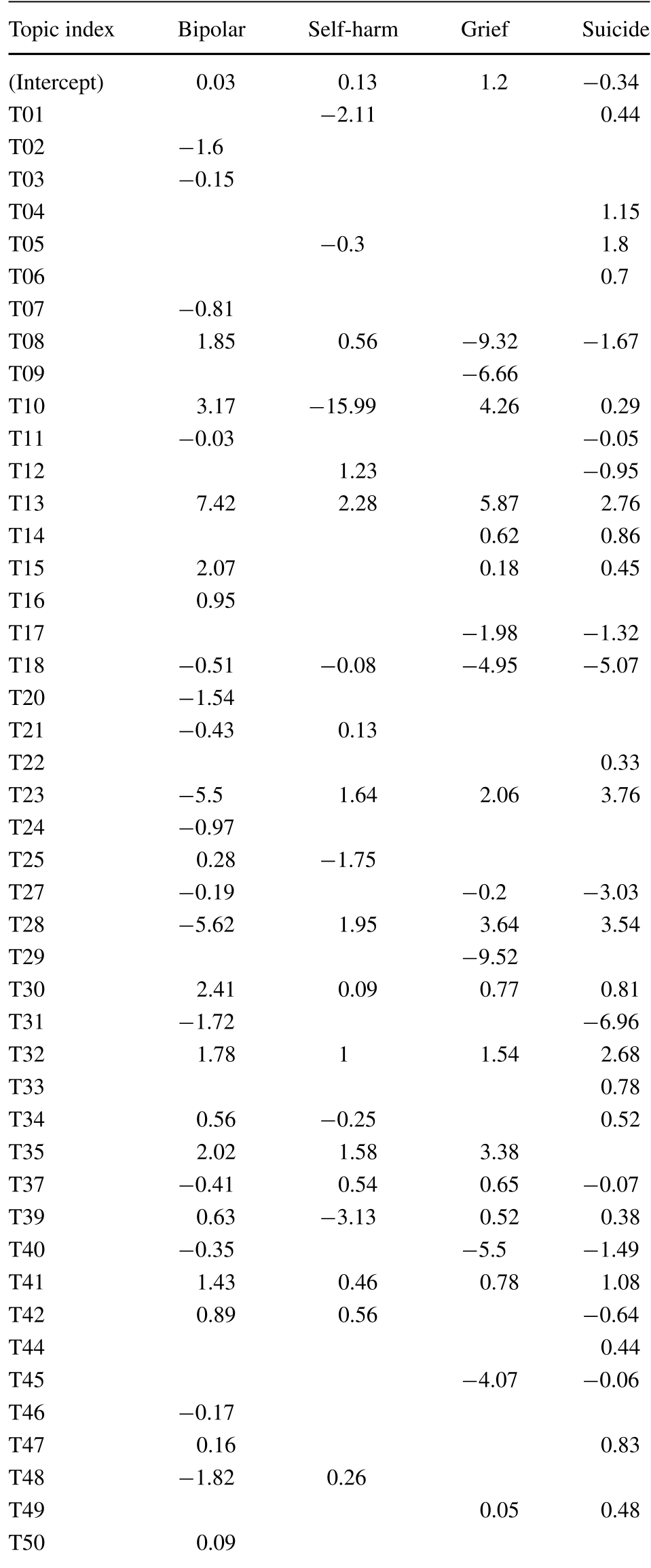
Standard machine learning models often use all available data points, which can lead to "noise" and over-fitting. Lasso is "parsimonious"—it automatically selects the most critical features and discards the rest. As shown in the study, Lasso achieved superior accuracy while using only about 48% of the features compared to standard logistic regression.
Key Findings: The Linguistic Fingerprints
The results provided a fascinating look at the "dialects" of these different communities:
- Bipolar Disorder: Primarily focused on medical management. Topics 23 and 28 (medication names and diagnostic terms) were the strongest predictors.
- Grief/Bereavement: Defined by family-centric language. "Mother," "father," and "baby" appeared frequently, alongside heavy use of past-tense verbs.
- Self-Harm: Characterized by visceral, behavioral language (e.g., "cutting," "blood") and a higher-than-average expression of anger.
- Depression: Surprisingly, the general "Depression" group was the hardest to isolate. They used more "filler" phrases ("I mean," "you know") and explicit language, but their topics overlapped heavily with the other groups.
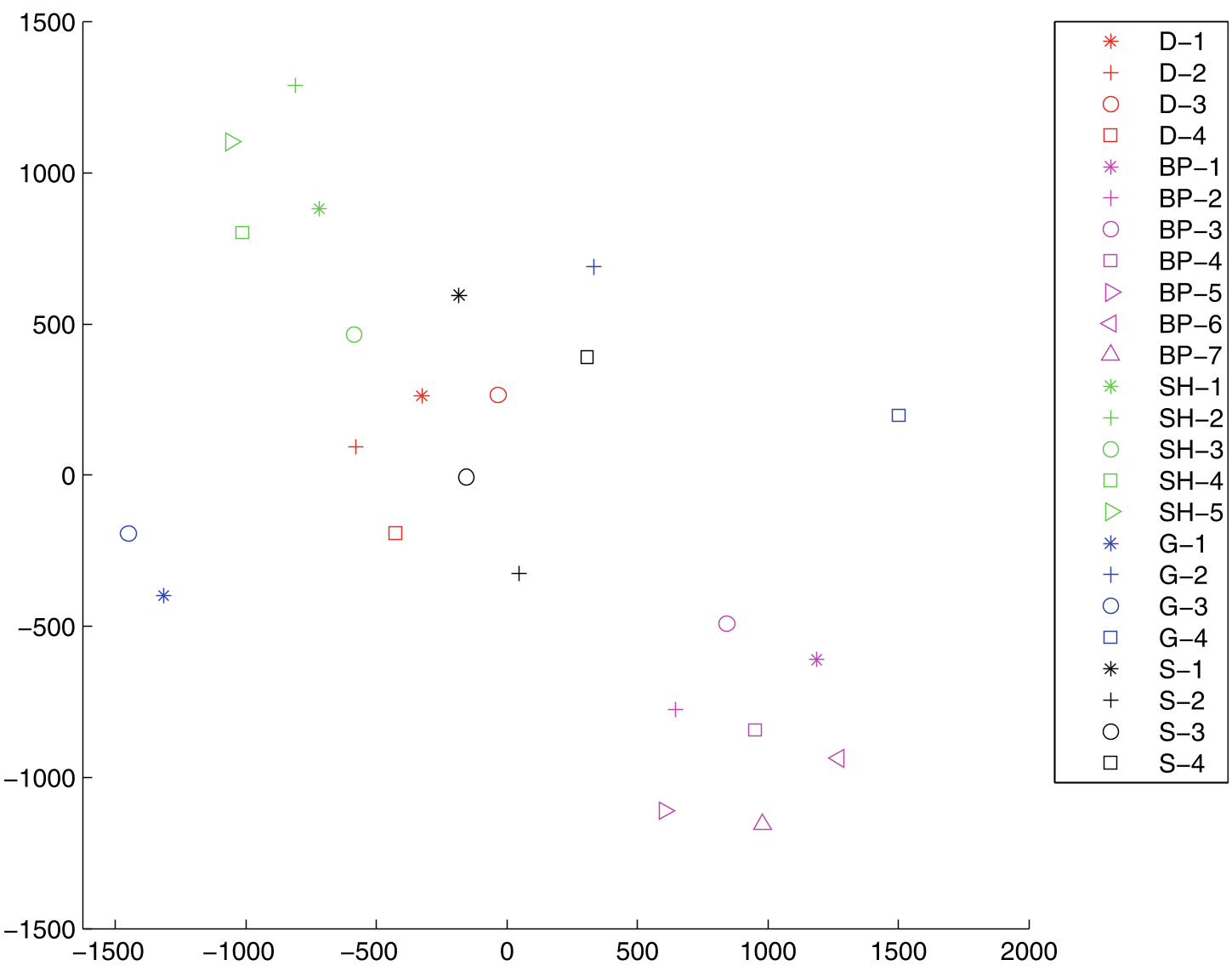 Visualizing the distinct clusters formed by different sub-groups using t-SNE.
Accuracy in Action
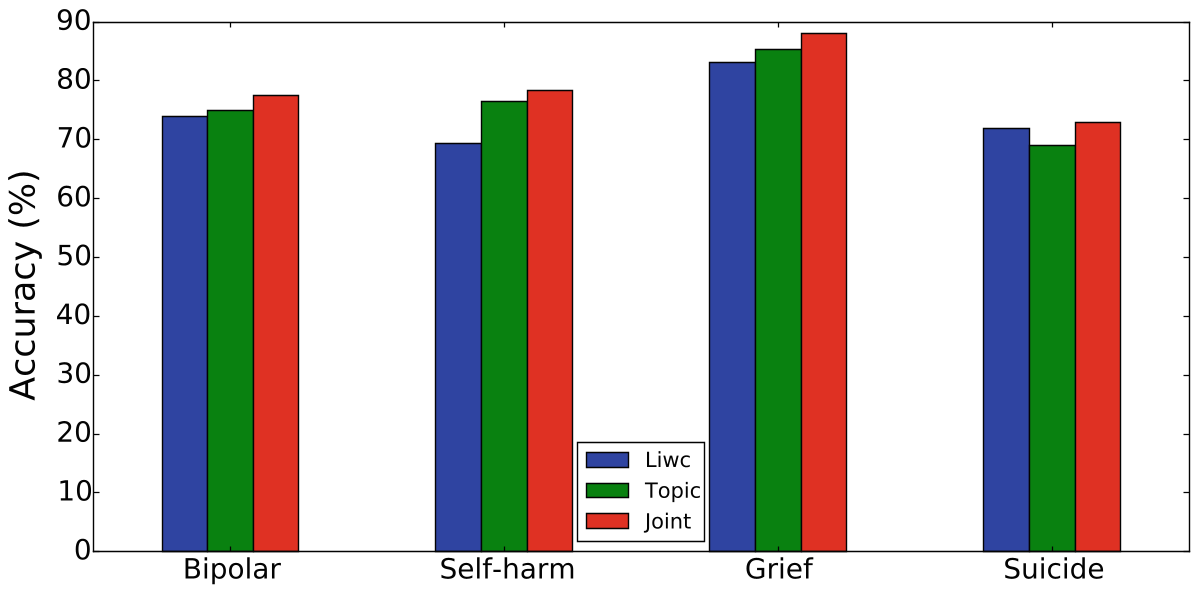
The researchers found that combining both topics and linguistic styles yielded the best results. The accuracy peaked at 88% when distinguishing between the Depression and Grief groups. Even the most difficult pair to distinguish—Depression vs. Suicide—achieved a 73% accuracy rate.
Critical Insights: Beyond the Data
The study revealed a concerning gap: There was almost no mention of professional help-seeking in these communities. While users found social support, they weren't talking about going to doctors or therapists.
This presents a massive opportunity. If an algorithm can identify that a user's language is shifting from "general sadness" to "self-harm" or "suicidality," platforms could provide real-time, personalized interventions—connecting them with the specific resources they need most.
Conclusion
While the study acknowledges limitations (such as the lack of clinically validated diagnoses for the users), it lays the groundwork for a future of Digital Psychiatry. By viewing the web as a "sensing platform," we can move away from one-size-fits-all mental health resources and toward a world where the right help finds the right person at the right time.