
'Linguistics-Lite': Mastering Cross-Lingual Social Media Analysis with SVD
‘Linguistics-Lite’ Topic Extraction from Multilingual Social Media Data
This paper introduces a "Linguistics-Lite" approach for cross-lingual topic extraction from noisy social media data using a modified Singular Value Decomposition (SVD) framework. The core method, termed "multilingual LSA," allows for the alignment of topics across diverse languages without requiring parallel corpora during the main analysis phase, achieving a high validation accuracy of 91.7%.
TL;DR
In the hyper-fast world of intelligence analysis, waiting for a linguist to translate 100,000 tweets during a crisis is a luxury analysts don't have. This paper presents a "Linguistics-Lite" method to extract global topics across multiple languages simultaneously. By mathematically aligning languages through a translation matrix before applying Singular Value Decomposition (SVD), the researchers achieved 91.7% accuracy in identifying cross-lingual topics without needing a parallel corpus of the target events.
The Problem: The Language Barrier in High-Speed Data
The volume of social media data grows by 40-60% annually. For national security and disaster response, this data is "Social Radar." However, standard tools struggle because:
- Heterogeneity: Posts are noisy, informal, and span dozens of languages (English, Ukrainian, Russian, Spanish, etc.).
- The Translation Trap: Machine translation often loses nuance and is computationally expensive for real-time monitoring.
- Linguistic Dependency: Traditional NLP requires "heavy" tools like stemmers, part-of-speech taggers, and stop-lists for every individual language.
The authors argue for a system that is unsupervised, language-independent, and scalable—essentially, an approach that views text as pure statistical signal rather than complex grammar.
Methodology: The "MX = Y" Breakthrough
The core innovation lies in how the input to the SVD algorithm is structured. Standard Latent Semantic Analysis (LSA) fails cross-lingually because the term-document matrix treats "maison" (French) and "house" (English) as completely unrelated dimensions.
The authors solve this using a simple but powerful linear algebraic shift:
- Translation Matrix (): Probabilities are computed from an external parallel corpus (e.g., word alignments). If "maison" translates to "house" with a 0.7 probability, that value is stored in .
- Transformation: They compute . This projects the original documents into a "multilingualized" term space.
- SVD of : By applying SVD to , the resulting Principal Components (PCs) naturally group documents that share the same concepts, regardless of the language they were written in.
 The table above shows that the SVD of (MX = Y) approach significantly outperforms previous morphological and eigenvalue decomposition methods.
Real-World Application: The 2014 Ukraine Crisis
To prove the system's worth, the authors analyzed ~100,000 tweets from the early-2014 Ukraine conflict. The "Linguistics-Lite" approach was able to:
- Bridge the Gap: Group Spanish tweets about Russian troop movements with English and Russian counterparts.
- Identify Critical Trends: PC #3 identified the "Euromaidan" movement precisely as it "burst" in January 2014.
- Spatial Analysis: By mapping the document weights to timestamps and coordinates, the system visualized the global spread of the topic.
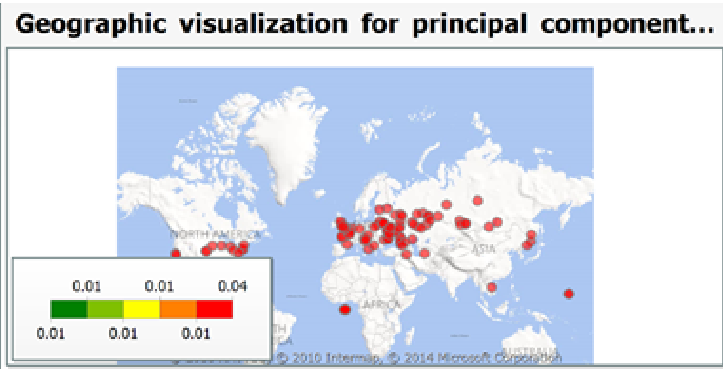 Fig. 1: Temporal and Keyword analysis of the 'Euromaidan' topic across the total dataset.
Critical Insight & Conclusion
The beauty of this approach is its minimalist inductive bias. By avoiding the "linguistic heavy lifting" of parsers and taggers, the model becomes resilient to the misspellings, slang, and abbreviations rampant on Twitter.
Key Takeaways:
- Superior Accuracy: 91.7% accuracy confirms that statistical alignment is often as effective as deep linguistic modeling for topic discovery.
- Scalability: The method is "write once, run anywhere." Once the matrix is built from a general parallel corpus, it can be applied to any domain (disasters, elections, or war).
- Analyst Empowerment: It allows a monolingual analyst to navigate a multilingual sea of data, identifying what is happening and where to focus their limited attention.
While modern Large Language Models (LLMs) have since moved toward dense vector embeddings, this SVD-based "Linguistics-Lite" approach remains a masterpiece of efficiency and transparency for large-scale document clustering.