
Beyond Static Graphs: A Deep Dive into Link Prediction for Dynamic Social Networks
Link Prediction in Dynamic Social Networks: A Literature Review
This paper provides a comprehensive literature review of link prediction in dynamic social networks, categorizing state-of-the-art methods into similarity-based, maximum likelihood, and probabilistic frameworks. It specifically analyzes how evolving network topologies and temporal features impact the accuracy of predicting emerging, missing, and broken links across diverse domains like biology and academic collaborations.
TL;DR
Social networks are not frozen in time; they are living, breathing entities. This paper provides a high-level architectural review of how we can predict future connections by treating "time" as a first-class citizen. By shifting from static snapshots to evolutionary modeling—using deep learning (ctRBM), latent spaces, and triad transitions—researchers are moving closer to accurately forecasting how human and biological networks grow and dissolve.
Background & Positioning
In the landscape of Network Science, Link Prediction is a classic problem: given a set of nodes and edges, who will connect next? While SOTA methods for static graphs are mature, the "Dynamic" frontier remains a "Wild West." This review functions as a tactical map, positioning various methodologies—from simple similarity indices to complex probabilistic models—within the coordinate system of temporal network analysis.
The "Static" Trap: Why Traditional Methods Fail
Most prior works treat a network like a photograph. However, a social network is more like a video.
- The Problem: Conventional algorithms (like Adamic-Adar or Common Neighbors) ignore when an interaction happened.
- The Insight: A connection made five minutes ago is more predictive of future interaction than one made five years ago. To solve this, authors argue we must incorporate Temporal Decay, Node Centrality Drifting, and Community Evolution.
Methodology: The Three Pillars of Prediction
The paper categorizes the "how" into three distinct technical strategies:
1. Similarity-Based Strategies (The Local View)
These rely on the "birds of a feather" principle. In dynamic contexts, this is expanded to "Time-Aware Similarity," where the overlap of neighborhoods is weighted by the freshness of interactions.
2. Maximum Likelihood (The Global Structure)
This assumes the network follows an underlying organizational principle. A key example is the Latent Space Model, where nodes move in a p-dimensional hidden space.
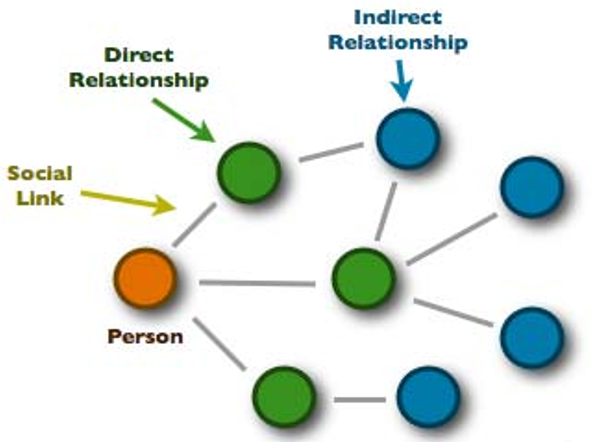 Fig 1: Conceptualizing nodes and their potential indirect relationships in a latent manifold.
3. Probabilistic & Deep Learning Models (The Evolutionary View)
Models like the Conditional Temporal Restricted Boltzmann Machine (ctRBM) use transition variance to capture non-linear dynamics. They don't just ask "who is similar?" but "how does the probability of a link evolve based on recent neighbor influences?"
Experiments & The "Data Problem"
The review synthesizes results across various datasets, revealing a fragmented landscape:
- Heterogeneity: Real-world networks (Twitter, DBLP) are often heterogeneous, yet many models are still tested on homogeneous synthetic data.
- Scalability: While deep learning models offer high precision, they often struggle with the "Billions of Nodes" scale of modern social media.
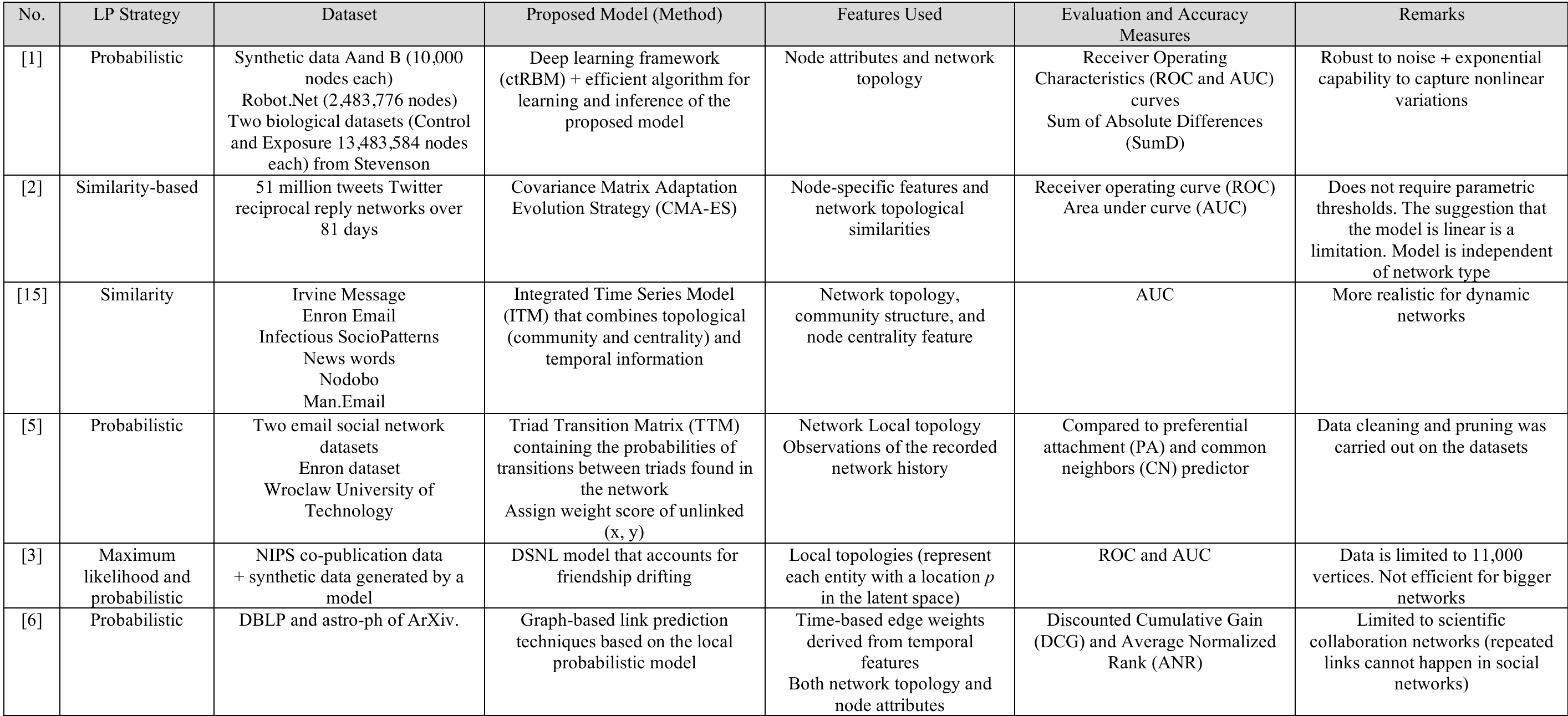 Table 1: A comparison of SOTA models, showing the trade-offs between complexity and the features used (Topology vs. Attributes).
Critical Analysis & Conclusion
Takeaway
The shift from "What is the network?" to "How is the network changing?" is the definitive trend. The integration of Time-Aware Multi-Relational Link Prediction (TMLP) represents the current peak of performance by combining multi-domain topological features with temporal dimensions.
Limitations & Future Work
The paper honestly points out two major roadblocks:
- Metric Consensus: Using only AUC/ROC is insufficient for highly imbalanced dynamic graphs where "non-links" vastly outnumber "links."
- Breadth vs. Depth: Most models excel in one domain (e.g., Email networks) but fail in others (e.g., Protein-Protein Interactions). The "Universal Link Predictor" does not yet exist.
Future Outlook: We expect to see a surge in Temporal Graph Neural Networks (T-GNNs) that can internalize these survey findings into end-to-end differentiable architectures.