
Fuzziness in Friendship: Redefining Link Prediction in Signed Social Networks
Link prediction in signed social networks based on fuzzy computational model of trust and distrust
The paper introduces two novel link prediction models, LILP and LGILP, specifically designed for Signed Social Networks (SSNs) where relationships include both positive (friends) and negative (foes) ties. By employing a fuzzy computational framework to model the inherent vagueness of trust and distrust, the authors achieve SOTA accuracy in predicting both the existence and the polarity of links.
TL;DR
In the real world, human relationships aren't just binary "friend" or "foe" switches; they exist on a spectrum of intensity. Most social network algorithms fail because they treat all links as equal and ignore negative ties. This paper introduces a fuzzy computational model that treats trust and distrust as linguistic variables, combining preference similarity and Social Balance Theory to predict missing links in signed networks with significantly higher accuracy than traditional inductive learning methods.
Problem & Motivation: The Binary Trap
Most link prediction research operates in an "all-friends" world. However, actual social platforms like Epinions or Slashdot allow users to express distrust or "foe" relationships.
The authors identify three major flaws in current SOTA:
- The Sparsity Problem: In most networks, the number of observed links is a tiny fraction of total possible pairs, making prediction difficult.
- Binary Bias: Assigning +1/0/-1 is misleading. A "foe" could be someone you slightly disagree with or your arch-nemesis; a "friend" could be an acquaintance or a soulmate.
- Ignoring Asymmetry: Trust is often one-directional, a nuance lost in static graph models.
The central insight: All Relations Are Not Equal. To capture the "nebulousness" of human interaction, we need mathematical models that can handle vagueness—hence the shift to Fuzzy Logic.
Methodology: The Core Mechanics
The authors propose a two-phase architecture: Computing tie strength and then predicting the link.
1. Fuzzy Modeling of Trust and Distrust
The paper breaks down "Tie Strength" into two primary factors:
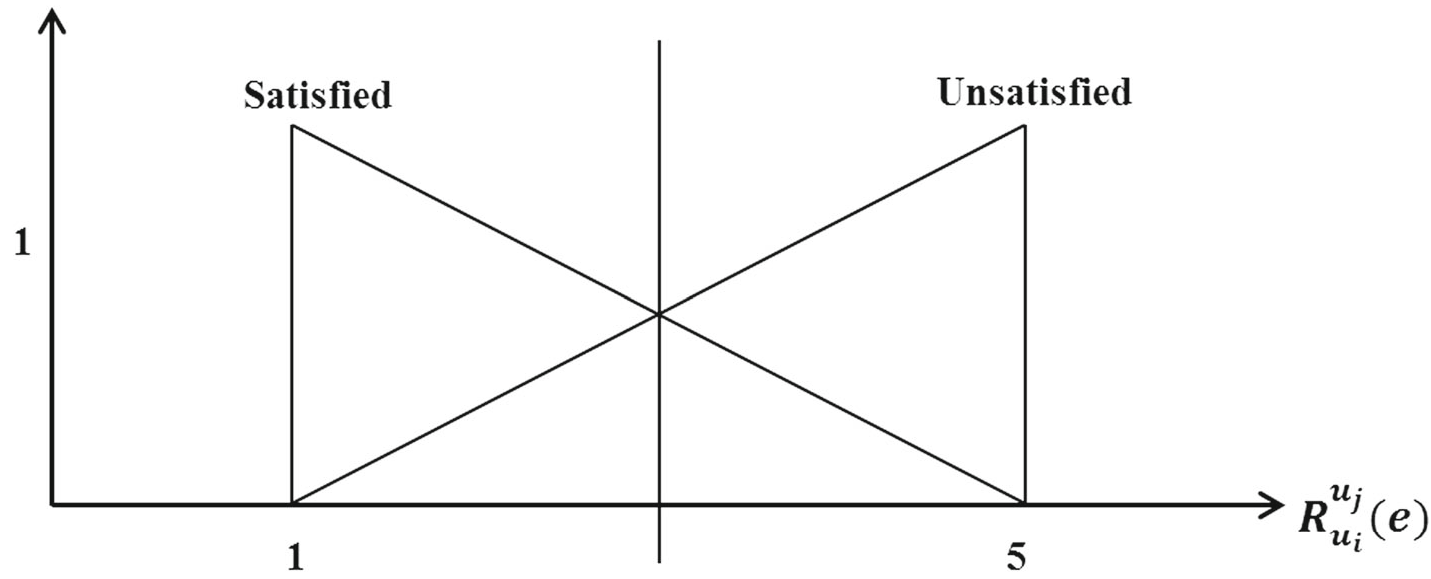
- Preference Similarity Factor: Calculated using common choices (ratings 1-5). These ratings are fuzzed into sets: Favored, Non-Favored, and Indifferent.
- Knowledge Factor (Virtual Encounters): This tracks historical interaction. If User A and User B consistently rate items similarly, their "Experience" and "Reciprocity" scores increase.
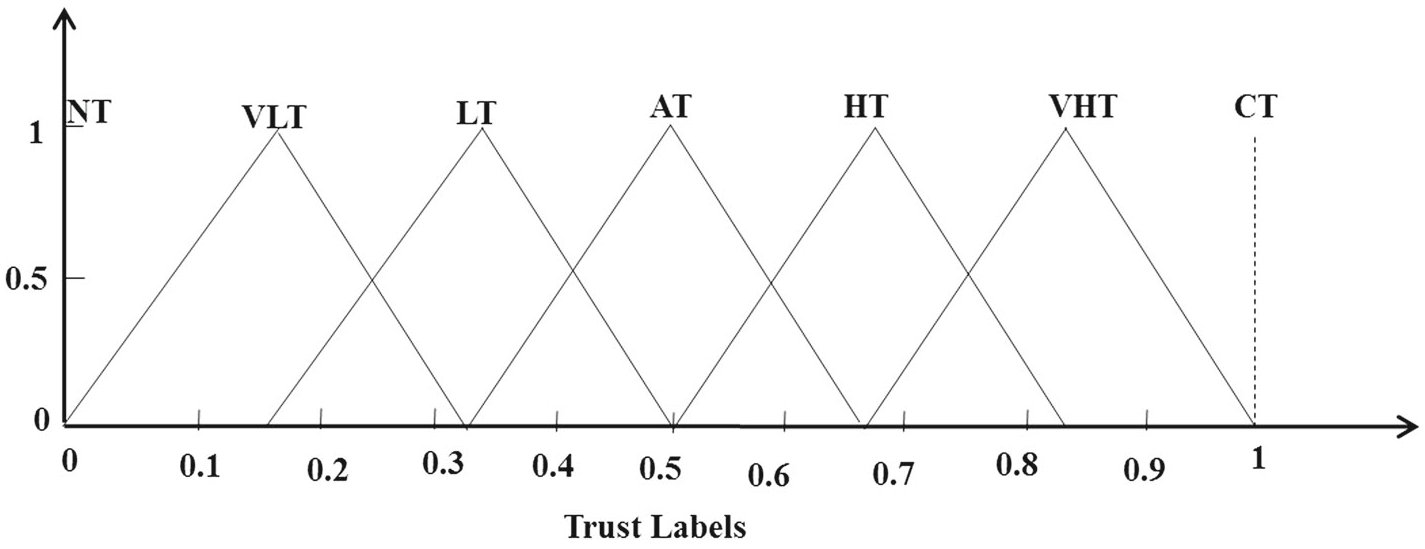
These values are mapped onto seven linguistic fuzzy sets (e.g., Very Low Trust to Complete Trust) using triangular membership functions.
2. LILP vs. LGILP
The authors propose two versions of their prediction engine:
- LILP (Local Information based Link Prediction): Uses local user similarity (Pearson Correlation) and the fuzzy trust values to predict a link if similarity exceeds a threshold (0.6).
- LGILP (Local and Global Information based): This is the "smarter" model. It incorporates Social Balance Theory—the idea that "the friend of my friend is my friend" and "the enemy of my enemy is my friend." It evaluates if adding a specific link increases the "balance" of the local triad.
Experiments & Results: Proving the Value
The models were tested against ILLP (Inductive Learning based Link Prediction) on three datasets: a synthetic FFN network, Epinions, and Slashdot.
Key Performance Gains
- Accuracy: Across all partitions (from 500 up to 5000 users), LILP and LGILP consistently maintained higher accuracy than the baseline.
- Handling Negative Ties: One of the biggest wins was in Specificity (the ability to correctly identify foes). In signed social networks, correctly identifying potential antagonists is arguably more difficult—and more important for platform safety—than finding friends.
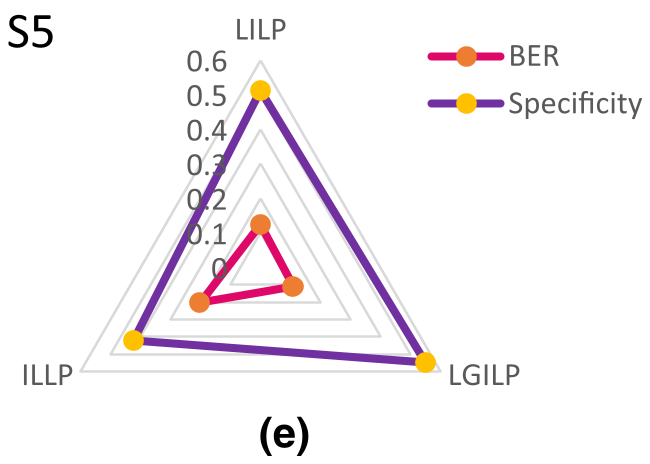
The BER (Balance Error Rate) for the proposed models was significantly lower, indicating fewer misclassifications in sparse environments.
Critical Analysis & Conclusion
The takeaway is clear: Fuzzy logic is arguably more "natural" for social science applications than crisp logic. By allowing the model to represent trust as a degree of membership rather than a flag, the authors created a system that is more resilient to the "noise" and subjectivity of user ratings.
Limitations:
- The computational cost of calculating individual local-global triads can be significant as the user base grows into the millions.
- The model relies on explicit ratings; in modern "silent" social media where users mostly scroll without rating, "Knowledge Factors" might be harder to extract.
Future Outlook: The authors suggest incorporating Trust Propagation—mathematically mapping how trust flows through a 3rd party—to further resolve sparsity. This work paves the way for more nuanced recommendation engines that don't just suggest "content," but understand the complex emotional fabric of the people consuming it.