
Enhancing Link Prediction: Why Interaction Weights Matter in Social Networks
Link Prediction of Social Networks Based on Weighted Proximity Measures
This paper introduces a weighted approach to link prediction in social networks, specifically targeting Question-Answering Bulletin Boards (QABB). By integrating the frequency of user interactions (link weights) into traditional proximity measures like Common Neighbors and Adamic/Adar, the authors achieve superior predictive accuracy compared to unweighted structural baselines.
TL;DR
Link prediction is the art of guessing who will talk to whom next. While most models just look at the "shape" of the network, this paper argues that the "strength" of existing connections is the real secret sauce. By weighting traditional measures like Adamic/Adar with interaction frequency, the authors significantly improved prediction accuracy on large-scale Yahoo! Q&A data, proving that in social networks, the quality of a connection is as vital as its existence.
The Motivation: Moving Beyond "Yes/No" Connections
In the world of online social networks—like Yahoo! Answers (QABB)—users are constantly forming new links. Predicting these links is crucial for recommending the right questions to the right people.
However, previous research (like the famous Liben-Nowell & Kleinberg study) focused mostly on unweighted graphs. In these models, a single interaction between two users counts the same as a hundred interactions. The authors of this paper noticed a flaw: structural properties alone don't capture the "heat" of a relationship. Furthermore, because users on "open" boards often hide their age or job, we can't rely on profile data. We must look at the behavior—the weights of the links.
Methodology: The Weighted Evolution
The core innovation lies in transforming three classic proximity measures into weighted versions. Instead of just counting common neighbors, the new formulas count the strength of the paths through those neighbors.
1. Weighted Common Neighbors (CNw)
While the standard Common Neighbors (CN) simply counts how many mutual friends two people have, the weighted version (CNw) sums the weights of the links to those mutual friends.
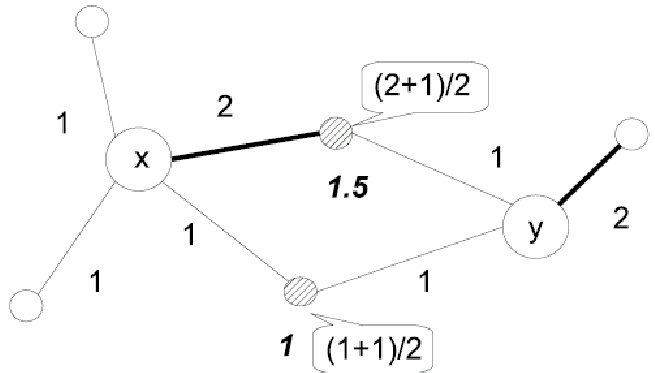 Figure 1: Comparison between unweighted (score=2) and weighted (score=2.5) neighbor evaluation.
2. Weighted Adamic/Adar (AAw)
The original Adamic/Adar index rewards common neighbors that have few connections (the "rare friend" logic). The weighted version refines this by considering the total interaction volume of that common neighbor, effectively penalizing "loud" hubs while rewarding strong, niche connections.
3. Weighted Preferential Attachment (PAw)
This follows the "rich get richer" philosophy. Nodes that already have a high volume of interaction are predicted to gain more links in the future.
Experimental Results: Where the Weights Win
The authors tested their hypothesis on a massive dataset from Yahoo! Chiebukuro, involving over 58,000 users and 1 million messages.
Key Findings:
- Weighted is Better: In almost every category (News, Sports, Health), the weighted measures (CNw, AAw) outperformed their unweighted counterparts.
- The Winner: Weighted Adamic/Adar (AAw) was the most stable and accurate predictor.
- Network Density Matters: The improvement was most pronounced in "dense" categories where users interact frequently. In sparse networks, the structural differences are too thin for even weights to help much.
| Category | CN (Base) | CNw (Weighted) | AA (Base) | AAw (Weighted) |
|---|---|---|---|---|
| Yahoo! Answers | 29.5 | 32.0 | 29.9 | 32.2 |
| News | 23.5 | 25.2 | 23.8 | 25.4 |
| Average | 20.8 | 22.0 | 21.5 | 22.4 |
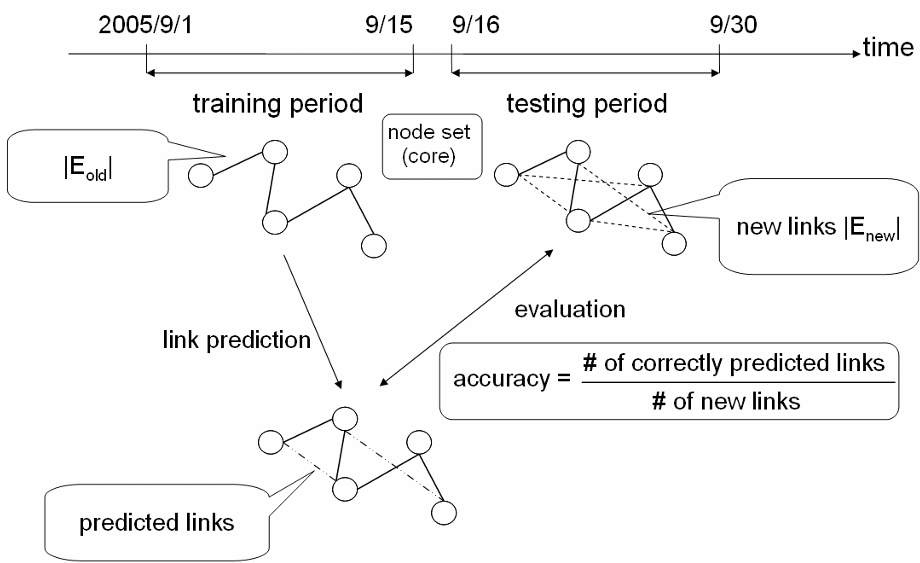 Figure 2: The research workflow from data partitioning to accuracy evaluation.
Critical Analysis & Future Outlook
This work is a strong validation of the Inductive Bias that interaction frequency correlates with future link formation. However, it also reveals a limitation: Preferential Attachment (PA) actually performed poorly on networks with uniform degree distributions, proving that "size" isn't everything.
The "Recency" Gap: One limitation of this study is that it treats a weight from three weeks ago the same as a weight from three minutes ago. As the authors suggest in their conclusion, the next frontier is Temporal Weighting—giving more importance to recent interactions.
For developers and researchers building recommendation engines, the takeaway is clear: stop looking at the graph as a skeleton of 0s and 1s. Treat it as a circulatory system where the "flow" (weight) dictates where the next branch will grow.