
Linking M-Business to Organizational Behavior: A New Research Dimension
Linking M-Business to Organizational Behavior Levels – A Mobile Workforce Centered Research Framework
This paper introduces a three-dimensional research framework designed to bridge the gap between Mobile Business (m-business) and Organizational Behavior (OB). It categorizes the impact of mobile technologies across individual, group, and organizational levels, validated by an empirical study of the mobile workforce across nine industries.
TL;DR
For years, Mobile Business (m-business) has been treated as a technical or marketing challenge. This paper argues it is actually a psychological and structural challenge. By introducing a 3D research framework, the author connects mobile workforce data with the three levels of Organizational Behavior (OB)—Individual, Group, and Organizational—revealing that how we move for work fundamentally changes how we lead and cooperate.
Perspective: The "Behavioristic" Gap
Most m-business research asks: "How can we make this app faster?" or "Will people buy this?" Rarely do researchers ask: "How does this mobile app change an organization’s power structure?"
The author highlights that while Information Systems (IS) and Computer Science have matured, Organizational Behavior—the study of human psychology in organizations—has largely ignored the mobility revolution. This paper seeks to fix that by moving away from technology-driven motivation toward a behavioristic understanding of the mobile era.
Methodology: The 3D Research Framework
The core contribution is a framework that allows researchers to look at m-business through three specific lenses simultaneously:
- OB Levels:
- Individual: Impact on personality, motivation, and stress.
- Group: Dynamics of collaboration and leadership effectiveness in mobile teams.
- Organizational: Changes in corporate culture, power, and formal design (e.g., the shift to virtual organizations).
- Application Type: Using Porter’s Value Chain to categorize apps (CRM/Customer-facing, ERP/Support-oriented, SCM/Operations).
- Industry Context: Acknowledging that a mobile app affects a "Blue Collar" field service technician differently than a "White Collar" executive.
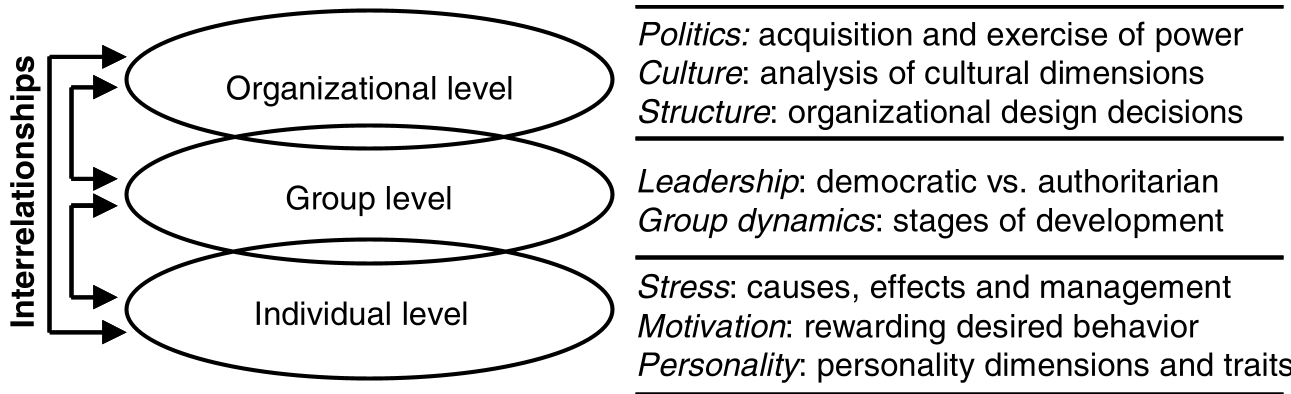 Fig. 1: Overview of typical organizational behavior issues across three analysis levels.
Empirical Insight: Not All Mobility is Equal
The paper doesn't just provide a theoretical model; it grounds it in a study of 540 companies across nine industries. The findings show a clear divide in the "Mobile Workforce":
- The Blue/White Collar Divide: Industries like Construction and Transport are dominated by Mobile Blue Collar workers (technical), whereas Consulting is White Collar dominant.
- Interaction Topology: Some industries rely on Central Site communication (Dispatching), while others thrive on Peer-to-Peer interaction.
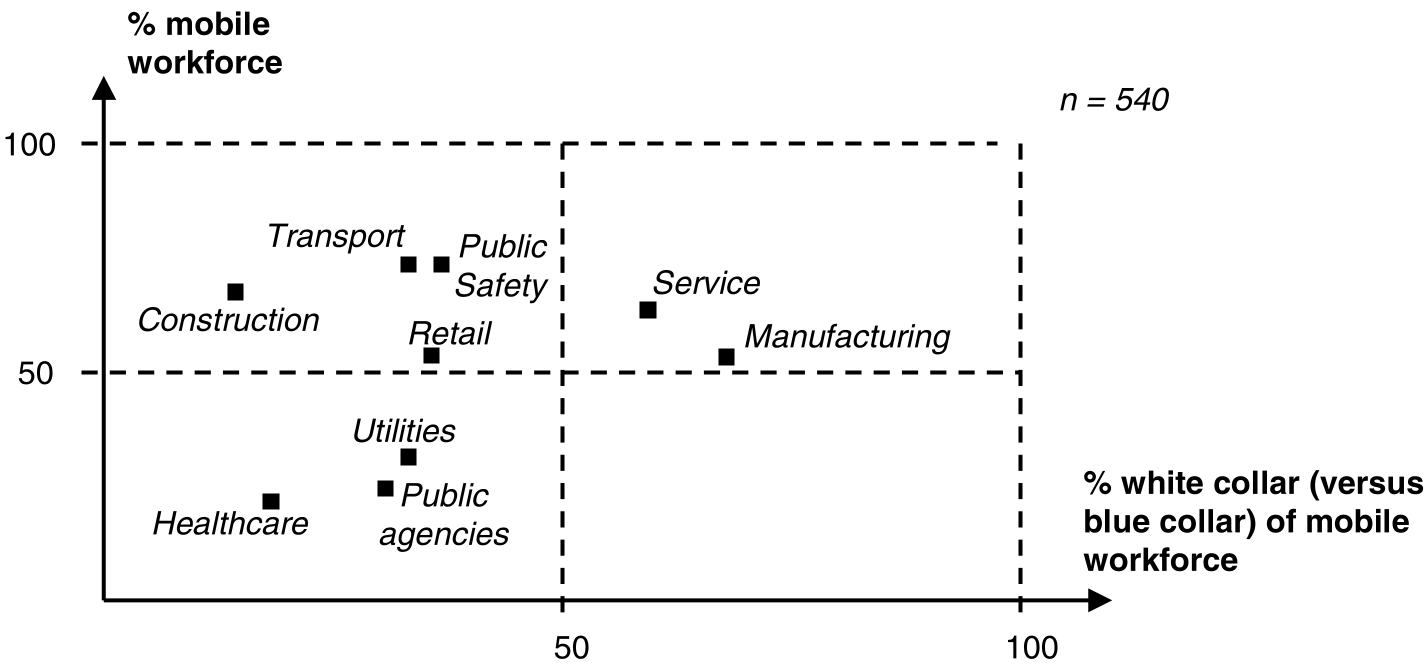 Fig. 2: The interaction topology of different industry mobile workforces.
Deep Insight: Why This Matters
The most striking argument is the potential for increased central control. Mobile apps allow managers to monitor field workers in real-time. From an OB perspective, this could lead to a shift in Power and Politics (Organizational Level) and increased Stress Symptoms (Individual Level).
The framework acts as a map for future scholars. For instance, a researcher could use it to specifically study "Group Dynamics (OB Level) within Support Applications (Value Chain) in the Healthcare Industry (Industry Level)."
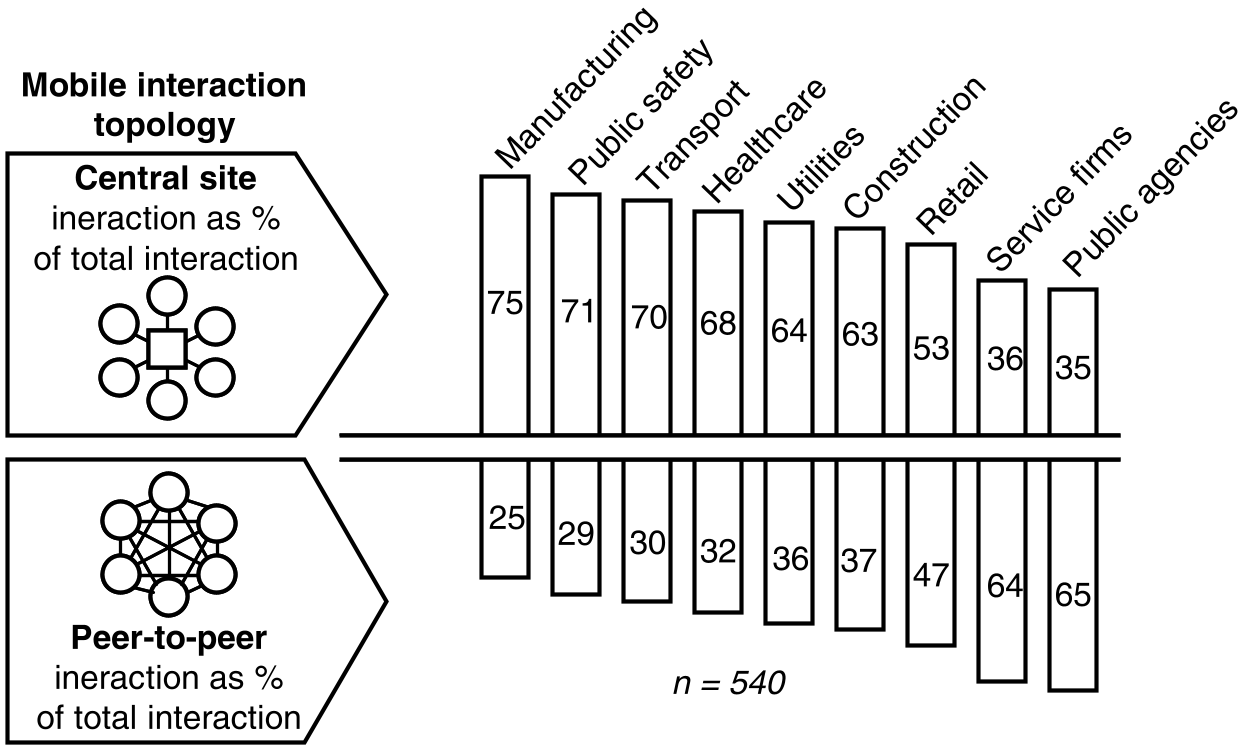 Fig. 3: The proposed 3D Research Framework for M-Business and OB.
Critical Analysis & Conclusion
Takeaway
The paper successfully argues that m-business is more than a tool—it is a social intervention. By providing the Mobile Workforce as a link, the author creates a common language for psychologists and IT developers.
Limitations
- Temporal Context: Written in 2006, the paper focuses on "M-Business" before the smartphone (iPhone) explosion. The "Blue Collar" vs. "White Collar" distinction remains valid, but the ubiquity of devices today likely blurs the "Interaction Topology."
- Geographic Focus: The empirical data is restricted to German-speaking countries, which may have specific cultural attitudes toward organizational hierarchy and privacy.
Future Outlook
As we enter the era of AI-integrated mobile work, this framework is more relevant than ever. Understanding how AI-driven mobile tools affect employee autonomy and group cohesion will be the next frontier of OB research.