
LIP3: Achieving Precision in Private Profile Matching for Mobile Social Networks
LIP3: A Lightweighted Fine-Grained Privacy-Preserving Profile Matching Mechanism for Mobile Social Networks in Proximity
The paper introduces LIP3, a Lightweight fIne-grained Privacy-Preserving Profile matching mechanism for Mobile Social Networks in Proximity (MSNP). It utilizes Confusion Matrix Transformation (CMT) to compute the exact cosine similarity between user profile vectors without relying on heavy cryptographic primitives.
TL;DR
Discovery of nearby friends in Mobile Social Networks in Proximity (MSNP) often forces a trade-off between privacy and computational efficiency. LIP3 breaks this deadlock by using a "Confusion Matrix Transformation" (CMT) approach that delivers mathematically exact cosine similarity for profile matching without the heavy tax of homomorphic encryption. It is lightweight enough for smartphones yet precise enough for meaningful social discovery.
The "Coarse vs. Costly" Dilemma
In a world where we want to find people with similar interests (e.g., at an airport or a stadium) via Device-to-Device (D2D) communication, privacy is paramount. Historically, researchers faced two bad choices:
- Computationally Heavy Protection: Using Homomorphic Encryption or Public-key systems. These provide fine-grained matching but drain mobile batteries and create communication bottlenecks.
- Lightweight Coarseness: Using existing CMT methods (like EWPM) that are fast but use "rough" matching values. As shown in the paper, EWPM might tell you two strangers are equally good matches even when their actual cosine similarity is significantly different.
LIP3 (Lightweighted fIne-grained Privacy-Preserving Profile matching) was designed to provide the best of both worlds: the speed of CMT with the mathematical rigor of Cosine Similarity.
Methodology: The Power of the Weight Matrix
The core innovation of LIP3 lies in how it structures the comparison. Instead of simple set intersections, it treats interest profiles as vectors and uses a specific mathematical trick to calculate the dot product privately.
1. Matrix Transformation
Each user transforms their profile vector (attributes and weights) into an attribute matrix .
2. The Weight Matrix ()
The authors define a unique weight matrix where . This allows the system to reconstruct the term (the numerator of the cosine similarity formula) from the obscured matrices.
3. Privacy Levels
- Level-I: Protects privacy against "Honest-but-Curious" users.
- Level-II: Increases security by sending only a scalar result back to the initiator, preventing even malicious "internal" attackers from reverse-engineering the profile matrix.
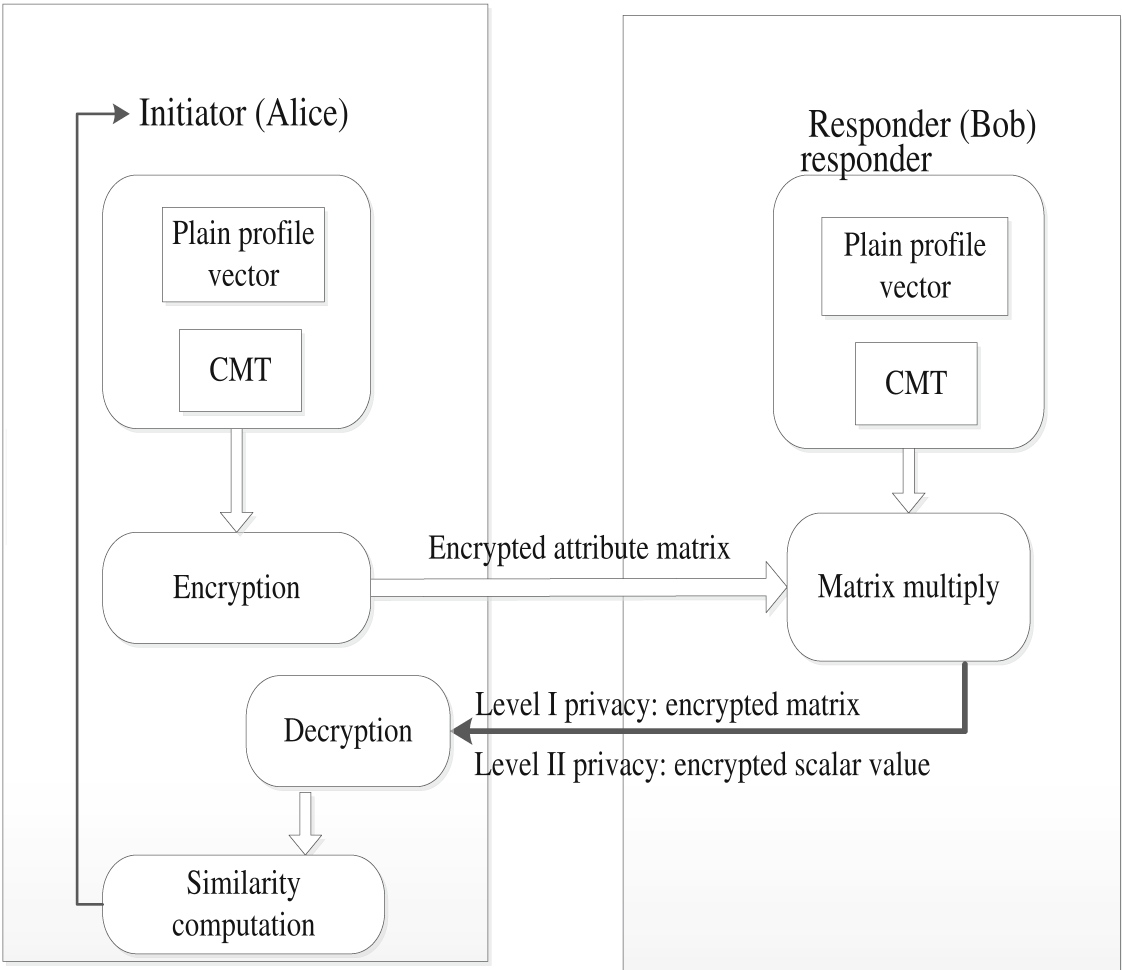 Figure 1: The LIP3 architecture showing the flow from individual profile vectors to the final similarity calculation.
Performance & Experiments
The researchers compared LIP3 against EWPM and traditional Fine-grained matching.
Accuracy: The Qualitative Leap
In a test case with three users (Alice, Bob, and Charles), the previous SOTA (EWPM) assigned a matching value of "3" to both Bob and Charles. Alice couldn't tell who was a better match. LIP3 results:
- Alice & Bob Similarity: 0.943
- Alice & Charles Similarity: 0.833
LIP3 clearly identified Bob as the better match, proving its clinical precision.
Efficiency: Striking the Balance
Despite the increased accuracy, the computational cost remains nearly identical to the "rough" EWPM method and orders of magnitude lower than encryption-heavy schemes.
 Table 1: LIP3 maintains the efficiency of CMT-based protocols while offering higher precision.
Critical Insight & Conclusion
LIP3 is a significant step forward for decentralized social networking. By shifting the "complexity" from heavy encryption to clever matrix algebraic transformations, the authors have enabled a high-utility service (precise friend discovery) to run on low-power hardware.
Future Outlook: While LIP3 excels in static profile matching, future iterations might need to address "Attribute Linkage Attacks" where a series of matching requests could potentially leak profile data over time. However, for immediate D2D proximity applications, LIP3 sets a new standard for efficient, fine-grained privacy.