
Intelligent Scalp Diagnosis: Bridging AI and Personal Healthcare
Live Demonstration: An Intelligent Scalp Diagnosis System using Deep Learning for Scalp Healthcare
This paper presents an end-to-end intelligent scalp diagnosis system that leverages deep learning to automatically detect five common scalp conditions (dandruff, allergies, bacteria, grease, and alopecia). The system integrates a specialized 200x magnification scalp detector, a mobile application, and a cloud-based AI computing server to provide objective healthcare assessments.
TL;DR
Hair health is often overlooked until significant issues arise. This paper introduces a comprehensive AI-powered system that uses deep learning to diagnose five major scalp conditions—dandruff, allergies, bacteria, grease, and alopecia. By combining a 200x magnification camera with cloud-based AI, the system removes the subjectivity of human diagnosis and provides a scalable solution for hair salons and therapy centers.
Problem & Motivation: The Subjectivity Trap
According to the World Health Organization (WHO), nearly 70% of the global population suffers from scalp-related issues. Despite the high demand for scalp care, the industry faces a significant bottleneck: subjectivity.
Current diagnostic methods depend almost entirely on the professional experience of a physiotherapist. This leads to several pain points:
- Inconsistency: Two different specialists might provide two different diagnoses for the same scalp condition.
- High Costs: Training staff to reach a "professional" level is both expensive and time-intensive.
- Scalability: Hair salons find it difficult to promote standardized care services without an objective measurement tool.
The authors' insight was to replace the human eye with a high-magnification sensor and the human brain with a trained Deep Learning model, ensuring that every diagnosis is backed by data rather than intuition.
Methodology: From Follicle to Cloud
The system is built on a four-pillar architecture designed for seamless user experience and robust processing:
- Scalp Detector: A hardware device equipped with 200x magnification to capture high-resolution imagery of the scalp surface.
- Mobile App: Acts as the interface gateway, receiving images via Wi-Fi and displaying diagnostic results.
- AI Computing Server: The "brain" where deep learning models perform inference to score the five target symptoms.
- Cloud Service Platform: A database for long-term tracking and Customer Relationship Management (CRM), allowing users to monitor their scalp health over time.
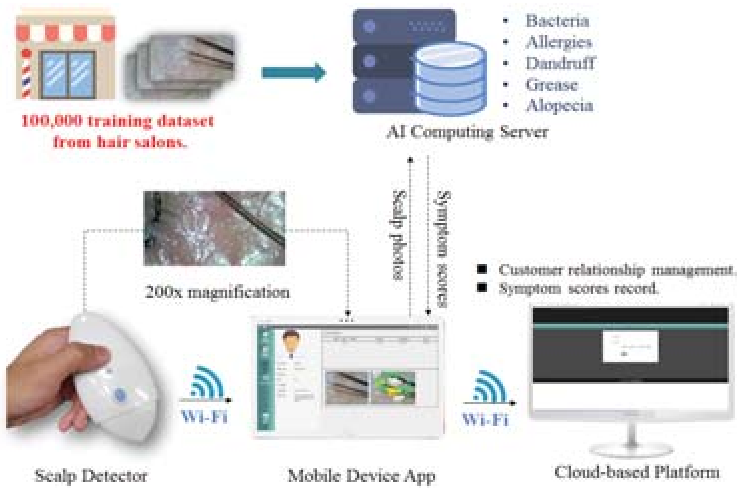 Fig. 1: The holistic system architecture, connecting hardware, mobile UI, and remote AI processing.
Experiments & Results
The core achievement of this demonstration is the automated quantification of scalp health. The system successfully classifies and scores five specific categories:
- Dandruff: Flaking of the skin.
- Allergies: Redness and inflammation.
- Bacteria: Identifying potential scalp infections.
- Grease: Excessive sebum production.
- Alopecia: Patterns of hair loss or thinning.
While the paper focuses on the system's deployment, the integration of a cloud platform allows for a "long-term customized scalp healthcare" record. This longitudinal data is crucial for verifying the effectiveness of prescribed treatments or hair products.
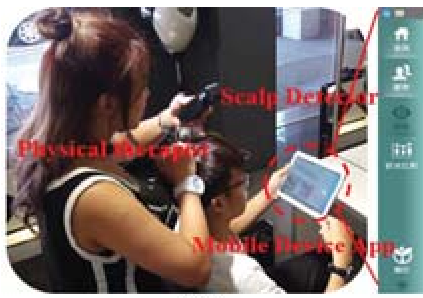 Fig. 2: The mobile interface displaying the five symptom scores to the user.
Critical Analysis & Conclusion
Takeaway
The shift towards AI-as-a-Service (AIaaS) in the beauty industry is inevitable. This system demonstrates that a combination of specialized IoT hardware and cloud-based deep learning can effectively standardize a previously subjective field.
Limitations
- Network Dependency: Since the inference is performed on an AI server, the system requires a stable Wi-Fi connection, which might limit its use in remote areas.
- Model Specifics: The paper provides a high-level overview of the "Deep Learning" component but does not detail the specific neural network architecture used (e.g., CNN, Transformer), which is vital for assessing its computational efficiency.
Future Work
The next logical step for this research would be the integration of Generative AI to simulate potential recovery outcomes or the use of Federated Learning to improve the model's accuracy while maintaining the privacy of the users' sensitive medical images.