
Live It Up: Deciphering the Emotional Rollercoaster of World Cup Finals
Live It Up: Analyzing Emotions and Language Use in Tweets during the Soccer World Cup Finals
This paper presents a cross-edition comparative study of fan sentiment and "colorful" language use on Twitter during the 2014 and 2018 FIFA World Cup Finals. Using sentiment analysis (SentiStrength) and hate speech classifiers, the authors provide a quantitative exploration of emotional dynamics during high-stakes sporting events.
TL;DR
By comparing millions of tweets from the 2014 and 2018 FIFA World Cup Finals, researchers found that while fans became statistically "nicer" over the four-year gap, our current AI tools are still surprisingly bad at telling the difference between a passionate fan shouting at a TV and actual hate speech.
Background: Sports as an Emotional Catalyst
Sports are perhaps the most reliable generators of raw, unfiltered human emotion. When Germany faced Argentina in 2014, and France battled Croatia in 2018, hundreds of millions of people didn't just watch—they tweeted. This paper analyzes these digital footprints to understand how global sentiment shifts during 90 minutes of high-stakes drama.
The Problem: The "Hyperbole Trap"
The core challenge identified by the authors is the specificity of colorful language. In a standard social media context, saying "I want to kill [X]" is a red flag for hate speech. In a soccer match? It might just be a frustrated reaction to a goalkeeper's collision.
Current SOTA (State-of-the-Art) tools often lack the Inductive Bias required to understand these sports-specific nuances. The result is a high rate of false positives that skew our understanding of online toxicity.
Methodology: Polarity and Toxicity
The researchers analyzed two distinct datasets:
- 2014 (Firehose): 4 million tweets (Argentina vs. Germany).
- 2018 (Streaming API): 771k tweets (Croatia vs. France).
They used SentiStrength for polarity (-4 to +4) and compared it against major match events to see if the AI's "feelings" matched the reality on the pitch.
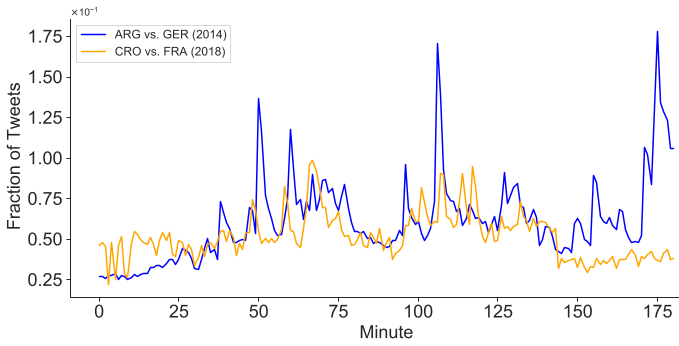 Figure 1: Notice how 2014 remained mostly negative, while 2018 trended more positive—a clear shift in global fan sentiment.
Key Findings: Peaks of Emotion
The study highlights that major match incidents trigger immediate, measurable spikes in specific linguistic categories:
- Sentiment Shift: Users were most positive right before the final whistle—anticipation breeds optimism.
- The "Kill" Peak: A major collision in 2014 (Neuer vs. Higuain) caused a massive spike in "hate speech" classifications because fans used the word "kill" to describe the intensity of the foul.
- The Policy Effect: 2018 saw a noticeable reduction in offensive language, likely due to Twitter's 2017 policy updates regarding hateful conduct.
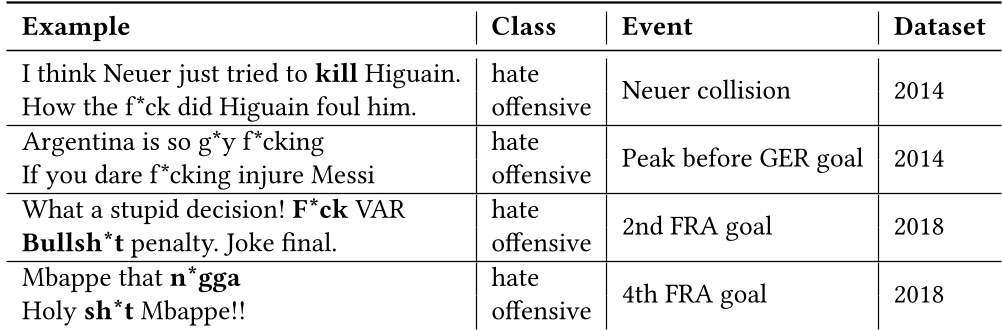 Table 1: Examples of how common soccer phrases (e.g., "Mbabpe that ngga") were misclassified due to a lack of cultural and situational context.*
Critical Insight: Why Context Matters
The most striking takeaway is the failure of generic classifiers. For instance, the phrase "You'd swear Germany watched Hitler’s WWII speech in the locker room" is a complex historical analogy. Generic tools struggle with this level of sarcasm and metaphor, often mislabeling these as "regular posts" or incorrectly flagging them as "hate speech."
Conclusion
This work serves as a cautionary tale for NLP researchers. As we move toward more automated moderation, we must account for contextual domains. Future research should focus on:
- Domain Adaptation: Training models specifically on "sports-lexicon."
- Disambiguation: Better mechanisms to separate "Hyperbolic Aggression" (fan passion) from "Targeted Hate Speech."
Ultimately, while the world "lived it up" more in 2018 than 2014, our ability to accurately measure that joy—and the frustration that accompanies it—remains a work in progress.