
Live Social Semantics: Bridging the Gap Between Digital and Physical Social Networks
Live Social Semantics
The paper presents "Live Social Semantics," an innovative framework that integrates Linked Data, online social networks (Facebook, Delicious, Flickr), and real-time physical contact sensing via RFID. Deployed at ESWC09 with 139 active participants, it achieved real-time visualization and recommendation of social connections by bridging virtual profiles with face-to-face interactions.
TL;DR
"Live Social Semantics" is a pioneering study that debuted at the 2009 European Semantic Web Conference (ESWC09). It successfully synthesized Linked Open Data (LOD), Web 2.0 folksonomies, and Active RFID sensing to create a real-time social ecosystem. By tracking face-to-face encounters and mapping them to semantically enriched interest profiles, the system provided attendees with unprecedented insights into their networking activities, facilitating both virtual and real-world connections.
Problem & Motivation: The "Blind Spot" in Networking
Conferences are social hubs, yet much of the value—networking—is left to chance. The authors identified a significant gap:
- Online Networks are Incomplete: Your Facebook or LinkedIn profile only shows a sliver of who you are and who you know.
- Physical Encounters are Transient: You might talk to someone for 20 minutes but never exchange contact info or realize you share the same research niche.
- The "Cold Start" Problem: How do you know who to approach in a room of 300 strangers?
While previous attempts used Bluetooth to track proximity, those methods were often noisy and lacked the "Semantic Layer"—the knowledge of what a person is actually interested in.
Methodology: The Semantic Mashup
The system stands on three pillars: Sensing, Profiling, and Visualizing.
1. High-Resolution Proximity Sensing
Instead of unreliable Bluetooth, the authors used Active RFID badges from the SocioPatterns project. These sensors detect face-to-face proximity within 1 meter by exchanging low-power radio signals that are shielded by the human body—effectively ensuring that a "contact" only counts if two people are actually facing each other.
2. Automated Interest Extraction
The team didn't just ask users for keywords. They built a Profile of Interest (POI) engine that:
- Crawled tags from Delicious and Flickr.
- Normalized and disambiguated these tags using the TAGora Sense Repository.
- Mapped these tags to DBpedia URIs, creating a common "lingua franca" for interests.
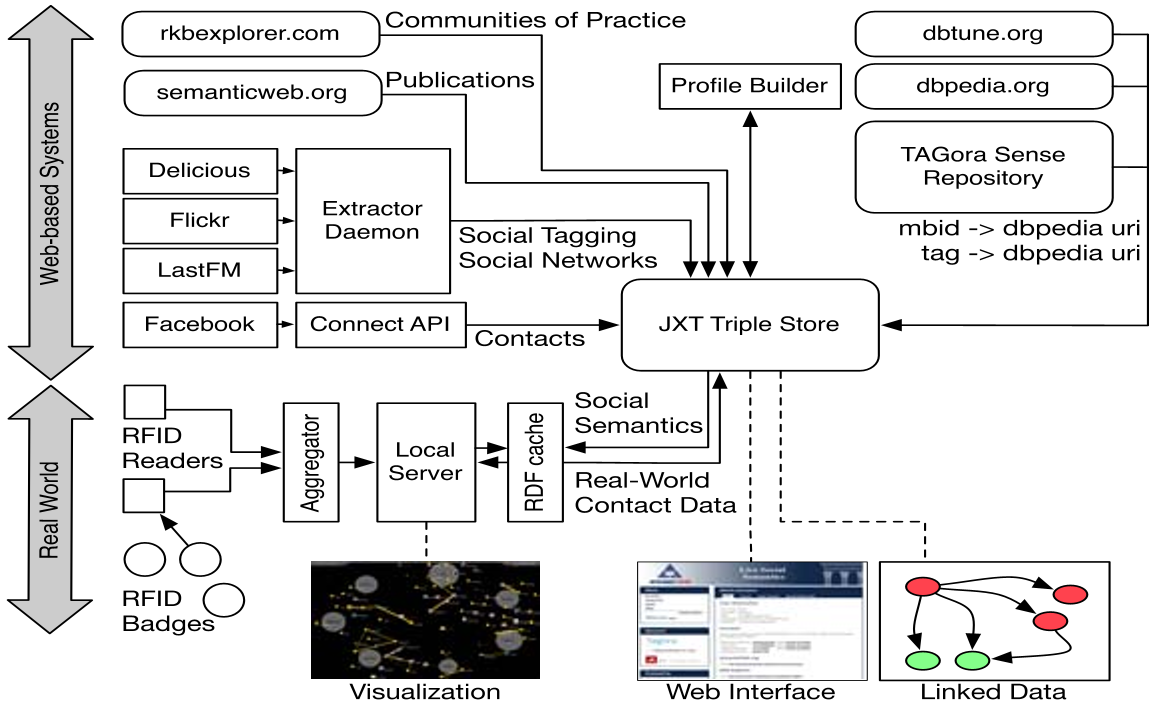 Figure 1: The Global Architecture of Live Social Semantics, bridging the Virtual and Real worlds.
3. The "Triangle Closing" Recommendation
The most advanced feature was the recommendation logic. If Person A and Person B were talking (Physical edge), and the system knew both A and B were connected to Person C on Facebook (Virtual edges), it could suggest C as a mutual point of contact, "closing the triangle" in real-time.
Experiments & Results: Real-World Deployment
The system was tested "in the wild" at ESWC09. Out of 305 attendees, 187 participated.
- Data Richness: 61% of users linked two or more social media accounts, allowing the system to build multifaceted profiles.
- Algorithm Accuracy: The profile building algorithm was highly effective. When users were asked to edit their auto-generated 50-interest lists, they only deleted 20% of the suggestions. Interestingly, tags from Delicious (professional bookmarks) were more accurate for interest profiling than Flickr (photos) tags.
- Social Dynamics: The RFID data revealed a "long tail" of interactions. Most contacts were short-lived, while a few "social butterflies" managed to maintain significant contacts (15+ minutes) with dozens of people.
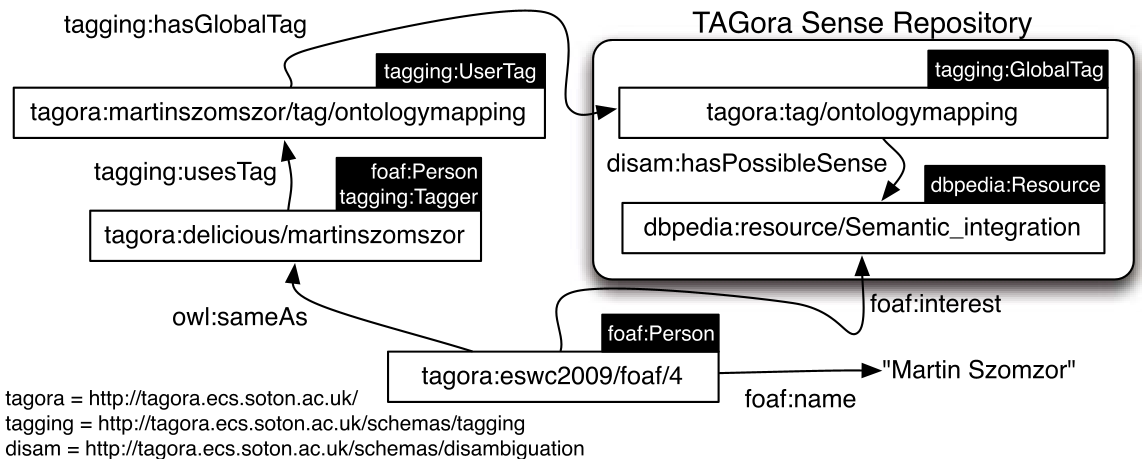 Figure 2: The Spatial View displayed in the conference lobby, showing real-time social clusters.
Critical Analysis & Future Outlook
Takeaway
This paper proved that "Live Social Semantics" is possible. By moving beyond simple "tracking" and adding a semantic understanding of human interests, we can make social gatherings more efficient and meaningful.
Limitations
- Privacy Tension: While 61% of users agreed to share data for research, 39% requested immediate data destruction, highlighting the ongoing friction between "personalized services" and "data privacy."
- Hardware Dependence: The need for custom RFID badges and readers is a barrier to entry. Future systems would ideally leverage the sensors already in our smartphones (UWB/NFC).
Looking Ahead
The authors envision a future where these profiles are persistent, traveling with you from conference to conference, and where Twitter (X) or LLM-based research summaries act as real-time context for your physical social interactions.
Editor's Note: This work remains a cornerstone for Ubiquitous Computing and the Semantic Web, foreshadowing the "Digital Twin" of social organizations we see today.