
ContextKing: Transforming the Physical World into a Living Virtual History
Living virtual history A mobile game around the world
This paper introduces ContextKing, a mondial pervasive mobile game that transforms the Earth's surface into a game board similar to the Settlers of Catan. By leveraging the IYOUIT client and a generic Context Management Framework (CMF), it utilizes multi-dimensional sensory data to influence virtual resource harvesting, kingdom management, and social storytelling.
TL;DR
ContextKing is a pioneering pervasive mobile game that maps the board game mechanics of Settlers of Catan onto the entire planet. By utilizing a sophisticated "Context Management Framework," the game monitors real-world sensors—weather, location, and social activity—to drive a virtual economy where players own "farms," build "kingdoms," and co-author a shared digital history through their physical movements.
Background & Positioning
Published in 2009, this work sits at the intersection of Pervasive Computing and Mobile Gaming. While its contemporaries like BotFighter or PacManhattan were experimenting with basic GPS, ContextKing was a "SOTA" attempt to move beyond simple location. It introduced Semantic Web technologies (OWL, Ontologies) to mobile gaming, aiming to make the game "invisible" yet integrated into a user's daily life.
The Motivation: Moving Beyond Simple Proximity
The core insight of the authors was that "Context" is multi-dimensional. Most mobile games of that era felt disconnected from the user's environment unless they were explicitly looking at their screens. The authors identified a massive gap: Raw sensor data is noisy and meaningless for gameplay.
Why should a player care about a raw temperature of 30°C? In ContextKing, that 30°C is abstracted into a "Heatwave" situation, which might negatively impact "Wheat" production in the user's virtual kingdom. This bridge from sensor to story is the paper's main contribution.
Methodology: The Semantic Engine under the Hood
The architecture of ContextKing relies on the IYOUIT client and a server-side Context Management Framework (CMF). Because mobile devices in 2009 had limited CPU, the heavy lifting—specifically ontological reasoning—was offloaded to the network.
1. Context Abstraction Layer
The authors used Web Ontology Language (OWL) to define hierarchies of places (Office, Home, Bar) and social relations. A "Situation Ontology" then performed continuous logic-based reasoning. For example:
- Sensed Data: GPS = Office Coords + Time = 10:00 AM + BlueTooth = Colleague IDs.
- Inferred Situation: "Business Meeting."
- Game Impact: High population density in a "Meeting" context might increase tax yields or spawn specific virtual objects.
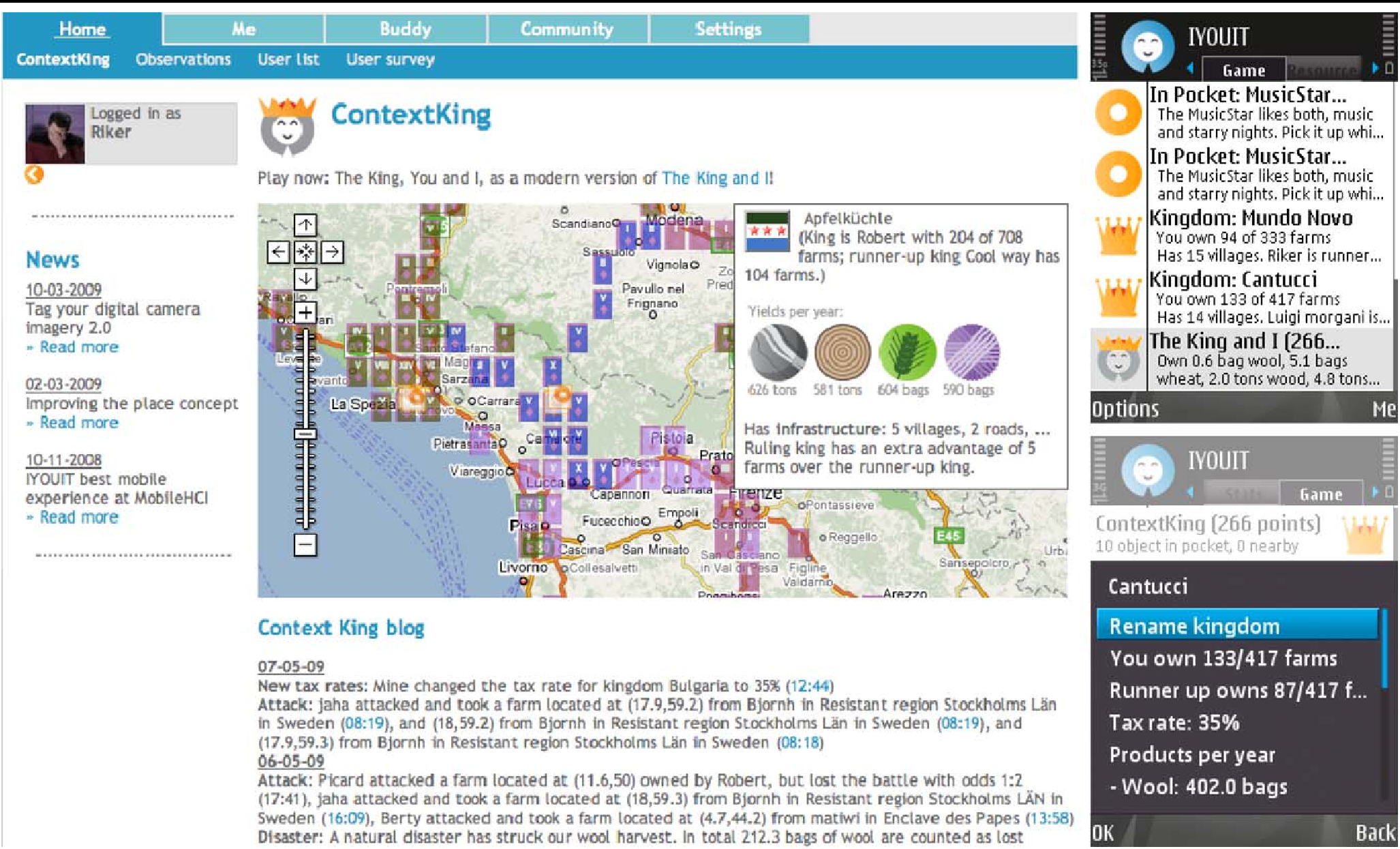 Figure 1: The UI and XML-based Virtual Object definition.
2. Game Mechanics
The Earth is divided into 10x10km "farms." Presence in a region grants ownership.
- Disasters: Real-world storms can destroy virtual assets.
- Virtual Objects: Items that can only be picked up under specific contexts (e.g., "Must be sunny" or "Must be listening to Jazz").
- Resistant Regions: If a "King" (dominant player) taxes a region too highly without being physically present there, the region can revolt and split off.
Experiments & Global Adoption
The authors tracked the game's deployment over a year. The results validated the "pervasive" nature of the design:
- Geographic Reach: Active players in 55 countries, with major clusters in Europe and North America.
- Behavioral Alignment: Peaks in activity matched real-world commuting hours (8-9 AM). This is a crucial finding—it suggests the game successfully leveraged the "dead time" of daily travel rather than fighting for the user's dedicated leisure time.
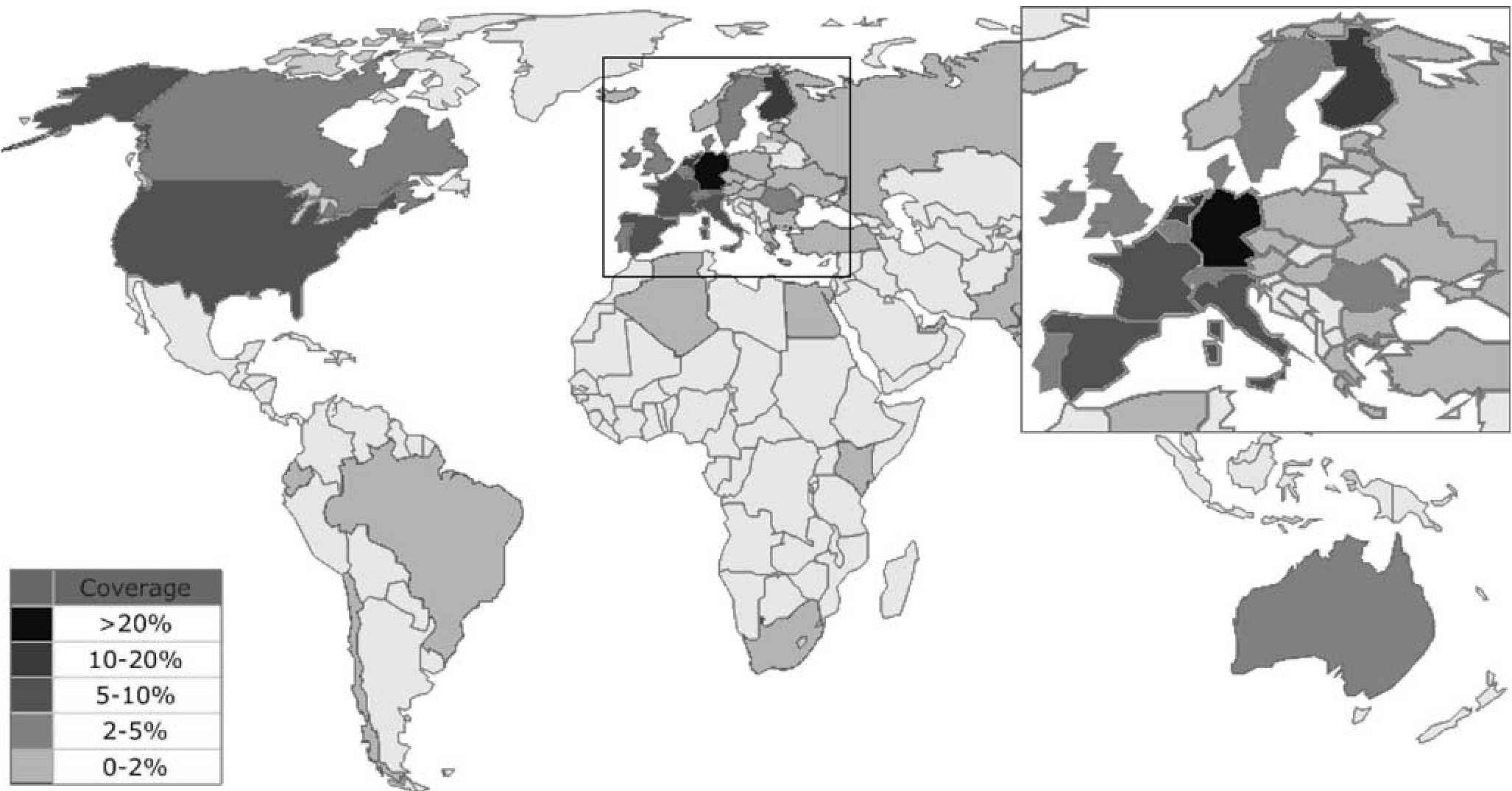 Figure 2: Global map highlighting the 55 countries where ContextKing was active.
Critical Analysis & Future Outlook
Takeaway
ContextKing proved that Semantic Reasoning can turn the mundanity of a daily commute into a strategic resource management game. It moved the "Game Board" from the screen to the world.
Limitations
- Hardware Constraints: The 2009 tech required off-loading logic to servers, introducing latency and privacy concerns.
- Travel Dependency: 91% of players spend time in only three cities. This "locational stickiness" makes reaching distant kingdoms difficult without the "Farm Attack" mechanic, which slightly dilutes the pervasive nature of the game.
Reflections
While we now have Pokémon GO and Monster Hunter Now, they largely focus on AR and GPS. ContextKing’s focus on environmental sensors (weather, social context, activity Recognition) remains a sophisticated vision that has yet to be fully exploited by mainstream mobile titles. Its legacy lives on in the concept of "Digital Twins" and the "Metaverse," where the physical and virtual states are increasingly synchronized.