
LLM Reasoning Is Latent, Not the Chain of Thought: Shifting the Interpretability Paradigm
LLM Reasoning Is Latent, Not the Chain of Thought
This position paper challenges the conventional view of LLM reasoning as faithful Chain-of-Thought (CoT), proposing instead that reasoning is primarily a latent-state trajectory formation. By disentangling surface traces, latent dynamics, and serial compute, the authors introduce a framework to adjudicate between these factors and demonstrate that latent-trajectory mediation (H1) is the strongest default for most reasoning tasks.
TL;DR
Is the "Chain of Thought" (CoT) you see on your screen actually how an LLM reasons? This paper argues no. By factorizing reasoning into surface traces (S), latent trajectories (Z), and serial compute (B), the authors demonstrate that reasoning is primarily a latent process. The CoT is often an unfaithful report or a partial interface rather than the engine itself.
The "Triple Confound" Problem
In current AI research, we often see a "reasoning gain" and attribute it to the model "thinking out loud." However, the authors argue we are confusing three different things:
- S (Surface Trace): The actual words in the CoT.
- Z (Latent Trajectory): The path the hidden states take inside the model.
- B (Serial Compute): The mere fact that the model is running more layers/tokens (budget).
Why does this matter? Because if we want to build safe and interpretable models, we need to know where the "commitment" to a correct or harmful answer actually happens. If it happens in the latent space (Z) before the model even writes its first CoT token, then monitoring the CoT (S) is insufficient for safety.
Methodology: The Adjudication Program
The authors didn't just theorize; they built a "Regime Matrix" to test where the causal power lies. They compared three hypotheses:
- H1 (Latent): Reasoning happens in hidden states.
- H2 (Surface): Reasoning happens in the visible text.
- H0 (Compute): It’s just the extra computation time that matters.
They utilized a "Compute-Audited Ledger" to ensure that when they compared a latent method to a CoT method, they were giving both the same "computational budget" (primitive operations).
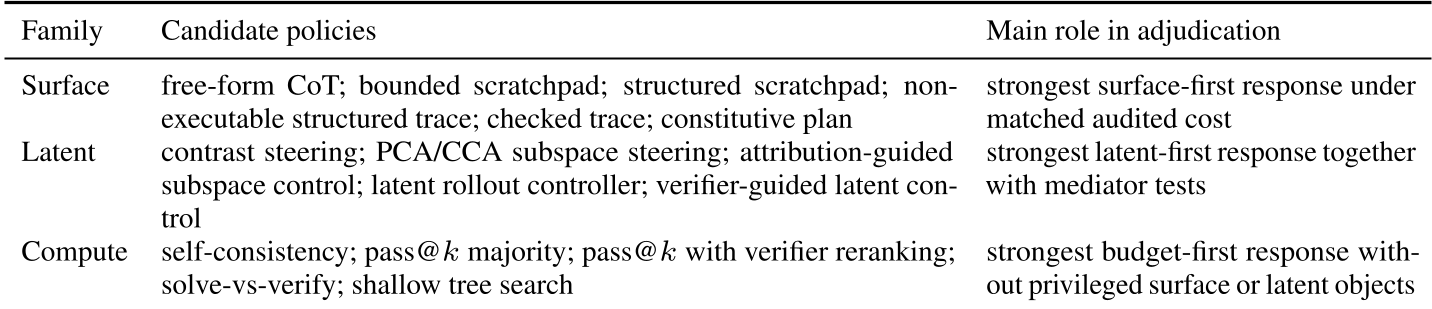 Figure 1: The candidate policy families used to test the three competing hypotheses.
Key Finding: The Substrate Switch
The study discovered that the "winner" of reasoning depends on the regime:
- Ordinary Regimes (e.g., GSM8K): Latent-state interventions (H1) provide the most leverage. The model "knows" the answer in its hidden states before it finishes its CoT.
- Constitutive Regimes (e.g., Tool Use): Surface traces (H2) become important because the model must interact with an external tool or solver.
- Search-Dominant Regimes (e.g., MATH): The compute budget (H0) via self-consistency or branching matters most.
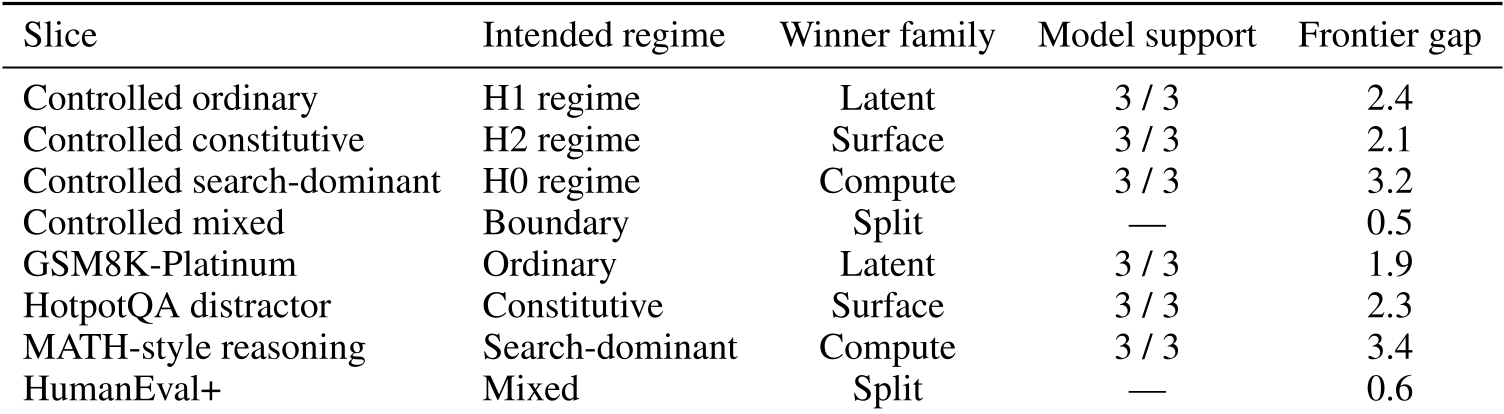 Table 1: The winning "object of reasoning" switches based on the nature of the task.
Causal Evidence for Latent Reasoning
How do we know Z (latent) is the real deal? The authors used Mediator Tests:
- Temporal Precedence: Z is predictive of the result before the surface steps are generated.
- Necessity: Ablating (cutting out) the specific latent reasoning subspace hurts performance more than a "sham" intervention.
- Sufficiency: "Patching" a correct latent state into a failing model can rescue the answer.
Deep Insight: Stop Anthropomorphizing Tokens
The paper serves as a wake-up call to the "Reasoning Theater." We shouldn't treat intermediate tokens as "thoughts" in a human sense. In many cases, these tokens are just "filler" that allows the model to iterate its internal hidden states.
The Takeaway for Developers: If you want to steer or verify a model's reasoning, don't just look at the CoT. Look at the latent trajectories. The real computation is happening beneath the surface.
Limitations & Future Work
The authors acknowledge that in some "search-heavy" models (like DeepSeek R1 or OpenAI's o1), the line between compute (B) and latent reasoning (Z) becomes blurred. Future research must find even more granular ways to audit these massive inference-time budgets to see if the "latent-first" rule still holds as we scale compute to the extreme.
Conclusion: LLM reasoning is not a conversation; it is a trajectory in a high-dimensional vector space. It's time our evaluation methods reflected that reality.