
Local Differential Privacy in OSNs: Rescuing Utility from the Noise of Global Anonymization
17370_Local Differential Privately Anonymizing Online Social Networks Under HRG-Based Model.
The paper introduces a group-based local differential privacy framework for Online Social Networks (OSNs) using the Hierarchical Random Graph (HRG) model. By decomposing the global network into 1-neighborhood subgraphs and applying a grouping algorithm, the method achieves strong privacy guarantees while significantly outperforming global differential privacy in data utility and computational efficiency.
Executive Summary
Sharing Online Social Network (OSN) data is a double-edged sword: it fuels sociological research and targeted advertising but risks catastrophic privacy leaks. Global Differential Privacy (DP) was long seen as the gold standard for protection, yet it suffers from a fatal flaw—to protect a single link, it adds so much noise that the resulting graph's structure (like the "friend-of-a-friend" clustering) is completely obliterated.
This paper introduces Group-Based Local Differential Privacy. By shifting the focus from the entire network to localized 1-neighborhood graphs, the authors provide a framework that keeps the privacy "shield" strong while allowing the graph's "soul"—its structural utility—to survive. In some tests, the method preserved nearly 40% of clustering information where traditional methods preserved 0%.
The "Noise Explosion" Problem
Traditional DP mechanisms inject noise proportional to the global sensitivity. In a social network, changing one edge can technically impact global metrics. Consequently, the noise required to hide that edge is scaled by the total number of nodes . In a network with millions of users, this noise acts like a blizzard, burying the original connections.
The authors' core insight is that an adversary usually uses localized knowledge (a target's immediate friends) to de-anonymize them. Therefore, anonymization should focus on making subgraphs similar to each other, rather than hiding one user among the entire global population.
Methodology: The Power of Hierarchy and Locality
The proposed framework follows a sophisticated pipeline to balance privacy and utility:
1. Graph Decomposition
Instead of treating the OSN as one giant matrix, the system extracts the Maximum Independent Set of nodes and creates 1-neighborhood graphs (the central node plus its direct neighbors). This ensures every edge is accounted for without over-processing.
2. HRG Feature Extraction
The Hierarchical Random Graph (HRG) model is used to abstract these subgraphs. The HRG is a binary tree where internal nodes represent connection probabilities.
- Why HRG? It naturally captures social clusters (communities) better than simpler adjacency models.
- Local Sensitivity: Crucially, the noise added to the HRG is now based on (subgraph size) rather than (global size), significantly reducing the volume of noise.
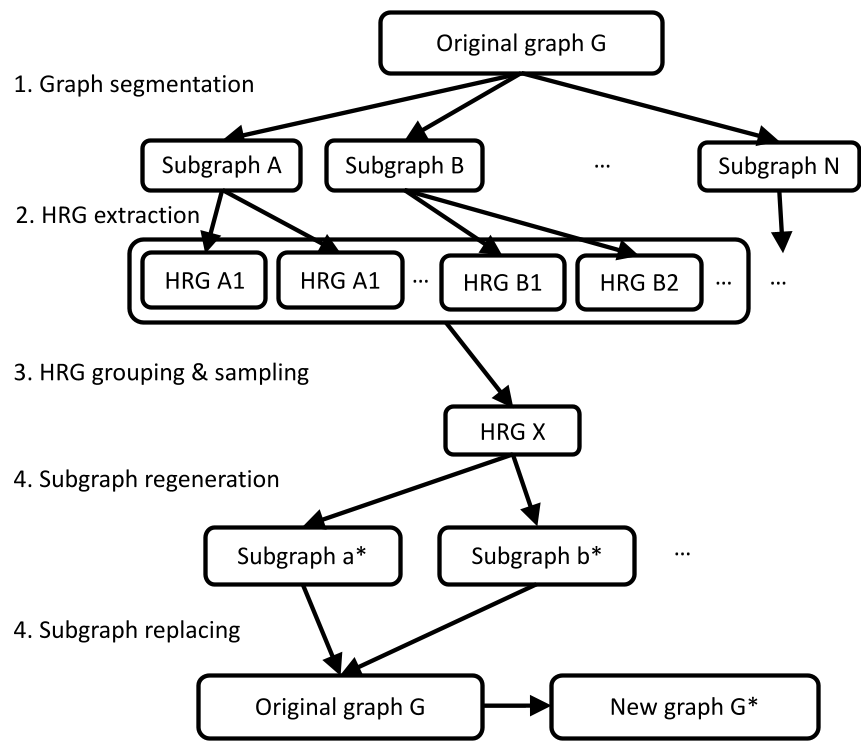 Figure 1: The overall framework from decomposition to regeneration.
3. Grouping and Smoothing
To further harden privacy, the authors realize that "local" isn't enough. They group similar HRGs together. By using Virtual Nodes or Outlier Distinction, they ensure that even within a group of potentially different sizes, a representative HRG can be used to "smooth" the variations, making individuals within a group indistinguishable.
Experimental Battleground: Local vs. Global
The researchers tested their methods against "Global HRG" and "Community HRG" baselines using real-world datasets like Facebook and Enron.
Structural Integrity
In Clustering Coefficient tests (a measure of how well friends know each other), the global method failed completely. Because global DP adds noise everywhere, it destroys small, tight-knit communities. The proposed "Outlier Distinction" method, however, almost mirrored the original graph's distribution.
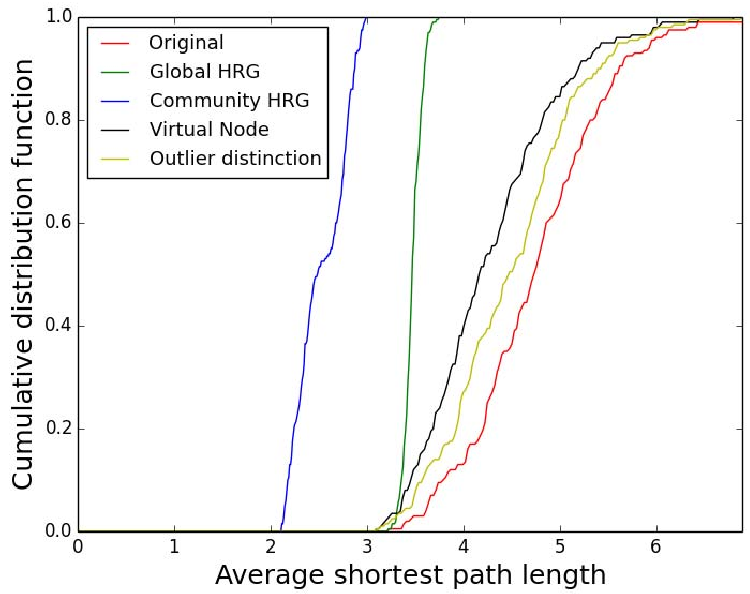 Figure 2: Clustering coefficient preservation (Original vs. Local DP vs. Global DP).
Efficiency and Scalability
Because the algorithm processes small subgraphs in parallel rather than one massive global matrix, the Runtime is significantly lower. While global methods scale linearly with the total nodes, the local approach's complexity is tied to the average neighborhood size, which is often .
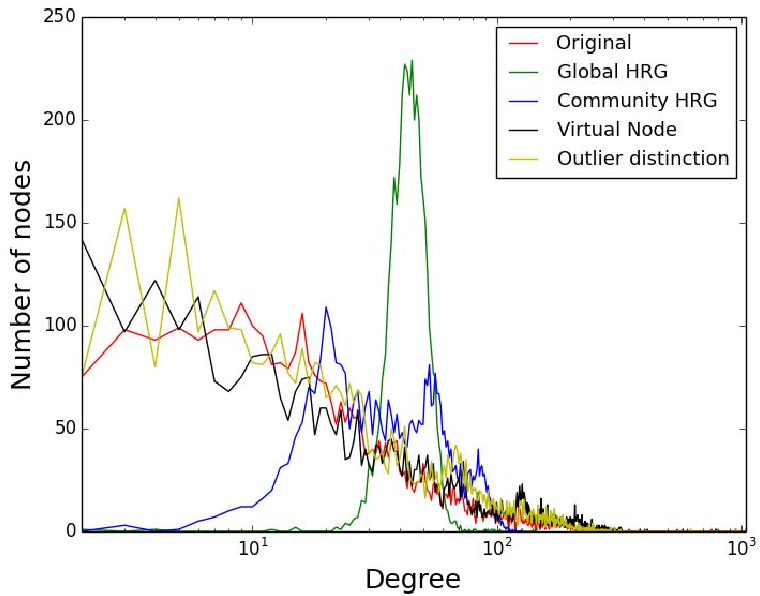 Figure 3: Computational efficiency gains of the local approach.
Deep Insight & Conclusion
This work represents a paradigm shift. It acknowledges that Global Indistinguishability is often overkill for practical OSN publishing. By defining Group-Based Local Differential Privacy, the authors provide a way to satisfy rigorous privacy auditors without handing the data analysts a pile of useless digital garbage.
Takeaway: The future of graph privacy lies in "local trust." By understanding that privacy attacks are usually local structural matching, we can design defense mechanisms that are both faster and more accurate. However, researchers should remain cautious about the "Outliers"—the hyper-connected celebrities of a network—who still require specialized handling to avoid sticking out like a sore thumb in a sanitized crowd.