
Beyond Translation: The Art and Science of Localizing Storyboards for Global UX
Localization of storyboards for cross-cultural user studies
This paper introduces a systematic framework for the Localization of Storyboards in cross-cultural User Experience (UX) research. By transforming "internationalized" templates into culturally-specific visual narratives for Chinese users, the study achieves a 92% cultural familiarity rate in remote online surveys.
TL;DR
Designers often assume visual sketches are a "universal language," but this paper proves otherwise. By localizing storyboards for the Chinese market—changing everything from bus seating arrangements to social activities like Karaoke—researchers achieved a 92% familiarity rate among participants. The study provides a 4-step blueprint for moving from "generic" internationalized visuals to "authentic" localized narratives.
The "Internationalization" Trap
In the world of Human-Computer Interaction (HCI), storyboards are the go-to tool for sparking imagination before a prototype even exists. However, a "one-size-fits-all" visual approach often fails. A scene of a teenager in a bikini on a beach might resonate in Australia but alienate users in the Middle East.
The authors argue that current HCI models often treat culture as a checklist (dates, currency, language) rather than a dynamic mental process. This paper shifts the focus toward seeing culture as a resource, where local users are active participants in shaping the research materials themselves.
Methodology: From "Euro-Centric" to "Sino-Centric"
The researchers began with "internationalized" storyboards developed by European designers. Using two focus groups (one remote via WeChat, one face-to-face in the UK), they identifies "cultural friction points."
Key Transitions in Visual Logic:
- Transport Context: An "international" bus with empty seats felt "unrealistic" to Chinese users. Localization required adding crowds and "reserved postures."
- Social Norms: The "Selfie" (taking a photo of oneself) was viewed as "smug" or "embarrassing" by the focus group. It was replaced with "Collaborative Photography"—friends taking photos of each other.
- Leisure Activities: A beach picnic (common in the West) was swapped for a Karaoke bar, reflecting a more authentic social touchstone for young Chinese adults.
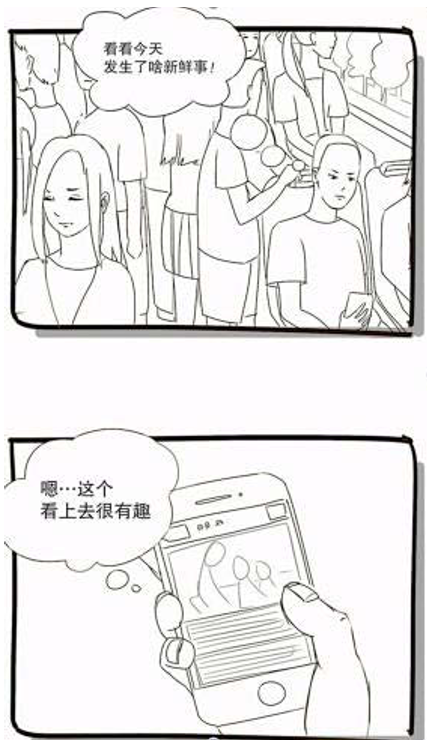 Figure: The Localized Storyboard 1 showing a crowded bus and Chinese-style smartphones.
Experimental Results: Does Localization Work?
The localized storyboards were tested in an online survey with 41 participants. The results were overwhelmingly positive:
- Comprehending Intent: 100% of users understood the core task (sharing links or photos).
- Cultural Resonances: 92% of respondents felt the pictures represented their own cultural background.
- Reduced Friction: Only a tiny fraction (6% in Scenario 1) found the images "odd," validating that the focus group's insights successfully removed cultural barriers.
 Table: High percentages of "Familiarity" across all three localized scenarios.
Collaborative Design: The Secret Sauce
The paper emphasizes that localization is not a solo act. The success relied on:
- Native Researchers: To facilitate focus groups in Chinese to capture nuance.
- Native Graphic Designers: To ensure "look and feel"—from clothing styles to the subtle body language of "reserved postures."
Critical Insight: The 4-Step Localization Blueprint
For researchers looking to apply this in industry, the paper suggests:
- Start with Universal Scenarios: Use text-based scenarios or internationalized drafts as a baseline.
- User-Informed Critique: Run focus groups (remote works just as well as face-to-face) to identify jarring details.
- Visual Overhaul: Localize the situation first (where it happens), then the details (how people look and act).
- Validation Questions: Always include "verification questions" in your survey (e.g., "Does this feel familiar?") to ensure your localization hasn't missed the mark.
Conclusion and Future Outlook
While this study focused on China, its implications are global. As technology products target increasingly diverse markets, the ability to conduct authentic remote user studies is a competitive advantage. The major limitation noted was gender representation; future storyboards must consider how behaviors differ across genders within a culture.
This work serves as a reminder that in UX, if the user can’t see themselves in the storyboard, they won't see themselves using your product.